
By: Bagas Nugroho S )*
Indonesia is responding to the surge in global oil prices caused by geopolitical conflicts with measured, long-term-oriented steps. The policies put in place aim not only to mitigate the immediate impact but also to strengthen the overall foundation of national energy efficiency.
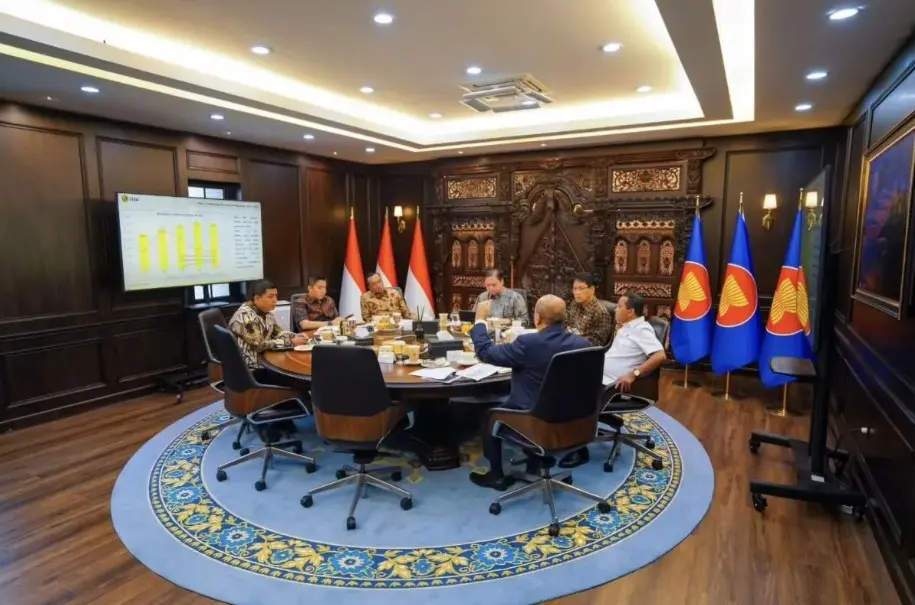
Coordinating Minister for Economic Affairs Airlangga Hartarto emphasized that the momentum of the crisis is being leveraged to drive a transformation of the national work culture. Policy direction is focused on shifting toward a more efficient, productive, and digitally-based work system to address increasingly complex global dynamics.
The work-from-home policy for civil servants one day a week is a key instrument in this strategy. This scheme, implemented every Friday, is designed to reduce mobility while cutting fuel consumption without compromising public service performance.
From a fiscal perspective, this measure is projected to have a significant impact on national budget efficiency. Reduced civil servant mobility directly lowers energy compensation costs in the State Budget, allowing fiscal space to be utilized more optimally.
The reduction in travel activities is also expected to have a broad impact on public energy consumption. With decreased daily mobility, fuel usage can be gradually reduced, creating a cascading efficiency effect across various sectors.
This efficiency is reinforced through restrictions on the use of official vehicles and a reduction in official travel. This step demonstrates consistency in controlling energy consumption within the bureaucracy without disrupting work effectiveness.
Encouraging a shift to public transportation is a key component of this strategy. Changes in public mobility patterns are expected to reduce reliance on private vehicles while accelerating the transition toward a more energy-efficient transportation system.
Expanding the implementation of car-free days across various regions serves as a supporting measure. Policy adjustments tailored to regional characteristics are deemed capable of enhancing effectiveness while positively impacting environmental quality.
Policy direction also targets the private sector through recommendations for flexible work arrangements. This approach allows the business sector room to adapt without neglecting national energy efficiency targets.
Public services will continue to operate normally to ensure social and economic stability remains unaffected. Strategic sectors such as healthcare and logistics will continue to operate at full capacity as part of national priorities.
In the education sector, in-person learning activities continue for elementary and secondary levels. This decision reflects efforts to maintain educational quality amid energy policy adjustments.
Budget reallocation is carried out through the prioritization and refocusing of expenditures by ministries and agencies. This step redirects spending from less productive activities toward programs that have a direct impact on the public.
The implementation of B50 biodiesel is a key component of the energy diversification strategy. This initiative aims to reduce dependence on fossil fuels while strengthening national energy security.
The Ministry of Communication and Digital Affairs, through Director General of Digital Infrastructure Wayan Toni Supriyanto, views the utilization of shared infrastructure as a strategic solution to support remote work arrangements. Collaboration among service providers is seen as capable of improving efficiency while maintaining the quality of digital connectivity.
Strengthening digital infrastructure is a crucial foundation for ensuring the success of the work-pattern transformation. Uniform network readiness enables digital activities to run optimally amid increasing connectivity needs.
Energy analyst Fabby Tumiwa views the implemented energy-saving policies as an appropriate step in addressing global uncertainty. Reliance on energy imports makes consumption control a relevant and urgent strategy.
The analysis also positions the work-from-home policy as an effective short-term solution for reducing fuel consumption. However, these efforts still require follow-up measures such as optimizing public transportation and improving efficiency in other sectors.
The overall strategy reflects an adaptive and comprehensive approach to addressing the global crisis. The combination of fiscal policies, behavioral changes, and technological support forms a strong foundation for maintaining national energy resilience.
Public and private sector participation are key factors in the successful implementation of this policy. Cross-sectoral collaboration is believed to strengthen the effectiveness of government measures while ensuring economic stability is maintained amid global pressures.
Collective awareness of the importance of energy efficiency is also beginning to take shape alongside the various policies being implemented. Changes in consumption patterns and a more energy-efficient lifestyle are part of the long-term transformation that is expected to continue.
The steps taken by the government also reflect a cautious approach in maintaining a balance between energy efficiency and economic growth. Adaptive policies allow productive activities to continue without placing excessive pressure on national energy consumption. Furthermore, a phased approach provides room for evaluation so that each policy can be refined in line with evolving global conditions.
Thus, energy-saving strategies are not merely reactive but also have a clear direction in supporting structural transformation toward a more efficient, resilient, and highly competitive economy amid ongoing global uncertainty.
)* The author is an economic analyst
