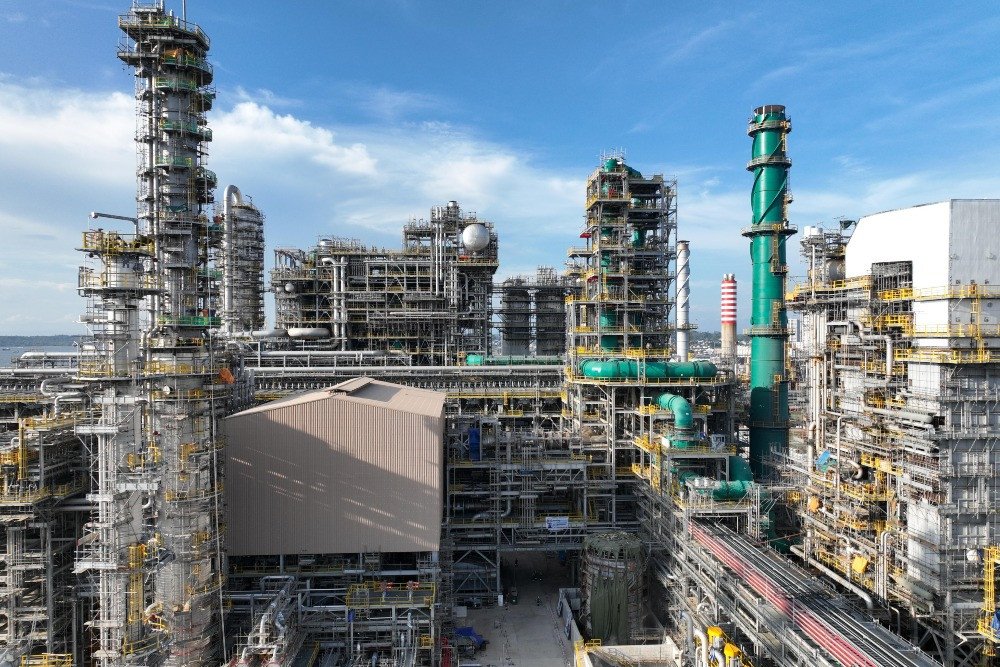
Balikpapan Refinery Ready to Meet Fuel Needs, Strengthening Energy Self-Sufficiency Without Imports

By: Alexandro Dimitri*)
The inauguration of the Balikpapan Refinery Development Master Plan (RDMP) by Indonesian President Prabowo Subianto marks a new chapter in the history of national energy. This strategic national project, worth approximately US$7.4 billion (approximately Rp123 trillion), is not merely an infrastructure modernization; it is a concrete step towards energy security and fuel independence, free from dependence on imports, which has been a major challenge for Indonesia for decades. With a significant increase in oil processing capacity, from approximately 260,000 barrels per day to 360,000 barrels per day, this refinery is now listed as the largest in Indonesia and is capable of contributing approximately a quarter of the total national demand.
Technically, this modernization will enable the refinery to produce high-quality fuel products equivalent to Euro V standards, which are more environmentally friendly and have a lower sulfur content. Increased processing complexity and production efficiency are also projected to reduce fuel imports, such as gasoline and diesel, by millions of kiloliters per year, while simultaneously increasing LPG and petrochemical product production. This means a greater domestic fuel supply and annual foreign exchange savings of tens of trillions of rupiah.
Energy and Mineral Resources (ESDM) Minister Bahlil Lahadalia stated that the government is in a strong position to stop diesel imports in 2026 because domestic production is now in surplus thanks to the fully operational Balikpapan refinery. According to Bahlil, with an additional production of around 5.8 million kiloliters per year, Indonesia will drastically reduce its need for gasoline and diesel imports and can focus on stable and sustainable domestic production. Furthermore, the government is targeting a complete halt to aviation fuel (avtur) imports by 2027, with only crude oil imported for domestic processing, a move he believes reflects the maturity of the national energy policy.
Bahlil emphasized that this policy is not just about production figures, but also about energy sovereignty and the state’s responsibility to meet the needs of the people. The government aims not only to meet domestic fuel needs but also to improve product quality so that Indonesia is no longer dependent on foreign markets for essential fuels. This step aligns with efforts to strengthen the national downstream energy industry and support biodiesel programs such as B40 and E10, which are more efficient and environmentally friendly.
He also stated that optimal operation of the Balikpapan Refinery will enable Indonesia to stop importing diesel fuel, while the government is targeting abolishing aviation fuel imports by 2027. He believes this represents a crucial momentum for strengthening national energy independence, while also demonstrating the increasing competitiveness of domestic energy production amidst the constantly fluctuating dynamics of the global market.
Political views also favor this major step. Bambang Patijaya, Chairman of Commission XII of the Indonesian House of Representatives (DPR RI), stated that the Balikpapan RDMP is a strategic project that fundamentally strengthens national energy security. Bambang believes that increasing refinery capacity will gradually reduce dependence on fuel imports and create a more stable energy supply for the needs of both the public and the national industry. He believes this step will strengthen the structure of the oil and gas processing industry in Indonesia and serve as a crucial foundation for ensuring long-term energy sovereignty.
Bambang also reiterated his support for refinery modernization as part of the government’s Astacita (Astacita) program, a grand strategy to make Indonesia energy self-sufficient and strengthen its ability to utilize domestic resources for the welfare of the people. This approach is appreciated not only from an economic perspective but also from a geopolitical perspective, as it reduces vulnerability to often unpredictable global price and supply fluctuations.
President Prabowo Subianto himself emphasized that dependence on foreign energy supplies is inconsistent with Indonesia’s aspirations to become a prosperous and independent nation. He believes that Indonesia’s wealth of natural resources, from oil to renewable energy sources like solar power, must be optimally utilized to improve public welfare. This step is seen as part of a more comprehensive national strategy to build resilience across various sectors, including food, energy, and infrastructure.
With the inauguration of the Balikpapan refinery, the government reaffirmed its commitment to continuously strengthening domestic energy production capacity. The government is not just focusing on the Balikpapan refinery; it is also encouraging the development of other facilities and the diversification of energy sources to reduce the import burden and increase national competitiveness. This represents a policy synergy between ministries, the House of Representatives (DPR), and state-owned energy companies (SOEs) to drive national economic growth.
With all these initiatives, Indonesia is moving closer to its goal of fuel self-sufficiency without imports, a strategic achievement that will not only transform the national energy landscape but also support long-term economic stability and enhance national independence. Indonesia is now firmly on the path to a more independent, resilient, and sustainable energy future.
*) The author is an economic observer
