
By: Anisa Rachma
The Free Nutritious Meals Program (MBG), initiated by President Prabowo Subianto and Vice President Gibran Rakabuming Raka, is more than just a solution to address nutritional challenges among children and pregnant women. Since its launch in early 2025, MBG has evolved into a powerful catalyst for local economic development. Across various regions, the program has shown encouraging results—not only in fulfilling basic nutritional rights, but also in activating agriculture, fisheries, livestock, and micro and small enterprises (MSEs) at the village and community levels.
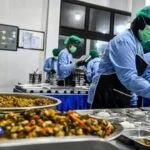
In Bandar Lampung, for example, MBG demonstrates how social needs and local economic empowerment can work hand-in-hand. Community kitchens set up under the program are required to source food ingredients locally. From vegetables, eggs, and poultry to beef and fresh fish, all food supplies are purchased from local farmers, fishers, livestock breeders, and MSEs in the surrounding areas.
This pattern not only stimulates immediate market demand, but also creates a domino effect—increasing residents’ income and purchasing power. Furthermore, MBG kitchens absorb significant labor, employing cooks, packagers, and logistics workers, thus creating new jobs, particularly for women and the urban poor in an inclusive manner.
Rahmawati Herdian, a member of Commission IX of the House of Representatives, stated that the program has significantly boosted local economic circulation. She emphasized that MBG is not merely about meeting nutritional needs; it also brings economic benefits to farmers, vegetable sellers, and even small food stall owners. In this sense, MBG is not a typical social assistance program, but rather an integrated development model that engages communities from upstream to downstream. Kitchens in areas like Enggal, Teluk Betung Utara, and Sukarame have become new economic hubs connecting public consumption needs with local production potential.
A similar impact is seen in Rokan Hilir, Riau. According to a Ministry of Finance report, the MBG kitchen there employs about 50 workers and empowers more than 100 local entrepreneurs. The program also accelerates regional budget absorption and strengthens local food security by boosting domestic production. Regional governments are encouraged to utilize village-owned enterprises (BUMDes) as food suppliers—shortening supply chains and ensuring the sustainability of fresh and healthy goods.
From a nutritional perspective, MBG contributes directly to reducing national stunting rates. As of June 22, 2025, the Coordinating Ministry for Economic Affairs reported that over 5 million beneficiaries receive daily nutritious meals through thousands of service units. Budget disbursement also shows positive trends: from IDR 3.3 trillion at the end of May, the figure rose to IDR 4.4 trillion by mid-June, reflecting the government’s commitment to speed up implementation and ensure the funds reach those who need them most.
Anyelir Puspa Kemala, an expert at the National Nutrition Agency (BGN), emphasized the need for cross-sector collaboration. Successful implementation requires alignment and strong commitment from all stakeholders at the local level.
BGN continues to work closely with parliament members, ministries, local governments, civil society, and the private sector. Public education is a key strategy, because MBG’s success depends not only on the number of meals served but also on people’s understanding of balanced nutrition and food hygiene. Local initiatives have also emerged to support the program—for instance, the Matahari Pagi Indonesia organization in Jakarta is helping empower MSMEs and broaden community-based free meal outreach.
In the long term, MBG holds massive potential as a foundation for human development in Indonesia. By focusing on youth nutrition, it contributes to future productivity, human capital quality, and national competitiveness. Moreover, the active participation of the agricultural sector and MSMEs in MBG’s supply chain is a significant step toward an inclusive, people-centered economy.
With a spirit of mutual cooperation, transparency, and regional capacity-building, MBG is not only worth continuing—it should be scaled up. It reflects how national policy can start from people’s basic needs and grow into a force that empowers neglected sectors. Amid today’s social and economic challenges, MBG stands as a model policy that unites welfare and self-reliance, with the people at its core.
