Collaboration Between the Central Government and the People of Aceh Accelerates Post-Disaster Recovery

By: Zulfikar Ibrahim
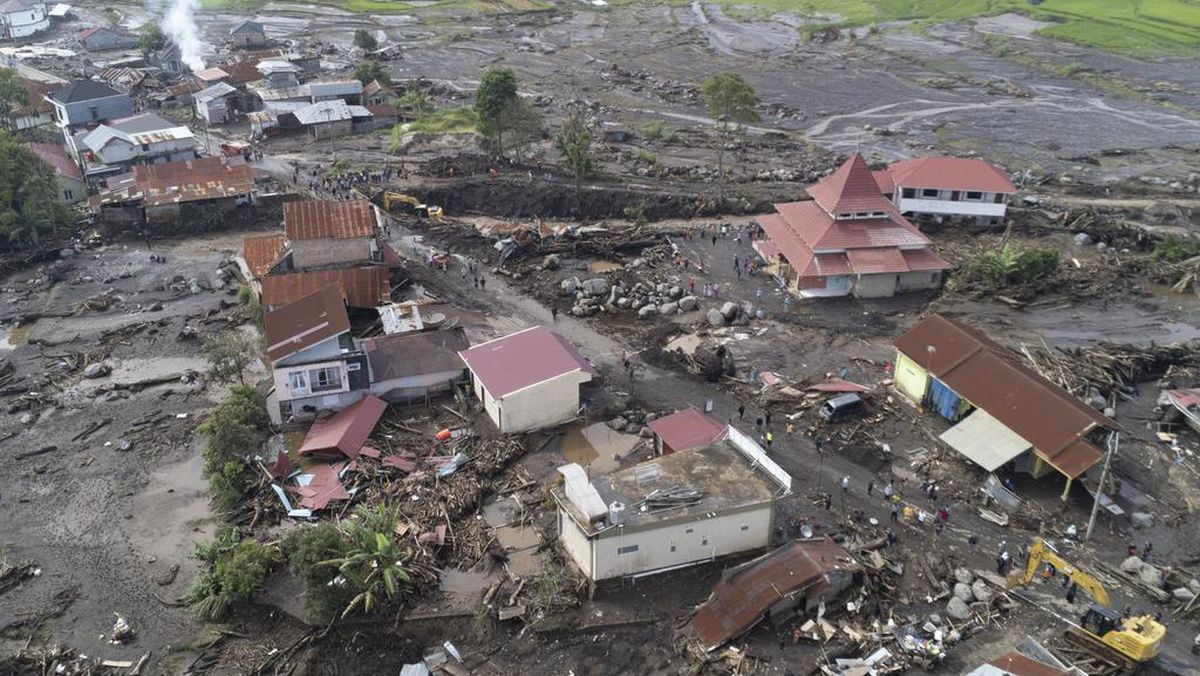
Collaboration between the Central Government, the Aceh Provincial Government, and local communities has become a key factor in accelerating recovery following the floods and landslides that struck several areas in Aceh. This collaboration also serves as a call for the wider public to continue maintaining solidarity and trust in the concrete actions taken by the state in times of crisis, because the success of disaster management is measured not only by the speed of response, but also by the involvement of all stakeholders in ensuring that recovery is sustainable and truly benefits the people.
Aceh Regional Secretary M. Nasir explained that the Aceh Government has implemented a six-cluster disaster management system from Emergency Response Phase I through Phase II. This approach is designed to ensure that every aspect of disaster handling—ranging from evacuation, logistics, and health services to early recovery—runs in a systematic manner. It also demonstrates that the regional government has not remained idle and continues to make maximum efforts despite existing limitations.
He emphasized that support from the central government plays a strategic role in enabling rehabilitation and reconstruction to proceed more quickly, in a more directed and measurable way. Given the extensive scale of damage, substantial resources are required in terms of budget, technical capacity, and cross-ministerial and institutional policies, making synergy between the central and regional governments an unavoidable necessity.
The expectation that coordination meetings will produce concrete, immediately actionable steps underscores the government’s determination to ensure that post-disaster recovery does not become a prolonged process. Instead, recovery efforts are intended to move swiftly, accurately, and sustainably—an approach that aligns with the state’s commitment to protect and serve its people when they need it most.
From the central government’s perspective, Coordinating Minister for Infrastructure and Regional Development Agus Harimurti Yudhoyono emphasized that the state has been present since the emergency response phase, including when several areas were still isolated due to severed land access. During that time, aid distribution was carried out via air routes while efforts continued to reopen land access as the lifeline for logistics distribution and community mobility.
These efforts demonstrate that the government is not only focused on short-term emergency response, but also has medium- and long-term perspectives to ensure that regional connectivity is fully restored. Without adequate access, economic and social recovery would be hampered, making the deployment of heavy equipment to reopen damaged roads a top priority.
Agus Harimurti Yudhoyono further stressed that the Ministry of Public Works will continue to be encouraged to accelerate road reopening, restore basic infrastructure, and provide clean water for affected communities. These measures reflect the government’s success in maintaining essential public services even amid complex disaster situations.
Beyond that, the government’s commitment to rebuilding homes, including relocating residents to safer areas less prone to disaster risks, demonstrates that the state is not merely restoring what was damaged, but is also striving to improve the quality of life through risk mitigation approaches to prevent similar disasters from recurring in the future.
Political support for the government’s actions has also come from the legislature. Member of Commission II of the House of Representatives (DPR RI), Ujang Bey, expressed confidence in national capacity to handle the floods in Aceh. His statement reinforces the narrative that Indonesia possesses the capability and resources to stand on its own in dealing with disasters without relying on foreign assistance.
Ujang Bey emphasized that the absence of approval for foreign aid indicates that the government has conducted careful assessments and has the capacity to address all existing challenges. This stance reflects national sovereignty and confidence in managing crises independently.
He also encouraged the government to remain focused on swift and simultaneous actions so that the needs of affected communities can be addressed promptly, from meeting basic necessities to restoring economic activities, as the speed and accuracy of response will greatly influence public trust in the state.
The government’s success in responding to the disaster in Aceh cannot be separated from strong cross-sector synergy, involving the central government, regional governments, security forces, and the active participation of citizens working hand in hand. This collaboration proves that post-disaster recovery is not solely the responsibility of the state, but a collective movement involving all elements of the nation.
This series of efforts serves as both a reminder and a call for all members of society to continue supporting the government’s recovery measures, to uphold the spirit of mutual cooperation, and to jointly ensure that rehabilitation and reconstruction in Aceh not only restore physical conditions, but also build social resilience and public trust—so that Aceh can rise stronger and be better prepared to face future challenges.
*) Social and Humanitarian Observer – Aceh Mandiri Social Justice Forum
