
By: Yandi Arya Adinegara)*
The Free Nutritious Meals (MBG) program, initiated by President Prabowo Subianto, has affirmed the government’s commitment to developing a healthy, intelligent, and competitive generation. MBG is not merely a food assistance program, but a strategic investment towards realizing Indonesia Emas 2045.
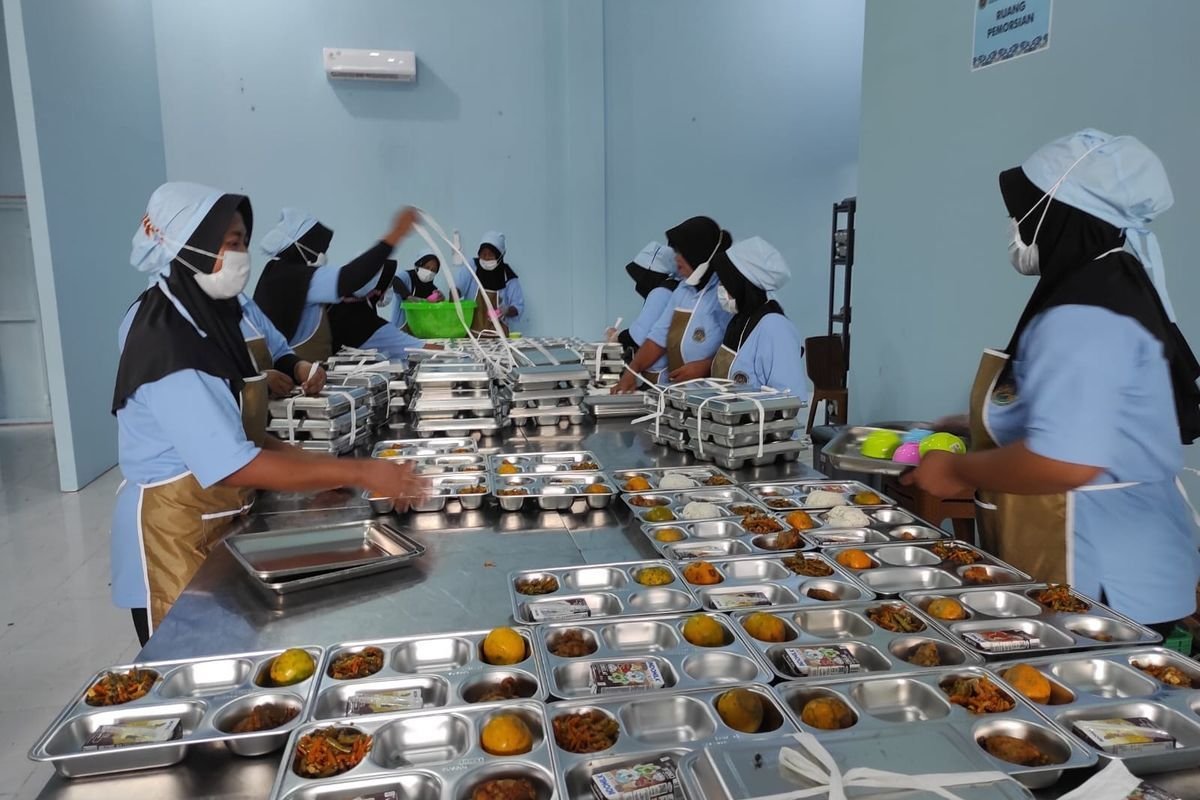
Since its inception, MBG has reached millions of beneficiaries across various regions, from young children and students to Islamic boarding school students (Islamic boarding school). Support for farmers, fishermen, and MSMEs as part of the supply chain also demonstrates the program’s broad impact, not only on health but also on community economic empowerment.
President Prabowo’s commitment to overseeing the MBG is evident in his swift response to reports of technical issues in the field. Hariqo Wibawa Satria, a Principal Expert at the Government Communications Agency (Bakom RI), stated that upon arriving at Halim Perdanakusuma Airport on Saturday, September 27, 2025, the President immediately led an emergency meeting to discuss repairs to the MBG. He emphasized that children’s safety is a top priority and emphasized that work has no holidays.
A follow-up meeting that evening and further coordination the following day demonstrated firm and consistent leadership principles. The President considered child safety an absolute priority. Even the smallest cases of poisoning must be reduced to zero.
From the coordination meeting, the President issued eight important directives. First, the safety of Indonesian children is a top priority, as it affects the lives of future generations. Second, all problematic MBG or SPPG (Nutrition Fulfillment Service Unit) kitchens must be closed and audited. Third, a comprehensive evaluation of the discipline and competence of cooks in all kitchens must be conducted.
Fourth, comprehensive sanitation improvements are being implemented, including water quality and wastewater flow. Fifth, all ministries, institutions, and local governments are being actively involved in oversight. Sixth, joint meetings between the Minister of Home Affairs, the Minister of Health, the National Nutrition Agency, and the Minister of Primary and Secondary Education with regional heads are ensuring that MBG governance is improved down to the lowest level.
Seventh, the Ministry of Health instructed health offices to utilize community health centers (Puskesmas) and health centers (UKS) to regularly monitor MBG kitchens. Within one month, the National Nutrition Agency aims for all kitchens to have hygiene and halal certifications and ensure proper water use. Eighth, each MBG kitchen will be equipped with CCTV connected to the central office, chefs will be retrained, cutlery will be sterilized, and water filters and rapid food testing kits will be used.
These steps demonstrate that the government is focusing not only on quantity but also on food quality and safety. MBG must be error-free and provide broad benefits to children and communities.
To ensure smooth distribution, the government, through the National Nutrition Agency, has also instructed each beneficiary school to appoint a teacher as the PIC for MBG distribution. These assigned teachers receive an incentive of IDR 100,000 per day as a token of appreciation for their role in ensuring the program’s sustainability. This policy not only strengthens oversight but also fosters a sense of collective responsibility. With the direct involvement of teachers, public trust in the safety and smoothness of MBG distribution is further enhanced.
The wider public has expressed appreciation for the President’s consistency in ensuring the quality of the MBG. Many consider the rapid improvement measures to be clear evidence that the government is serious about protecting the health of the nation’s children. Schools, youth organizations, and even academics view the MBG as a significant trust that must be safeguarded.
The Minister of Primary and Secondary Education, Abdul Mu’ti, emphasized that the MBG is a priority program that cannot be halted simply due to technical difficulties. He stated that the evaluation presents an opportunity to strengthen the system and make it more resilient.
Affandi Affan, Secretary of the Muhammadiyah Youth Central Leadership, assessed that the President’s swift action in conducting the evaluation demonstrated the government’s seriousness. He stated that the MBG is a significant trust concerning the health and future of children, requiring strict oversight to ensure the program runs safely and healthily.
Andi Yuliani, Secretary General of the Indonesian Muslim Intellectuals Association (ICMI), emphasized that MBG is a long-term investment. According to her, good nutrition from an early age significantly impacts the intelligence, health, and productivity of Indonesian children in the future. Equitable nutrition can significantly reduce stunting rates and nutritional inequality.
Government transparency is also a key factor appreciated by the public. Transparency demonstrates that the government is engaging the public in overseeing the program. Public participation in monitoring the MBG is key to its continued improvement. The government recognizes that the success of the MBG is determined not only by central government policies but also by collaboration with regional governments and communities.
The MBG program is one of President Prabowo Subianto’s landmark policies. With its responsive, decisive, and consistent approach, the government demonstrates that child safety is a top priority. Continuous evaluation and improvements demonstrate that the MBG is not merely a consumption program but rather a long-term investment in developing superior human resources.
The growing public appreciation is evidence of the MBG’s well-received success. This program provides equitable nutrition, reduces stunting, strengthens the nation’s competitiveness, and simultaneously promotes economic growth for the poor. MBG symbolizes the state’s commitment to protecting the nation’s future generations and serves as a stepping stone towards a healthy, strong, and competitive Indonesia in the future.
*) The author is a social observer
