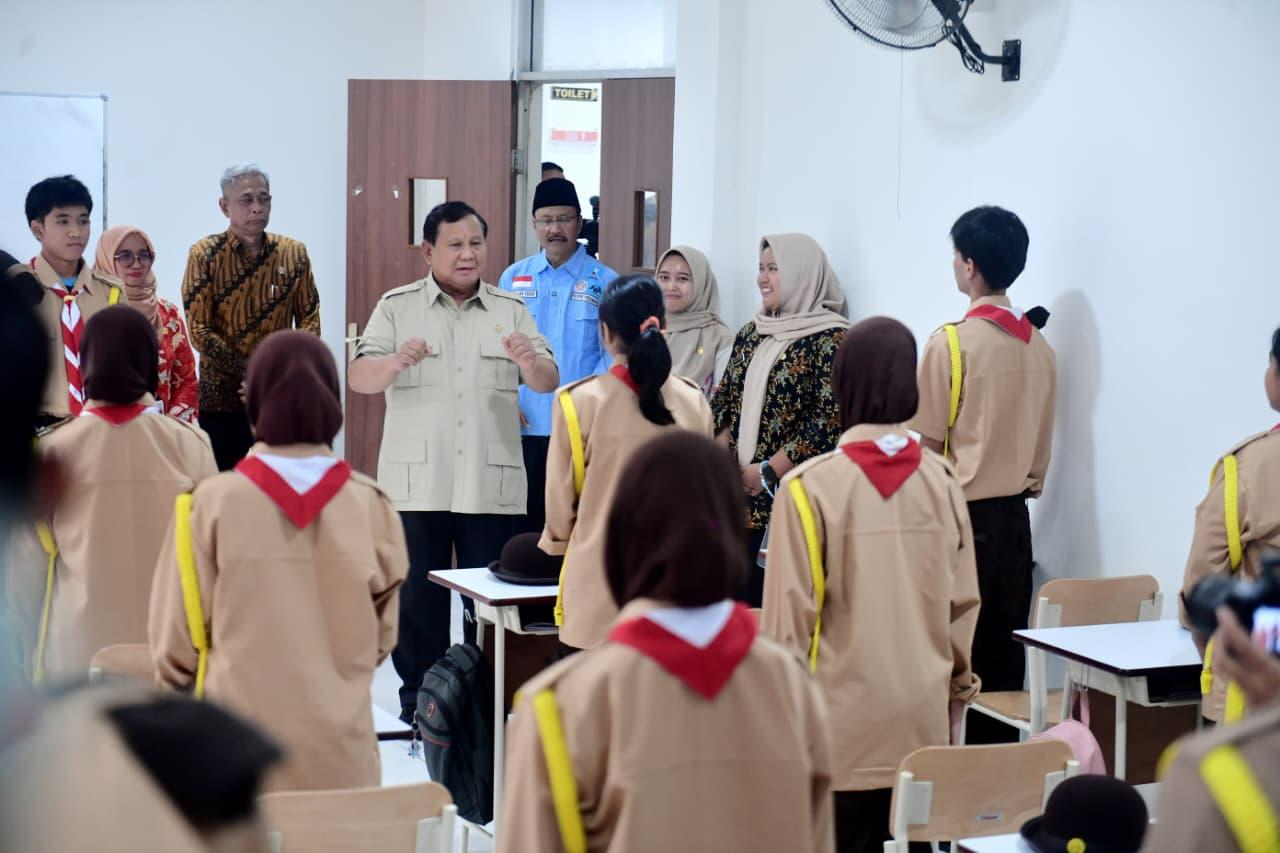

JAKARTA – The government continues to strengthen its commitment to providing inclusive, child-friendly, quality education by accelerating the Fastest Best Results (PHTC) School Revitalization Program and developing Phase II of Community Schools. This program not only focuses on improving the quality of educational facilities but also serves as a strategic instrument for child protection and poverty alleviation.
Presidential Chief of Staff, Muhammad Qodari, emphasized that school revitalization and the development of Community Schools are national priorities with broad impacts.
“It is important for us to emphasize that the School Revitalization Program and Community Schools are not just programs in the education sector, but also have broad economic impacts and a real multiplier effect,” he said at a press conference at the Bina Graha Building, Jakarta.
Throughout 2025, the revitalization program has reached 16,167 schools, with 16,062 units completed by March 2026. This year, the government has allocated a budget of IDR 14.1 trillion to reach 11,744 educational institutions and is proposing additional funding to expand coverage to 60,000 schools.
This program is being implemented through self-management, involving the local community.
“This program has created job opportunities for everyone, from construction workers and project supervisors to logistics service providers, thus empowering the community and strengthening the regional economy,” said Qodari.
More than 238,000 local workers have been absorbed, and approximately 58,000 MSMEs have been involved in supporting the program.
Consequently, the construction of Phase II of Public Schools continues to accelerate in 104 locations across Indonesia, with a target completion date of June 2026, ready to accept new students in the 2026/2027 academic year. This program is specifically designed for vulnerable communities to break the cycle of poverty through access to quality, boarding-based education.
The Minister of Women’s Empowerment and Child Protection, Arifah Fauzi, emphasized that child protection is a top priority in the implementation of the People’s Schools.
“Schools must be safe and supportive spaces for children to learn, develop, and build positive character. I hope students will take advantage of the opportunity to access education at the People’s Schools,” she said.
She also ensured that the available facilities meet child-friendly principles.
“Children can learn comfortably; they receive three meals a day and two snacks. The facilities at the People’s Schools are very representative and provide a safe space for children to express themselves,” she added.
At the regional level, local governments are also accelerating the implementation of this program. The Deputy Mayor of Medan, H. Zakiyuddin Harahap, emphasized the importance of accelerating the construction of People’s Schools as a top priority.
“We have coordinated, and this must be accelerated because this is our primary task. All parties must move quickly and work in a coordinated manner,” he emphasized while inspecting the construction project in Medan.
Zakiyuddin also highlighted the importance of ensuring the readiness of supporting infrastructure, such as drainage and street lighting.
“Drainage must be built immediately, and lighting must be installed to ensure a suitable and safe educational environment,” he said.
He emphasized the importance of cross-sector collaboration for effective development without wasting time and money.
By strengthening this program, the government is optimistic that People’s Schools will not only provide a solution for access to education for vulnerable groups, but will also create a safe, inclusive, and child-protection-oriented learning environment. Furthermore, this program is expected to produce a superior, competitive generation while strengthening the foundation of future national development.
(*/rls)
