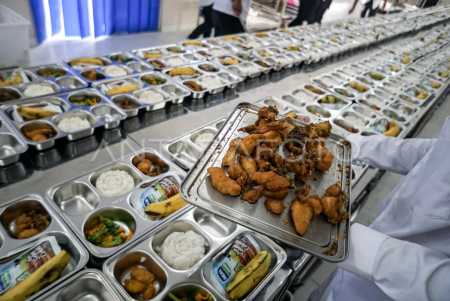

Jayapura – The Free Nutritious Meals (MBG) Program continues to be optimized in Papua by targeting the main groups: pregnant women, breastfeeding mothers, and children under two years old (Baduta) through inter-agency coordination, as well as elementary and secondary school students as part of national efforts to reduce stunting rates and improve the quality of human resources.
The Ministry of Population and Family Development (Kemendukbangga) through the Head of the Papua Region, Sarles Brabar, confirmed the existence of strategic cooperation with the National Nutrition Agency (BGN) in the form of signing a memorandum of understanding (MoU).
“We take care of pregnant women, breastfeeding mothers and toddlers to get balanced nutrition,” said Sarles.
Sarles emphasized that all MBG kitchens spread across cities and districts in Papua are required to coordinate with the BKKBN or Kemendukbangga so that the distribution of nutritious food is right on target.
“This collaboration is a form of our synergy with BGN,” he added.
Not only focusing on nutrition, Sarles also highlighted the government’s approach to the Family Planning Program (KB). He emphasized that the government encourages healthy and planned family planning to ensure the welfare of mothers and children.
Meanwhile, the MBG Program in Merauke Regency has been running again since May 28, 2025, after a technical evaluation was conducted to improve the quality of service. In several schools, the return of this program was enthusiastically welcomed by students, teachers, and parents.
“We are very happy that MBG is back. The children are more enthusiastic about going to school. They like it because they can eat with their friends,” said Herni Pasoluran, a teacher and person in charge of the MBG program at SD Don Bosco Budhi Mulia, Merauke.
Herni said that during the program hiatus, schools must remind parents to prepare supplies. During the break, schools remind parents of the importance of nutritious supplies from home as part of family nutrition education.
The principal of SMK Negeri 1 Merauke, Mariana Lusi Lalong, also appreciated the sustainability of the program. She considered MBG to have a great impact on students’ learning concentration.
“Children are more focused on learning when their stomachs are not empty. We hope this program continues to run consistently and sustainably,” he said.
The MBG program in Papua is one of the government’s spearheads in addressing nutrition and health disparities, especially in areas with geographical challenges and limited access. With cross-sector synergy and consistent commitment, this program is expected to be a strong foundation for the growth and development of Papuan children and the nation’s next generation.
