

By: Dirandra Falguni
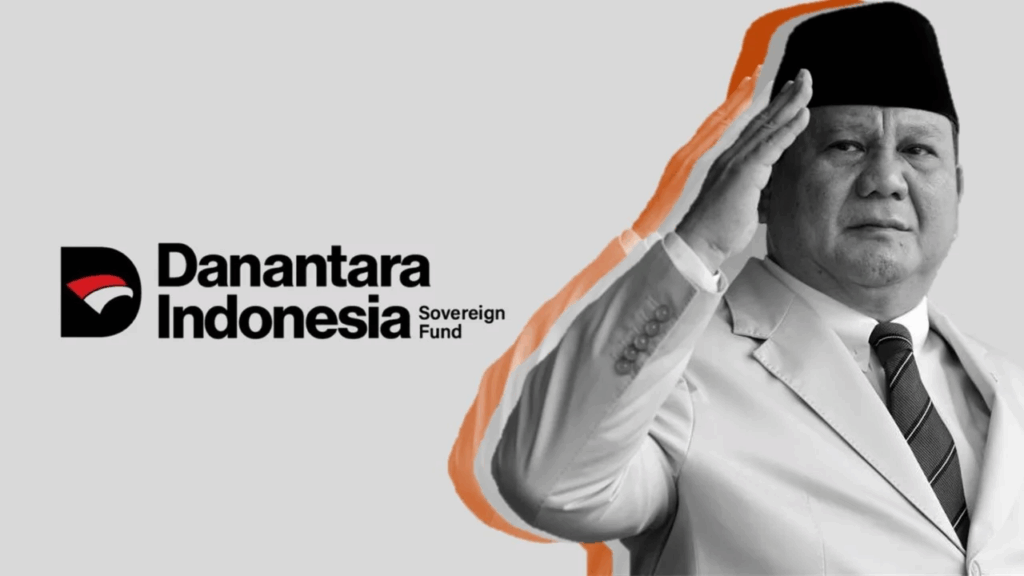
The Indonesian government continues to demonstrate its commitment to building a strong, self-reliant, and sustainable national economic foundation. One of the key instruments now being relied upon is the Badan Pengelola Investasi Daya Anagata Nusantara (BPI Danantara), a strategic entity designed to manage the country’s wealth professionally and digitally.
Deputy Minister of Finance, Anggito Abimanyu, emphasized that the presence of Danantara is crucial in boosting national investment, which remains moderate. Indonesia’s economic growth in the first quarter reached 4.87 percent (year-on-year), reflecting the resilience of the domestic economy. However, he stated that investment needs to increase, and Danantara is part of the answer.
Data from the Central Statistics Agency (BPS) shows that the investment component—Gross Fixed Capital Formation (GFCF)—only grew by 2.12 percent in Q1 2025. This slowdown occurred mainly in building and non-vehicle machinery investments. On the other hand, household consumption remained solid at 4.89 percent, driven by momentum from New Year, Ramadan, and Eid al-Fitr holidays.
This situation indicates that Indonesia still faces challenges in strengthening long-term investment foundations. Danantara emerges as a strategic solution, not merely to chase profits, but also to drive sustainable development.
President Prabowo Subianto stated that Danantara is not just a platform but a major breakthrough expected to propel Indonesia toward economic greatness in the digital era. According to him, Danantara symbolizes a transformation in wealth management that is more inclusive, transparent, and people-oriented.
Following the formation of its organizational structure, Danantara is currently compiling a list of strategic projects that will form its initial investment portfolio. Danantara CEO, Rosan Perkasa Roeslani, emphasized that their approach is not solely focused on profit margins but rather on tangible impact for society. All investment processes are conducted with transparency and professionalism.
This reflects a paradigm shift in state asset management—from mere administrative record-keeping to becoming a catalyst for national development, including poverty alleviation, job creation, and equitable development across regions.
A concrete example of Danantara’s collaboration with the business sector is the planned partnership with PT Pertamina Geothermal Energy Tbk (PGE). As a player in the renewable energy sector, PGE aims to increase geothermal capacity to 1,800 Megawatts by 2033. Achieving this target will require investments of around USD 6–7 billion, and PGE is opening the door to strategic partnerships, including with Danantara.
PGE’s Chief Financial Officer, Yurizki Rio, stated that geothermal development is a vital step toward achieving national energy independence. The company is adopting various technologies to reduce production costs and address the challenge of low geothermal electricity prices. Collaboration with Danantara could unlock significant potential for realizing these projects.
This commitment aligns with President Prabowo Subianto’s administration’s target of adding 75 Gigawatts of renewable energy capacity by 2040. In this context, Danantara’s role as an investment manager will become a key driver of clean energy infrastructure development throughout Indonesia.
Beyond investment strengthening, the government is also implementing parallel strategies to boost domestic economic capacity, one of which is through the Free Nutritious Meal Program (MBG). Currently, 3.4 million children across Indonesia are benefiting from the program. Besides being a long-term investment in human capital quality, the program also has a direct impact on local economies.
This is evident in the bustling kitchens across Indonesia, where food purchasing, the involvement of local MSMEs, and increased demand for raw materials show that MBG is not merely a social program, but a real driver of the micro-economy.
In facing increasingly complex global challenges—from geopolitical tensions to climate change and market uncertainty—the government recognizes the need for a holistic approach. Minister of Finance, Sri Mulyani Indrawati, stated that the state budget (APBN) will continue to be directed toward productive policies, including incentives such as holiday bonuses (THR), electricity and toll subsidies, and food price control.
The government is also implementing deregulation strategies, establishing a labor task force, and reconstructing state spending to be more efficient and targeted. These efforts are crucial in creating fiscal space, maintaining public purchasing power, and shielding businesses from global pressures.
Meanwhile, Danantara’s Chief Operating Officer, Dony Oskaria, noted that Danantara represents a transformation in state asset governance. According to him, this move ensures that the nation’s wealth truly benefits all Indonesian people.
Danantara’s presence not only marks a milestone in modern asset management but also acts as a bridge between government, investors, and the public. Through collaboration with the private sector, the development of clean energy, and social programs like MBG, the government is laying the foundation for a more inclusive, resilient, and sustainable new economy.
With principles of good governance, transparency, and digital technology utilization, Danantara is expected to become the driving force behind Indonesia’s journey toward economic sovereignty—realizing the long-held dream of a self-sufficient nation, fair in wealth distribution, and prosperous for all its people.
