
By: Asep Syahroni
The strengthening of Danantara, Indonesia’s sovereign investment management agency, as the driving force behind downstreaming and national investment is gaining strong momentum. At the Business Summit held at the US Chamber of Commerce in Washington, D.C., President Prabowo Subianto presented Indonesia’s grand vision as a competitive, stable, and promising investment destination in Southeast Asia.
President Prabowo emphasized that Indonesia is not only rich in natural resources but is also moving rapidly toward industrialization and downstream development. This transformation is designed to ensure that every strategic commodity owned by Indonesia generates maximum added value domestically. With substantial reserves of nickel, copper, and bauxite, Indonesia holds a strategic position in supporting the electric vehicle industry and future technologies. In addition, significant rare earth reserves further strengthen Indonesia’s bargaining power within global supply chains.
This commitment is being realized through the strengthening of an integrated national downstreaming agenda. This year, the government initiated 18 downstream projects across various priority sectors, including waste-to-energy processing projects with an investment value reaching Rp50.4 trillion, or approximately USD 3 billion. These projects are not solely oriented toward increasing production but also toward job creation, technology transfer, and reinforcing the national industrial structure.
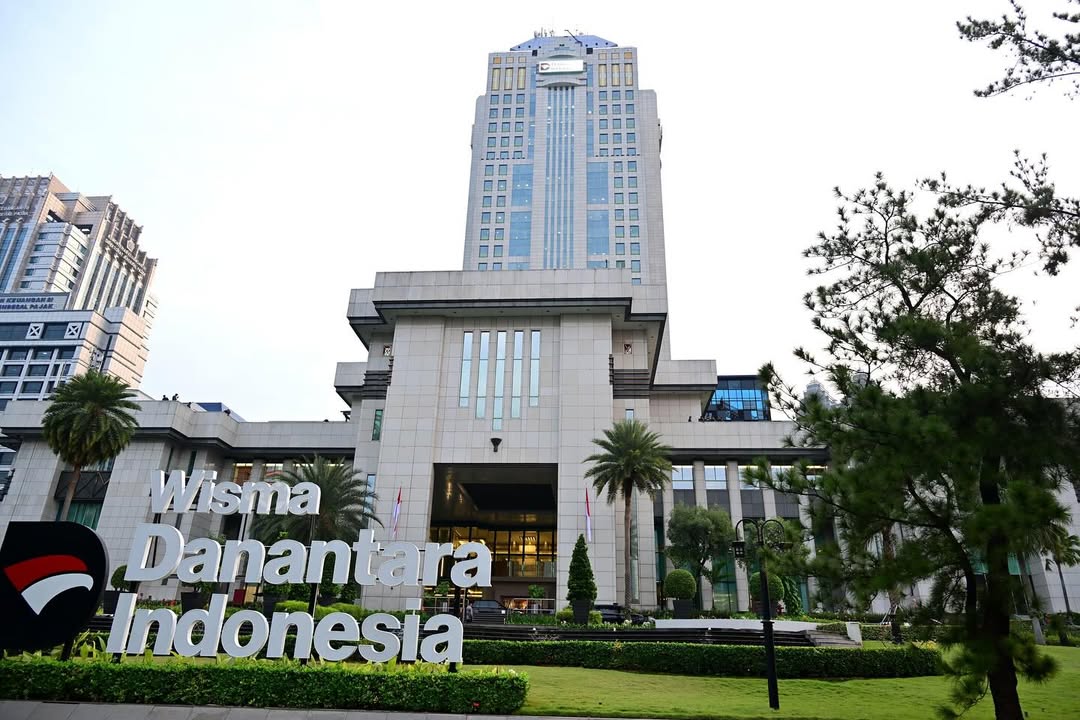
Within this context, Danantara is projected to become the locomotive of national investment. As a strategic investment management agency, Danantara plays a crucial role in ensuring effective project financing, transparent governance, and the establishment of sustainable global partnerships. Supported by pro-investment policies, Danantara is expected to accelerate the realization of downstream projects while simultaneously enhancing international investor confidence.
The President also stressed that legal certainty and national stability are fundamental pillars of a sound investment climate. The government remains committed to maintaining consistent regulations, efficient licensing systems, and conducive political and economic stability. A predictable and measurable business environment is key to attracting high-quality, long-term investments.
In line with Danantara’s strengthened role, the Minister of Investment and Downstreaming and Chief Executive Officer (CEO) of Danantara Indonesia, Rosan Roeslani, stated that further discussions on trade cooperation between Indonesia and the United States are ongoing. This agenda forms part of the implementation of the reciprocal trade agreement recently signed by both countries.
One of the main topics under discussion is the planned procurement of approximately 50 aircraft units from Boeing. The plan, which has been under consideration since last year, has now entered a more advanced stage of negotiation. This step is viewed as strategic in strengthening the national aviation sector while deepening industrial partnerships between the two countries.
Beyond aviation, discussions also include plans to import energy commodities from the United States. The government is exploring crude oil and gas purchases valued at up to USD 15 billion annually. This cooperation is seen as an effort to enhance national energy security while maintaining balanced bilateral trade relations.
Furthermore, opportunities for United States investment in Indonesia’s energy sector, including oil and gas and other strategic industries, are also part of the discussions. Such interest reflects growing global investor confidence in Indonesia’s stability and economic prospects. With its large domestic market and progressive industrialization agenda, Indonesia is considered to have strong potential as a production base and regional distribution hub.
The strengthening of Indonesia–United States partnerships demonstrates that the direction of national economic development is becoming increasingly structured and measurable. Trade collaboration, investment flows, and technology transfer form an integrated strategy that complements one another. Through balanced cooperation schemes, Indonesia not only expands market access but also enhances domestic industrial capacity.
At the same time, Danantara’s presence serves as a key instrument in consolidating various investment potentials and aligning them with national priority agendas. With a professional and accountable approach, Danantara can ensure that every strategic project generates multiplier economic effects, whether in the form of increased added value, job creation, or strengthened industrial competitiveness.
The global momentum toward a green economy, energy transition, and industrial digitalization presents significant opportunities for Indonesia. With strong resource fundamentals, consistent policy support, and Danantara’s active role as an investment locomotive, Indonesia is on the right path to accelerating economic transformation. These efforts reaffirm the government’s determination to position Indonesia as a major player in global supply chains and as a new, sustainable, and inclusive growth center.
Looking ahead, optimizing Danantara’s role is also expected to strengthen synergy among the central government, regional governments, national business actors, and international partners. The integration of industrial, energy, and trade policies within a unified strategic framework will ensure that incoming investments genuinely promote equitable development, expand the value-added industrial base, and reinforce Indonesia’s long-term economic independence. With careful planning and disciplined execution, Danantara can serve as a catalyst for accelerating structural economic transformation, solidifying Indonesia’s position as a new growth hub in the Indo-Pacific region.
The author is a student from Bandung residing in Surabaya.
