
By: Bara Winatha*)
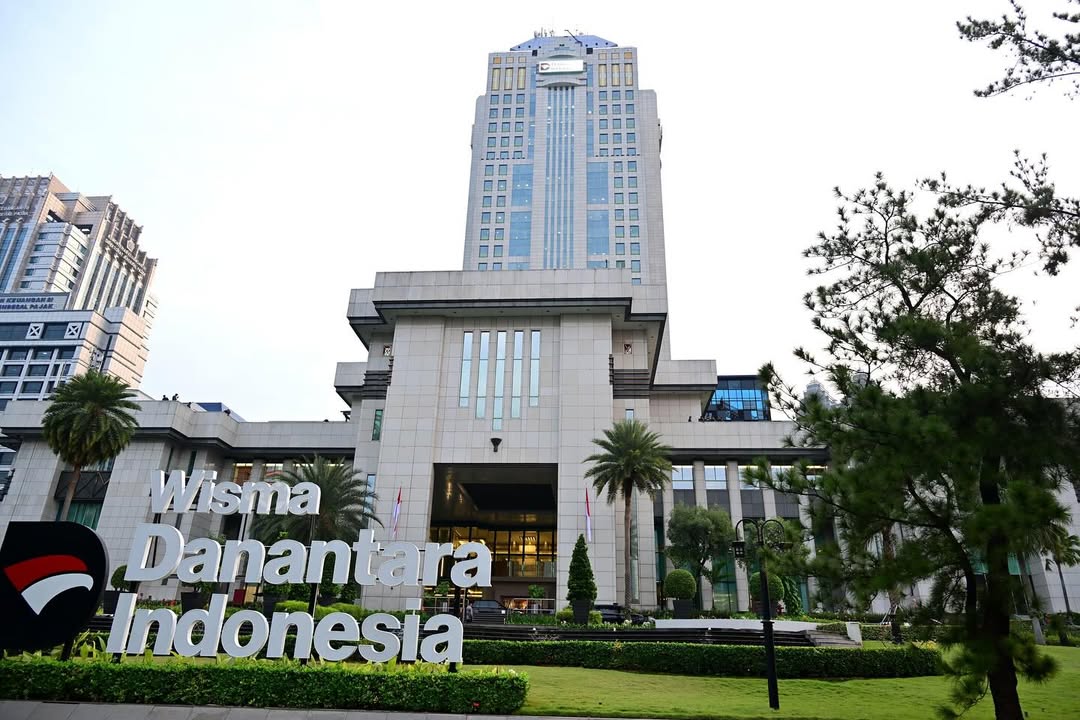
Public attention to the direction of national economic development in 2026 has intensified with the establishment of the Danantara Investment Management Agency (BPI) as Indonesia’s sovereign wealth fund (SWF). This institution is projected to be the country’s primary instrument for strengthening investment sovereignty while ensuring the sustainable financing of priority projects. One measure currently under consideration is Danantara’s involvement in the ownership structure of the Indonesia Stock Exchange through a demutualization scheme to deepen the domestic financial market.
Amidst global economic fragmentation, increasing geopolitical rivalries, and protectionist tendencies in various regions, the ability of governments to maintain control over development financing sources has become increasingly vital. Excessive reliance on short-term capital risks volatility, especially when market sentiment changes rapidly. Therefore, the presence of state investment institutions like Danantara is not only relevant but also a strategic necessity for maintaining development sustainability.
Rosan Roeslani, Minister of Investment and Downstream Development and CEO of BPI Danantara, emphasized that 2026 will be a crucial year for the institution to increase its contribution to development financing. Having begun actively placing investments in October 2025, Danantara is preparing to expand its investment scale across various priority sectors.
According to Rosan, strengthening Danantara’s role is not intended to replace the private sector, but rather to act as a catalyst encouraging collaboration between the government, state-owned enterprises, and businesses. He said that success in attracting investment remains highly dependent on regulatory certainty, ease of licensing, and consistent economic policies. In this context, Danantara is expected to serve as a financial anchor, maintaining stable investment flows amidst global dynamics.
Furthermore, sovereign wealth funds are essentially instruments widely used by countries to manage long-term wealth while cushioning economic shocks. Several countries have successfully utilized these schemes to accelerate structural transformation and increase industrial competitiveness. Indonesia is now moving in a similar direction, positioning state investment as part of a broader strategy toward economic independence.
This optimism aligns with the government’s target of realizing investment of around Rp2,100 trillion by 2026. Danantara’s presence is believed to strengthen the domestic investment base and boost foreign investor confidence in Indonesia’s economic prospects. When domestic capital is the primary foundation, the national economy will be much more resilient to external pressures.
BPI Danantara Chief Investment Officer, Pandu Patria Sjahrir, revealed that the investment fund placement target for 2026 is approximately US$14 billion, sourced from portfolio company dividends. This surge, he said, reflects the increasingly mature investment strategy and the readiness of the projects to be financed.
Over the next 12 to 24 months, investment will focus on renewable energy and energy transition, digital infrastructure, healthcare, food security, and industrial downstreaming. In addition to their potential for financial returns, these sectors are considered capable of creating long-term added value and strengthening the national economic structure. This direction also demonstrates a shift in the development paradigm from mere growth to a more inclusive and sustainable quality of growth.
Several projects have been prepared to enter the initial stages of development. In West Kalimantan, for example, an aluminum smelting and alumina production facility is being developed to strengthen the industrial value chain from upstream to downstream. Meanwhile, in Cilacap, Central Java, bioavtur development is planned to support energy transformation in the aviation sector. A bioethanol facility in Banyuwangi aims to expand national renewable energy capacity.
In the agricultural sector, Danantara is also exploring the development of a salt factory to supply the chlor-alkali industry, as well as an integrated poultry farming facility, which is expected to support the Free Nutritious Meals program while maintaining supply stability. Furthermore, waste-to-energy projects in several cities are also in the investment pipeline. The initiative to develop a Hajj service area in Mecca is also reportedly still in the exploration phase.
These steps emphasize that Danantara’s focus is not solely on profit, but also on creating economic and social impact. Strengthening the role of the capital market is seen as part of efforts to maintain financial system stability while simultaneously increasing national control over development direction. In other words, state investment is directed not only at pursuing growth but also at strengthening economic resilience.
The head of the Islamic Boarding School Economic Development and Empowerment Agency (BP2EP), Muzayyin Arief, believes 2026 will be a crucial period for testing the rationality of the country’s investment policies. He emphasized that Danantara’s success should not be measured solely by the size of its managed funds, but rather by the accuracy of its initial investment decisions.
According to Muzayyin, Danantara needs to be positioned from the outset as a long-term investment instrument, not simply a fiscal extension or a short-term project. Investing in long-lived industrial assets, he said, will help lock in the added value of domestic natural resources and strengthen the foundation of industrialization.
Ultimately, Danantara’s presence reflects the evolution of the state’s perspective on managing development, from a reactive approach to a more strategic and anticipatory one. When investment is positioned as a tool to build national capacity, rather than simply covering financing needs, economic sovereignty is no longer a slogan but a measured policy direction.
With professional asset management, a targeted investment strategy, and cross-sector synergy, Danantara is projected to become a key driver of Indonesia’s economic transformation. More than just an investment institution, its presence reflects the country’s commitment to building economic independence and ensuring the benefits of development are felt sustainably.
*)The author is a social and community observer.
