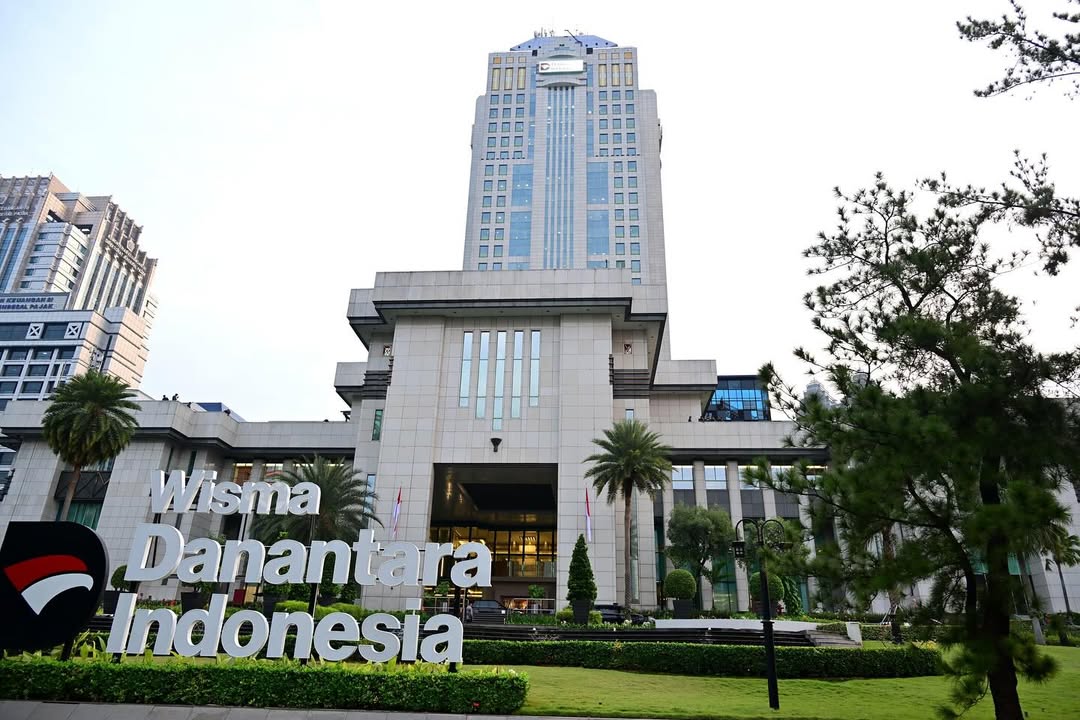
Danantara Consolidates State-Owned Construction Companies to Accelerate Infrastructure Transformation

By: Robby Ibrahim)*
Infrastructure transformation is a crucial foundation for national economic development. Amidst the complexity of global challenges, consolidating state-owned construction companies (SOEs) is a strategic step to strengthen the capabilities of the national construction sector. The government, through the Daya Anagata Nusantara Investment Management Agency (BPI Danantara), is currently developing a major restructuring plan for SOEs through mergers and consolidations. This step will not only improve the financial performance of SOEs but also boost work efficiency and accelerate the realization of more equitable and high-quality infrastructure development across Indonesia.
BPI Danantara’s Chief Operating Officer (COO), Dony Oskaria, explained that the merged state-owned construction companies will focus on being efficient and competent main contractors. The workforce will be drawn from the respective business units of each merged entity. This is a comprehensive strategy to improve the state-owned construction companies, which have faced challenges from debt burdens and scattered projects without clear segmentation. With this consolidation, the state-owned construction companies will not only be leaner but also more focused and adaptive to the dynamics of national development needs.
This consolidation plan will reduce the number of state-owned construction companies into three large entities with their respective specializations. State-Owned Enterprises Minister Erick Thohir has outlined the merger structure, which aims to avoid overlapping projects and unproductive internal competition. Hutama Karya and Waskita Karya will be directed to focus on toll road and non-toll road projects, institutional buildings, and residential and commercial areas. Meanwhile, Wijaya Karya (WIKA) and PT. PP (Persero) will focus on port and airport development, as well as relevant residential projects. The merger of Adhi Karya and Nindya Karya will focus on water infrastructure, railways, and other construction sectors that support connectivity.
This approach marks a significant milestone in realizing a healthier and more competitive national construction ecosystem. Specialization based on project clusters allows for more structured synergy between state-owned enterprises (SOEs), eliminating unhealthy competition among state-owned enterprises. This consolidation also reflects the government’s commitment to restructuring the strategic direction of state-owned construction enterprises (SOEs) for long-term national development goals.
Beyond focusing on efficiency, BPI Danantara is also strengthening the foundations of sound corporate governance. Rozi Sparta, Corporate Secretary of PT Adhi Karya, emphasized that Danantara’s steps will have a positive impact on national economic growth and accelerate infrastructure development. He added that the company is committed to continuously prioritizing good governance, transparency, the use of the latest technology, and innovation as key drivers in addressing development challenges.
In the long term, this transformation is expected to balance national economic interests with improving public welfare. The consolidated state-owned construction companies will spearhead the realization of strategic projects, ranging from trans-regional toll roads, clean water infrastructure, logistics ports, and modern mass transportation that can boost national productivity. This scheme will support the acceleration of national priority programs, inter-regional connectivity, and the acceleration of green transformation in the construction sector.
The restructuring of state-owned construction companies also sends a strong signal to investors and partners that the government is serious about strengthening the infrastructure sector with a professional governance approach. By establishing a healthier and more focused entity, the state’s fiscal capacity can be used more wisely and effectively. At the same time, Danantara plays a crucial role in fostering a measurable and sustainable investment ecosystem in the national development sector. This is key to creating a multiplier effect on the people’s economy.
This consolidation measure also touches on social and employment aspects. By utilizing the workforce of each of the merged business entities, the government ensures that this transformation will not negatively impact workers who have been part of the operational cycle of state-owned construction companies. Instead, opportunities for human resource capacity development will expand, as workers will be placed in a more modern, focused, and standardized work system.
The government and Danantara are not only designing changes to the institutional structure but also striving to establish a new work culture that upholds professionalism and efficiency. This provides a crucial foundation for facing the era of global competition in the infrastructure sector, while also establishing state-owned construction companies as entities capable of competing with international construction companies on domestic and regional projects.
The public should fully support the government’s efforts to consolidate state-owned construction companies (SOEs) for a more integrated, efficient, and sustainable infrastructure future. This transformation is not merely an institutional restructuring, but rather the foundation for realizing a more connected, resilient, and prosperous Indonesia. Public support will undoubtedly be a powerful boost to ensure the smooth running of this entire process and deliver tangible benefits to the nation.
)* The author is a Strategic Issue Observer.
