
By: Carrisa Alvina )*
The recent wave of demonstrations has left deep wounds for the nation. However, amidst this turmoil, a growing awareness emerged that Indonesia’s development must be more focused, measurable, and grounded in the principle of harmony.
President Prabowo Subianto emphasized that post-demonstration recovery is not only about security stability, but also about maintaining a balance between the economy and social life. It is at this point that the synergy between the Asta Cita development program and Danantara is the foundation believed to be able to bring new harmony to the nation.
Asta Cita has been positioned as a major compass in realizing development that reaches all corners of the country. It is known that it contains eight pillars that emphasize the state’s commitment to justice, independence, equality, and strengthening tolerance.
One of the key missions of Asta Cita is to build a life in harmony with the environment and culture, and to increase tolerance between religious communities. These values emphasize that development is not only about pursuing growth rates, but also about the quality of life together.
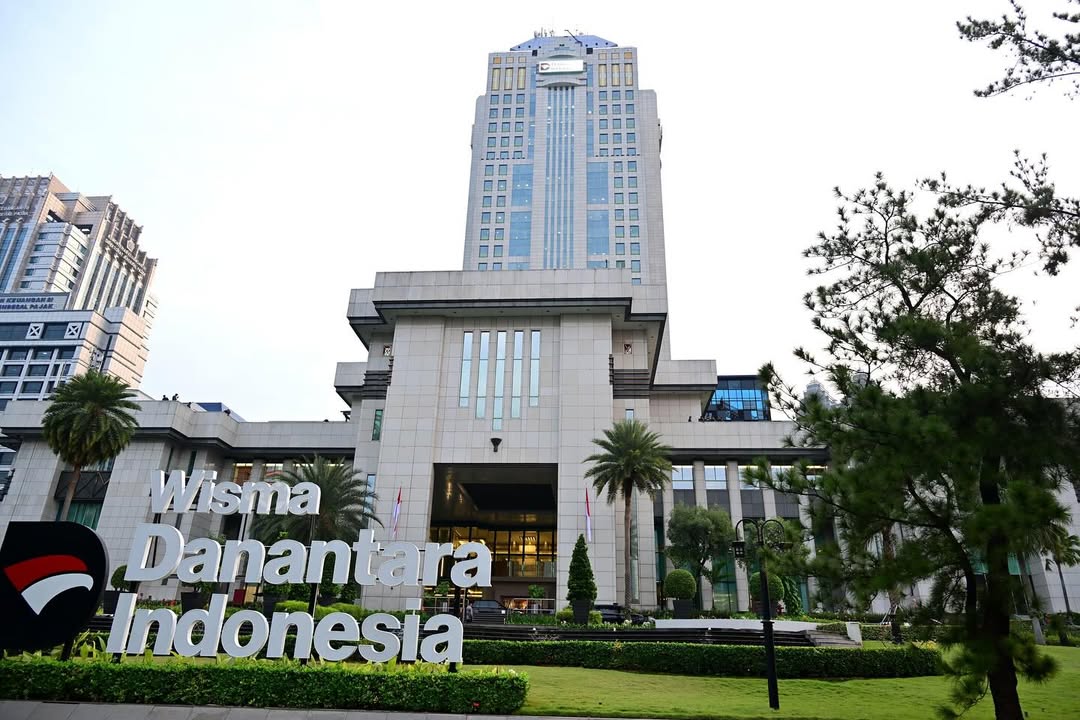
On the other hand, Danantara serves as a strategic instrument for managing state assets, strengthening investment, and stabilizing markets. This institution is designed as a superholding for state-owned enterprises (SOEs) and a sovereign wealth fund, tasked with optimizing state assets for long-term growth. Danantara carries a mandate to maintain financial stability, create jobs, and accelerate industrialization, so that prosperity can be enjoyed more evenly.
Indonesian House of Representatives member Bambang Soesatyo emphasized that the enactment of Danantara through Law No. 1 of 2025 further solidifies legal legitimacy. He believes this legitimacy is crucial for ensuring transparency and accountability in every investment management step.
He views Danantara as a new economic driver that must be supported by all elements of the nation. In his view, the role of institutions like the Supreme Audit Agency (BPK) and the Corruption Eradication Commission (KPK) is key to ensuring Danantara continues to function in line with national development goals, not merely for short-term interests.
Rosan Roeslani views Danantara as an anchor of market stability and a catalyst for growth. He emphasized that this institution serves to mitigate volatility, including when the capital market is under pressure from foreign investor selling.
According to him, focusing investment on vital sectors such as natural resource downstreaming, new and renewable energy, advanced manufacturing, and digital transformation will not only drive economic growth but also strengthen the nation’s competitiveness on the global stage. Rosan believes that transparency and professionalism-based governance are the foundation for Danantara to truly gain the trust of both domestic and international investors.
Herry Gunawan echoed this sentiment, emphasizing that Danantara is capable of addressing the capital constraints that have hampered economic growth. He believes this institution can increase the investment-to-GDP ratio, making the 8 percent growth target by 2029 realistic.
For him, the synergy between Danantara and the Asta Cita development direction will create broader economic equality, reduce disparities, and provide fairer access to opportunities for the community.
The synergy between Danantara and Asta Cita creates a new harmonious framework. Asta Cita serves as a development vision that prioritizes social justice, tolerance, and environmental sustainability, while Danantara acts as an economic driver, optimizing resources to realize this vision.
The two form a mutually reinforcing circle: a clear development vision provides direction for investment, while strong investment instruments provide the capital to achieve that vision.
The harmony achieved is not only social but also economic. With Danantara managing over Rp14,000 trillion in state-owned enterprise assets, opportunities for new job creation are increasingly open.
Priority sectors that are the focus of investment will support equitable development from villages to cities, in line with Asta Cita’s mission to build from the bottom up and eradicate poverty.
Bambang Soesatyo emphasized that the biggest challenge is ensuring governance is truly free from political interference. He emphasized the importance of multi-layered oversight to prevent Danantara from being trapped in abuse of authority.
Rosan added that investor confidence can only grow if good governance principles are truly implemented. Herry sees this significant opportunity as only possible if Danantara remains consistent in its mandate as a catalyst for growth, not a short-term political tool.
Following the demonstrations, the public needed concrete evidence that the nation’s development direction was not only promising but also capable of creating a sense of security, justice, and prosperity. The synergy between Asta Cita as the vision and Danantara as the instrument provided the answer to public concerns.
The harmony born from the collaboration between the two is expected to strengthen unity, maintain stability, and bring Indonesia closer to the grand ideal of Golden Indonesia 2045.
A new national harmony is no longer just a slogan; it must be realized through concrete steps. With Danantara as the economic pillar and Asta Cita as the direction of development, post-demonstration stability can be transformed into momentum. This momentum must be maintained so that Indonesia can move forward with confidence, stronger in the face of global turmoil, and more peaceful in its social life. (*)
)* The author is a contributor to the Lingkar Khatulistiwa Institute
