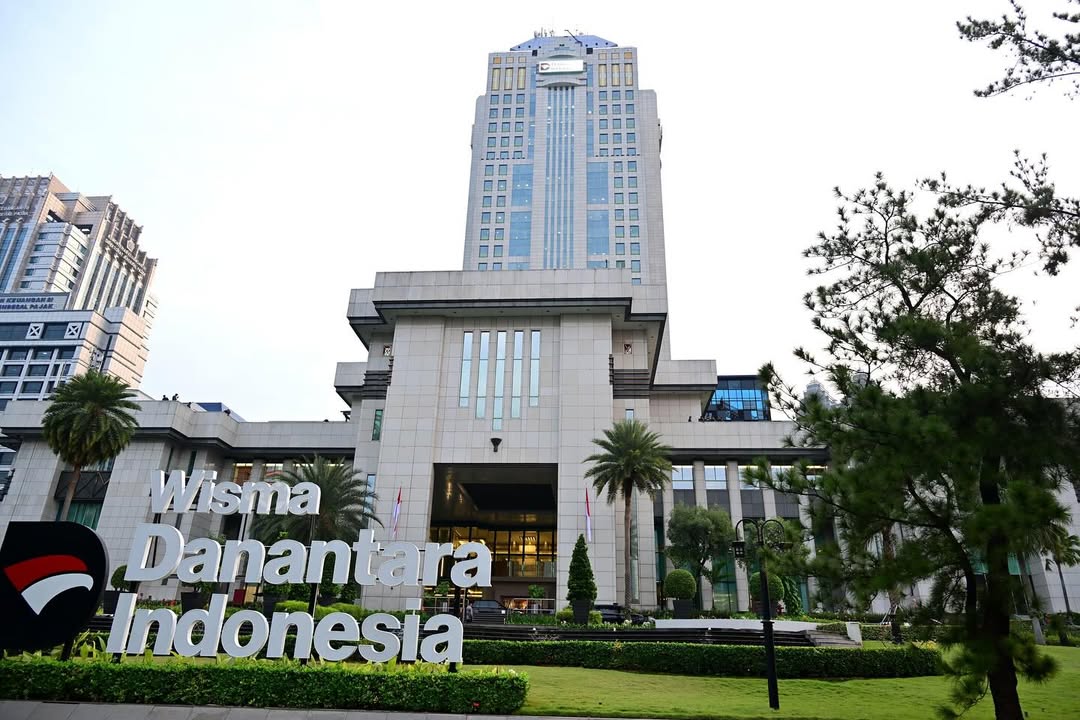
Danantara Pushes for Merger of State-Owned Construction Companies to Achieve National Efficiency

By: Lailani Fitriani )*
The strategic move by the Daya Anagata Nusantara Investment Management Agency (BPI Danantara) to encourage the consolidation of state-owned construction companies reflects the government’s strong commitment to restructuring the national construction sector. This policy direction not only aims to streamline the institutional structure of state-owned enterprises but also aims to strengthen competitiveness, operational efficiency, and sharpen business focus. Whereas previously there were seven state-owned construction companies with often overlapping scopes of work, the post-merger will create three main clusters with their own specializations. This paves the way for synergy, budget efficiency, and strengthened capacity of state-owned companies to face the challenges of an increasingly competitive industry.
The ongoing merger process under Danantara’s control demonstrates the seriousness and decisiveness in carrying out the structural transformation of State-Owned Construction Companies (BUMN Karya). According to Danantara’s Chief Operating Officer (COO), Dony Oskaria, this merger is a work priority targeted for completion in the second semester of 2025. The consolidation is carried out with a multi-strategic approach, which not only unites similar companies but also groups subsidiaries that have not contributed directly to the core business as contractors. This means that the reforms carried out are not merely changes in legal or administrative form, but rather a fundamental step towards establishing a healthier, more efficient, and sustainable BUMN ecosystem.
A key aspect of this plan is the streamlining of functions and strengthening of the core role of state-owned construction companies. The primary focus will be on pure contracting activities, while business lines outside this area will be consolidated into separate units to avoid becoming a burden on the parent company’s management structure. Previous business practices that allowed subsidiaries to develop without strict oversight have been a source of financial and governance problems. With this restructuring, state-owned construction companies are expected to operate more efficiently, accountably, and with greater direction.
Danantara’s decision to appoint a dedicated consultant to oversee the integration process also confirms that this policy was carefully and systematically designed. WIKA Corporate Secretary, Ngatemin, stated that an internal evaluation process has begun, focusing on improving the company’s governance and management systems. Regular discussions between the consultant and representatives from state-owned construction companies demonstrate the active involvement of all stakeholders. This allows for early anticipation of potential risks during the transition period, ensuring that the final outcome truly produces a healthy and competitive entity.
Support for this merger plan also came from other stakeholders, including the Ministry of State-Owned Enterprises, which has been promoting the consolidation initiative as a way to rescue and revitalize the state-owned construction sector. The government recognizes that facing increasingly complex national development challenges requires strong, professional state-owned enterprises with strong financial and managerial capacity. In the context of massive infrastructure development (both in the Indonesian capital city/IKN, inter-regional connectivity, and other public facilities), the role of a solid state-owned construction company is vital.
More than just structural efficiency, this merger also symbolizes a paradigm shift in state-owned enterprise management. The era of state-owned enterprises operating with high operational costs and low output must be abandoned. The merger marks a turning point towards a state-owned enterprise that is more adaptive to market changes, innovative in its services, and competitive regionally and globally. With this simplification, the merged company is expected to have a stronger capital structure, easier access to funding, and flexibility for healthy business expansion.
This plan also aligns with the government’s ambitious SOE reform agenda. Consolidation is not the end, but rather the beginning of a new chapter in comprehensive SOE transformation. In fact, Dony Oskaria revealed that in addition to the construction sector, Danantara is also preparing consolidation in other sectors such as fertilizers, hospitals, hotels, and industrial estates. One example is PT Pupuk Indonesia, which is projected to become a strong entity in supporting the national food self-sufficiency program. This indicates that Danantara’s steps are broad-scale and strategic in the long term.
With all the ongoing processes, the public should be hopeful that the transformation of state-owned construction companies through this merger will positively impact national efficiency. Danantara’s steps not only protect the company from financial risk but also re-establish the strategic role of state-owned enterprises in national economic development. When state-owned construction companies are able to better carry out their duties, infrastructure development, which is the foundation for long-term growth, will be faster and more targeted. Amid global challenges and pressing domestic development needs, this efficiency measure through the merger of state-owned construction companies is the right choice and must be continuously monitored until completion.
)* The author is an observer of economics and development
