
By: Yopi Nawipa*
The government continues to demonstrate a strong commitment to achieving equitable development across Indonesia, including in Papua. One concrete manifestation of this commitment is the provision of adequate housing for low-income communities through the National Three Million Homes Program. Papua is a key part of this strategic program, with the Papua Provincial Government submitting a plan to build and rehabilitate 14,882 habitable housing units to the Ministry of Housing and Settlements (PKP).
This initiative is not simply an infrastructure project, but rather a comprehensive effort to sustainably build the well-being of the Papuan people. Papua Governor Mathius Fakhiri emphasized that this program aligns with the development vision of a Smart, Prosperous, and Harmonious Papua (CERAH). The development of livable housing is considered a crucial pillar in alleviating poverty, expanding access to safe housing, and strengthening social bonds across Papua.
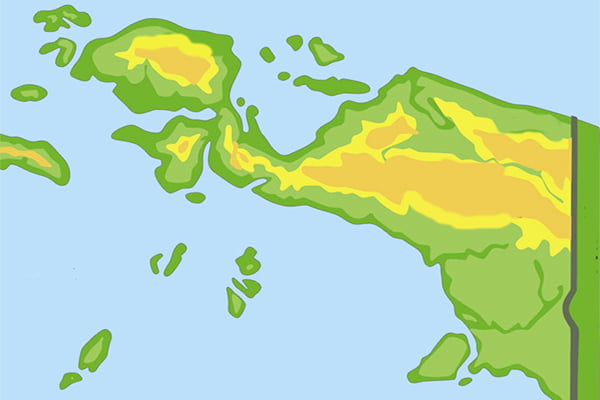
The planned construction of 14,882 housing units will be spread across nine regencies and cities in Papua, including 3,512 units in Jayapura City, 2,504 units in Keerom Regency, 1,201 units in Yapen Islands Regency, 2,671 units in Jayapura Regency, 1,046 units in Supiori Regency, 471 units in Waropen Regency, 335 units in Sarmi Regency, 293 units in Mamberamo Raya Regency, and 2,849 units in Biak Numfor Regency. This distribution shows that development is not concentrated in urban areas alone, but also touches remote areas that have faced limited basic infrastructure.
The Papua Provincial Government views the development of habitable housing as a strategic step to improve the community’s quality of life. In addition to providing safe and healthy housing, this program is also expected to stimulate new economic activity in the surrounding residential areas. A well-organized and suitable environment can stimulate the growth of small businesses, local trade, and other productive activities that provide livelihoods for local communities.
Minister of Housing and Settlements, Maruarar Sirait, emphasized that Papua holds a strategic position in the implementation of the Three Million Homes National Strategic Program, a breakthrough initiated by President Prabowo Subianto. He stated that public housing development is not merely a physical matter but also part of a national welfare equity strategy. He emphasized the importance of close cooperation between the central and regional governments to ensure effective, targeted development and a tangible impact on the Papuan people.
Good coordination between ministries, regional governments, and relevant institutions is key to the program’s success. The central government will synchronize data with the Papua Provincial Government and the Central Statistics Agency (BPS) to ensure that housing assistance reaches those in need. Accurate targeting is crucial, given that many low-income Papuans live in substandard housing or lack permanent housing.
In addition to building houses, the government also places significant emphasis on the sustainability of residential areas. Maruarar Sirait emphasized that every developed area must have long-term prospects to prevent it from reverting to slums. Therefore, each area receiving the housing development program will be designed to have new economic potential, such as the development of local tourism areas, centers for creative economic activities, or social facilities that can increase community interaction and productivity.
Adapting house designs to the geographic and social conditions of the Papuan people is also a key priority. Papua boasts cultural diversity and unique natural conditions, ranging from coastal areas to mountainous areas. The government ensures that the designs and models of houses built will adapt to local needs and characteristics, ensuring that housing is not only technically feasible but also relevant to the lifestyles and values of the local community.
The affordable housing development program in Papua is also expected to create new jobs for the local community. The development process, involving local workers, will stimulate the local economy and enhance self-reliance. In the long term, this could stimulate economic growth in eastern Indonesia, which has historically lagged behind other regions.
Papua Governor Mathius Fakhiri expressed his appreciation for the central government’s attention to the basic needs of the Papuan people. He considered the collaboration between the central and regional governments a concrete manifestation of the state’s presence in strengthening the welfare of the people in Papua. With the full support of the Ministry of Maritime Affairs and Fisheries, the three million homes program is expected to become a driving force for social and economic development, while accelerating Papua’s transformation toward a more prosperous and independent future.
More than just building homes, this initiative reflects the government’s strong commitment to making Papua an integral part of national development. With an inclusive, equitable, and needs-based approach, the three million homes program is expected to foster renewed optimism among the Papuan people. Adequate housing is not just a place of shelter, but also the foundation for a productive, competitive, and prosperous society.
Through synergy between the central and regional governments, public housing development in Papua will become a tangible symbol of Indonesia’s spirit of equitable development. From Jayapura to Biak, from the coast to the interior, this program is expected to demonstrate that the state is present for all its people without exception. Papua will not only be a beneficiary but also an active participant in the long journey toward a more just, prosperous, and socially just Indonesia for all its citizens.
*The author is a Social and Economic Researcher of Papuan Indigenous Communities
