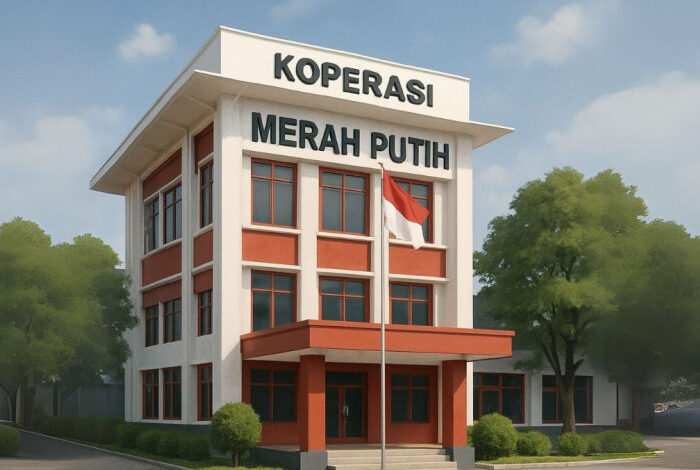

JAKARTA – The Indonesian government continues to drive rural economic development through the launch of the strategic Desa/Kelurahan Merah Putih Cooperative Program, initiated directly by President Prabowo Subianto. This initiative serves as a key element in achieving village-level economic independence and national food self-sufficiency, in line with the spirit of mutual cooperation and active community participation at the grassroots level.
The Ministry of Marine Affairs and Fisheries (KKP) is one of the agencies actively implementing the program through the marine sector. Acting Director General of Capture Fisheries at KKP, Lotharia Latif, stated that the Desa Merah Putih Cooperative is a concrete step in building strong, competitive fisherfolk institutions.
“Through the Desa Merah Putih Cooperative, fisherfolk organizations will no longer be just associations, but become true business entities driving independence. This will push national self-sufficiency through food independence,” Latif explained.
He further noted that the cooperative will serve as a strategic partner to the previously established Kampung Nelayan Merah Putih, creating an integrated economic empowerment ecosystem from upstream to downstream.
“This collaboration will strengthen fisherfolk business partnerships and improve their overall welfare,” he said.
Echoing these remarks, Director of Fisher Protection and Empowerment, Mahrus, emphasized that the ministry has developed over 20,000 marine and fisheries business groups and 921 cooperatives that are ready to be transformed into part of the Merah Putih Cooperative network.
“KKP will engage fisheries extension officers, local governments, and microfinance institutions to expand fishers’ access to financing, business assistance, and market access,” Mahrus stated.
Nationally, the launch of the Merah Putih Cooperative is fully supported by Presidential Instruction Number 9 of 2025, which involves 18 ministries and all local governments. Coordinating Minister for Food Affairs, Zulkifli Hasan, explained that the cooperative aims to shorten lengthy distribution chains and reduce rural communities’ dependence on middlemen, illegal online lenders, and loan sharks.
“These cooperatives will act as distribution agents for basic goods, fertilizers, LPG, and even postal services, directly from producers to communities,” said Zulkifli.
Meanwhile, Deputy Minister of Cooperatives, Ferry Juliantono, added that modern training programs are also being prepared to enhance the skills of cooperative management teams.
“Cross-sectoral collaboration is essential for cooperatives to grow professionally and sustainably,” Ferry noted.
Minister of Villages, Development of Disadvantaged Regions, and Transmigration, H. Yandri Susanto, highlighted that villages failing to establish cooperatives risk delays in receiving their second-phase village fund disbursements.
“Our target is for all cooperatives to obtain legal status before the national launch and to have clear, measurable business plans,” he stated.
As of early July 2025, 79,400 villages had conducted special village deliberations, and around 30,000 cooperatives had obtained legal status. Communities can register as members through the official program website, following schemes for new establishment, development, or cooperative revitalization.
With professional management and broad support from both the public and government, the Merah Putih Cooperative is expected to generate 1 to 2 million new jobs and drive village-level economic gains of up to IDR 80 trillion annually. The program is set to become a key driver of rural self-sufficiency and a critical pillar in achieving Indonesia’s Vision 2045.
