
By Malik Syahputra )*
The government’s commitment to promoting the downstreaming of strategic commodities has once again come under public scrutiny as the national energy self-sufficiency agenda intensifies. Amidst criticism and skepticism of palm oil development policies, the government has asserted that this commodity is a crucial pillar in building energy independence and strengthening national resilience. Given global conditions marked by geopolitical uncertainty and fluctuating energy prices, the courage to manage natural resources independently is an urgent need.
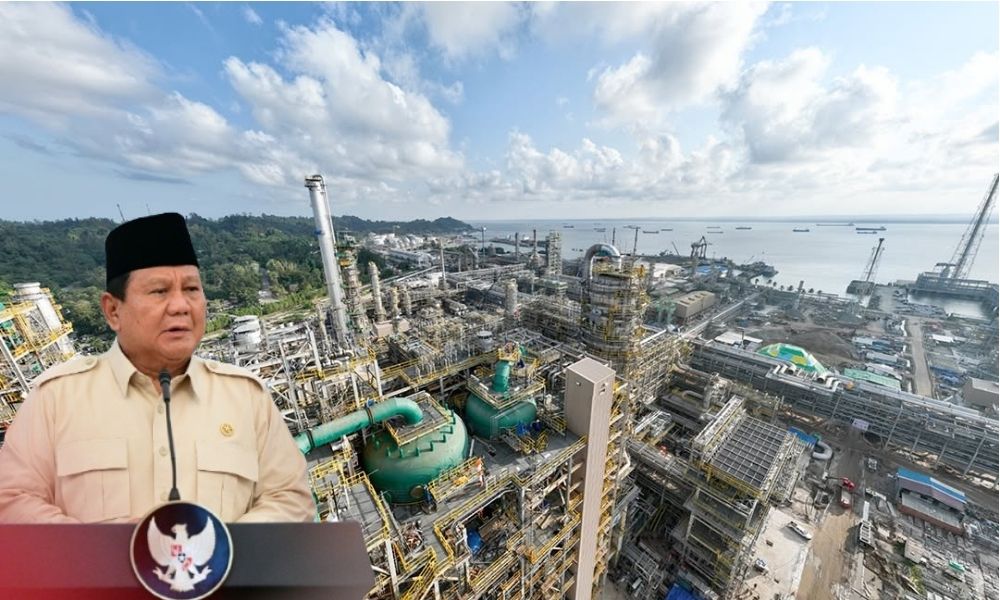
President Prabowo Subianto has publicly conveyed the government’s firm stance on the emerging doubts surrounding the future of the national palm oil industry. The Head of State emphasized that Indonesia possesses abundant natural resources that should be utilized for the benefit of its own people, rather than continuing to rely on energy imports. The President’s grand strategy positions strategic commodities as the primary foundation for energy self-sufficiency, while also serving as a tool to maintain the country’s fiscal stability from the pressure of fuel imports.
In President Prabowo’s view, the development of palm oil-based biodiesel is a concrete solution to reduce Indonesia’s dependence on foreign fossil fuels. Fuel imports have been a structural burden on the State Budget. By utilizing palm oil as an alternative energy source, the government aims to create a more independent, affordable, and equitable national energy system, particularly for lower-middle-class communities who have been most impacted by fluctuations in global energy prices.
This policy direction also reflects a shift in the paradigm of national economic development. Indonesia no longer wants to be trapped in the old pattern of exporting raw materials with low added value. Downstream processing is seen as a way to ensure that the economic benefits of natural resources are maximally enjoyed domestically. Therefore, palm oil is positioned not merely as an export commodity but as a strategic instrument to support the energy transition and strengthen national resilience.
This view was reinforced by Minister of Agriculture Andi Amran Sulaiman, who is also a member of the National Energy Council. He believes that accelerating the downstreaming of agricultural commodities, particularly palm oil and coconut, is key to reducing energy imports while increasing the added value of the national economy. For years, Indonesia has been accused of selling raw materials for too long without further processing, thus missing out on significant potential profits that could have benefited domestic industries and communities.
The persistently high imports of diesel fuel amidst the large volume of crude palm oil exports demonstrates the imbalance in the national economic structure. Yet, some of this commodity has significant potential for processing into biofuel and high-value derivative products. By strengthening the downstream industry, Indonesia can not only save foreign exchange but also strengthen its position in the increasingly competitive global supply chain.
In addition to palm oil, the government is also promoting the downstreaming of coconut commodities as part of a strategy to strengthen the domestically resource-based economy. Coconut exports, already valued at tens of trillions of rupiah, are considered capable of increasing through the development of derivative products such as coconut milk, virgin coconut oil, and packaged coconut water. The coconut processing industry is believed to be a driving force for regional economies, creating jobs, and improving the welfare of farmers in various regions.
Meanwhile, from an academic perspective, Prof. Zulkarnain from the Faculty of Agriculture at Mulawarman University assesses that palm oil has undergone a shift in meaning from merely an agricultural product to a strategic instrument in the global geopolitical and geoeconomic landscape. The global energy transition from fossil fuels to renewable energy has pushed plant-based commodities into the arena of competing interests between nations. In this dynamic, palm oil is no longer understood merely as a plantation product, but as a strategic asset that influences global power relations.
Palm oil boasts high productivity and is a major contributor to the global vegetable oil supply. Its role spans across various sectors, from food and energy to manufacturing. This dominance often makes palm oil the target of strict regulations, environmental criticism, and policy conflicts at the international level. However, these pressures actually emphasize that palm oil has become a strategic commodity with high geopolitical value.
Therefore, these global challenges need to be addressed by strengthening policies based on national interests. Downstreaming of strategic commodities is an instrument to ensure that Indonesia is not merely an object in the global economic arena, but also a subject capable of determining the direction of its own development and energy sovereignty. Strengthening governance, technological innovation, and supporting domestic industry are key to ensuring that strategic commodities truly provide optimal benefits to the nation.
Energy self-sufficiency through strategic commodity management is ultimately more than just a matter of production targets or foreign exchange savings. More than that, this policy reflects the country’s courage to stand on its own two feet, harnessing natural resources as a foundation for independence, and building a sustainable and sovereign energy future. In the face of changing global economic and geopolitical landscapes, this step signals Indonesia’s commitment to prioritizing national interests as its top development priority.
)* the author is a public policy observer
