Downstreaming Strengthens MSMEs and Regional Economy: A Path Towards Equitable Development and National Economic Sovereignty

By: Cahyo Widjaya*
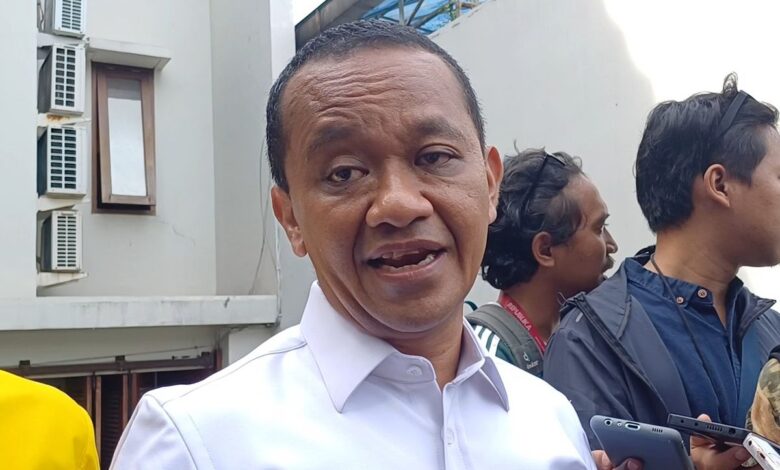
The mineral downstreaming policy currently being intensified by the government is not merely a short-term economic strategy. More than that, downstreaming is a long road towards equitable development and economic sovereignty, especially for regions that produce natural resources. Undeniably, the management of natural wealth so far has tended to benefit the central government and large capital groups. However, within the new framework initiated by the Minister of Energy and Mineral Resources (ESDM), Bahlil Lahadalia, this paradigm is beginning to shift.
Bahlil emphasized that future downstreaming policies must be fair, not only for investors but also for local MSME (Micro, Small, and Medium Enterprises) actors, local communities, and regional governments. According to him, the added value from natural resources should be enjoyed more by the communities in the producing regions. They, Bahlil stated, must be “masters in their own land.” In a written statement released on June 25, 2025, he stressed the importance of equitable distribution of economic benefits so that they are not solely concentrated in Jakarta.
As concrete evidence, Bahlil pointed to the success of downstreaming in North Maluku and Central Sulawesi. These two provinces recorded extraordinary economic growth, reaching 20 percent—a figure far exceeding the national average of around 6 percent. This achievement shows that natural resource-based industrialization can significantly boost regional growth. More than just statistics, this indicates an economic domino effect that can revitalize local MSMEs, expand employment opportunities, and increase community purchasing power.
However, Bahlil also acknowledged the challenges of sustainability. He emphasized the need for long-term planning to prevent regions from experiencing post-mining stagnation. The government, he said, is developing a post-mining downstreaming roadmap that will include the development of other leading sectors such as fisheries and plantations. “Don’t let the region die after the mining is finished,” he stated. This demonstrates that the government is aware of the importance of long-term regional economic continuity.
Nevertheless, the downstreaming policy is not without criticism. Several civil society groups have highlighted the social and ecological impacts of smelter projects. A report titled “The Destructive Power of Nickel Downstreaming” revealed that this policy often causes inequality and environmental damage in North Maluku. Data from the Central Statistics Agency (BPS) even noted an increase in poverty rates in several mining-centric regions like Central Sulawesi and North Maluku between 2022 and 2023.
The Campaigner for the Mining Advocacy Network (Jatam), Alfarhat Kasman, highlighted the expansion of the smelter industry, which displaces agricultural land and fishing areas. Ecological impacts such as water pollution and forest damage cause environmental crises that directly affect public health and purchasing power. In his view, these negative effects could potentially worsen poverty in mining areas.
Other criticism comes from academics. Energy observer from Gadjah Mada University, Fahmy Radhi, believes that the dominance of foreign investors, especially from China, in the downstreaming sector means Indonesia only enjoys a small portion of the profits. He stated that about 70 percent of the economic proceeds are taken out of the country, while Indonesia only obtains 30 percent. With such a structure, the main goal of downstreaming to increase national added value is deemed not yet optimal.
However, amidst this debate, young figures from community organizations also show strong support for downstreaming. The Head of the ESDM Division of PP AMPG, Kevin Hartman Putella, affirmed that downstreaming is not just an economic policy but also a concrete form of moving towards equitable development and national economic sovereignty. According to Kevin, this program has created many jobs, strengthened Indonesia’s position in the global value chain, and encouraged the development of new industrial areas outside Java.
He mentioned that more than 30 smelters are already operational, and dozens more are under construction. The presence of this industrial infrastructure not only accelerates the growth of the mineral processing sector but also attracts investment in other energy and natural resource sectors. “What is most felt is the absorption of labor. Hundreds of thousands of jobs have been created,” Kevin said.
On the other hand, Kevin also sees downstreaming as part of Indonesia’s grand strategy in energy transition. With the largest nickel reserves in the world, Indonesia has the opportunity to become a key player in the electric vehicle battery supply chain. According to him, the direction of this policy aligns with President Prabowo Subianto’s vision in Asta Cita, especially regarding industrialization and increasing domestic added value.
Despite the many challenges, from environmental aspects to foreign dominance, the downstreaming policy still holds great hope. What is needed now is transparent governance, local community involvement, and a strong commitment to ensure that industrial development does not leave behind ecological and social damage. The government also needs to provide more space for MSMEs so that they are not just spectators but active participants in the production and distribution chain.
With a comprehensive approach—integrating economic, social, and environmental aspects—downstreaming can truly be an engine of economic equalization. When natural resources are managed fairly, sustainably, and in favor of local communities, economic sovereignty is not a dream. Downstreaming, in this context, is a bridge towards a more independent, just, and prosperous Indonesia.
Economic Populist Researcher – Nusantara Institute of Economics
