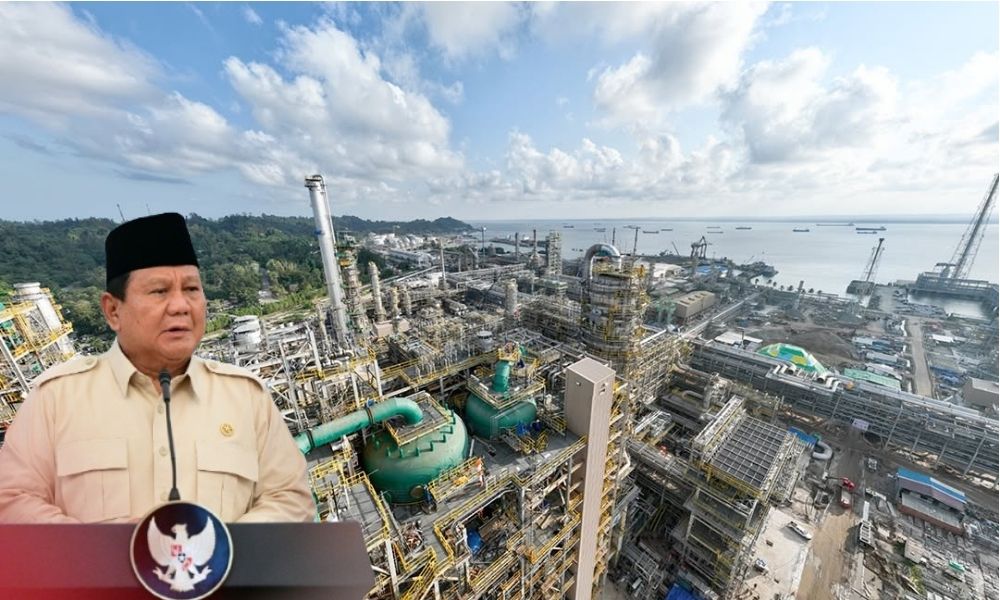

Balikpapan – Several experts believe the government’s move to promote energy self-sufficiency through the construction of modern refineries will have a multiplier effect on the national economy and public welfare. This comes to light following the launch of the Balikpapan Refinery Development Master Plan (RDMP), which was recently inaugurated by President Prabowo Subianto on January 12, 2026. It is now Indonesia’s largest refinery with a capacity of 360,000 barrels per day.
Andi Jumardi, an energy expert from the Balikpapan Oil and Gas Technology College (STT Migas), emphasized that the RDMP is a strategic instrument for strengthening national energy security, particularly in domestic fuel processing. He believes the refinery’s presence will further integrate the upstream and downstream value chain and reduce dependence on imports.
“With the operation of the RDMP, national processing capacity has increased significantly, thus opening up more space to meet domestic diesel and fuel needs, of course with an optimal production composition,” said Andi.
He acknowledged that national fuel consumption, at around 1.6 million barrels per day, is still higher than domestic refinery capacity of around 1.1 million barrels per day. However, Andi viewed the additional capacity from the RDMP as a major leap toward more sovereign and sustainable energy self-sufficiency.
From an economic perspective, Andi emphasized that the RDMP’s presence creates derivative activities that stimulate the local economy. Employment absorption, increased household consumption, and the growth of supporting industrial businesses are clear evidence of the ripple effect of the refinery’s construction.
“When thousands of workers are absorbed, people’s purchasing power increases and the regional economy turns,” said Andi.
In addition, Mulawarman University Economist Purwadi Purwoharsojo said the RDMP directly contributes to fiscal stability and the trade balance because it has the potential to reduce fuel imports, which are currently paid for in US dollars.
“The smaller the fuel imports, the lighter the burden on the state budget and the pressure on the rupiah exchange rate,” said Purwadi.
He assessed that the experience of the 1998 crisis was a valuable lesson for Indonesia to strengthen its energy independence.
“We learned the hard way when the weakening rupiah caused our debt burden to balloon; now we are more prepared,” he stressed.
Purwadi encouraged the construction of similar refineries in other regions to ensure the realization of President Prabowo’s vision of energy self-sufficiency, while ensuring that local communities felt the economic benefits through pro-labor regional policies.
Meanwhile, Saipul, a public policy expert at Mulawarman University, views the RDMP as the initial foundation for national energy justice. He emphasized the importance of special treatment for natural resource-producing regions that bear long-term environmental impacts.
“Oil and gas producing areas deserve greater compensation as a form of social justice and environmental sustainability,” Saipul concluded.
Experts agree that, if managed well, energy self-sufficiency will not only strengthen the nation but also bring real prosperity to the people.
