

By: Rani Harianja)*
The energy self-sufficiency program has begun to be seriously driven by the government in order to strengthen national independence and reduce the burden on the state budget. Dependence on imported energy has created great pressure on state financing, both through fuel subsidies and the cost of purchasing fossil energy from abroad. With this initiative, the potential for very significant savings has been calculated and targeted to be realized in a relatively short time.
The state budget savings are projected to reach a fantastic figure, namely up to US$ 58 billion per year or equivalent to Rp 938 trillion if energy self-sufficiency can be implemented comprehensively. Reducing energy imports and subsidy efficiency will be the two main factors contributing to the large savings. Therefore, this step is not only seen as a technical effort, but also as a sustainable national economic strategy.
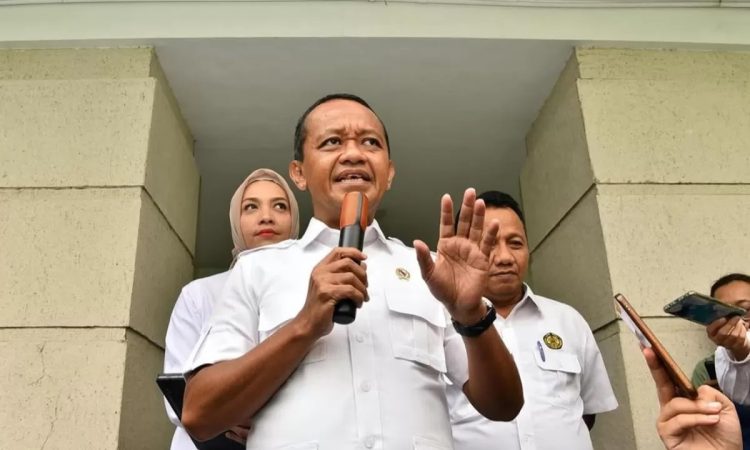
Minister of Energy and Mineral Resources, Bahlil Lahadalia, said that the use of Solar Power Plants (PLTS) as the backbone in increasing the electrification ratio in villages that have not been electrified, deserves appreciation. This step reflects the spirit of equality and social justice that has been the ideal of national development. When conventional electricity infrastructure has difficulty reaching 3T (underdeveloped, frontier, outermost) areas, PLTS is present as the right, fast, and efficient solution.
The government has shown a strong commitment to providing clean and affordable energy to all corners of the country. With the abundant potential of solar energy in Indonesia, the use of PLTS is not only technically realistic, but also economically strategic. The 4-5 year timeframe targeted by the President to light up villages without electricity is an ambitious but much-needed step, especially if the execution involves synergy between the state, state-owned enterprises such as PLN, and the private sector.
PLN President Director Darmawan Prasodjo also emphasized that full support for the government in realizing energy justice in the 3T region through PLTS is a real step that deserves appreciation. When most people in the city enjoy 24-hour electricity without interruption, millions of people in remote areas still live in darkness. In this context, the PLTS project is more than just a technical program, it is a form of the state’s support for all its citizens without exception.
The data submitted regarding 47 PLTS with a total capacity of 27.8 megawatts and reaching more than 5,000 households in 11 provinces shows that the realization in the field is starting to show concrete results. This step provides new hope for villages that have been isolated from energy access. The presence of electricity in a village means opening access to better education, adequate health services, and previously closed economic opportunities.
The government has started taking concrete steps to realize this program through the development of domestic energy infrastructure. One of them is the construction of an electric vehicle battery factory in Karawang and a new energy industrial area in South Halmahera. These facilities are prepared to strengthen the transition from fossil fuels to new and renewable energy sourced domestically. The existence of the battery factory is also utilized to support the electric vehicle ecosystem and energy storage from renewable sources such as solar power and biomass.
The statement by the Deputy Chairman of the MPR RI, Eddy Soeparno, who welcomed President Prabowo’s commitment to the inauguration of the renewable energy project in Cepu emphasized one important thing, namely that energy independence is now not just a technocratic discourse, but has become a national political agenda. When the leaders of high state institutions openly encourage the development of new and renewable energy (EBT), a strong signal is given that support for the energy transition has crossed sectoral and party boundaries.
The fact that Indonesia still relies on energy imports, despite having abundant fossil and renewable energy reserves, is an irony that has eroded the state budget and reduced the competitiveness of the national economy. This dependence also makes Indonesia vulnerable to fluctuations in world oil prices, so that the development of renewable energy is an answer that cannot be postponed. Therefore, Eddy’s statement that Indonesia can not only reduce, but also eliminate energy imports, is not empty optimism, it is rooted in the reality of potential that has not been maximized so far.
The use of solar energy is considered as one of the main pillars in achieving energy self-sufficiency. Indonesia’s potential as a tropical country is maximized through the development of solar panels that can be installed in various locations, from rooftops to industrial areas. Areas that were previously difficult to reach by the electricity network can now be reached through efficient and clean solar power solutions. This system is combined with batteries as power storage, so that it can guarantee the availability of stable electricity without the need for expensive distribution infrastructure.
The government views the target of achieving energy self-sufficiency in the next five to seven years as realistic. This optimism is based on the readiness of natural resources, technological advances, and consistent policy directions. This transformation is also believed to create a large number of new job opportunities in the clean energy sector, from production to infrastructure maintenance.
This program not only answers national energy needs, but also symbolizes the sovereignty of the country. The ability to manage resources independently and sustainably will be an important legacy for future generations. Through energy self-sufficiency, a bright and independent future can be built without burdening the state budget.
)* National Energy Security Strategy Analyst
