
By: Lestari Notonegoro)*
The commitment to achieving national energy self-sufficiency is growing stronger as energy industry players, particularly in the upstream oil and gas sector, consolidate. This optimism stems not from mere rhetoric, but from the realization that energy independence is a key prerequisite for public welfare and national economic resilience. This policy direction aligns with President Prabowo Subianto’s Asta Cita (Asta Cita), which positions energy security and independence as the foundation of sustainable development and as a means of equitably distributing development benefits to the regions.
Ahead of the 50th IPA Convention & Exhibition (IPA Convex), George NM Simanjuntak, Head of the Formalities Division of the Upstream Oil and Gas Regulatory Agency (SKK Migas), emphasized that the upstream oil and gas industry contributes far more than just production and state revenue. He noted that the public perception of the upstream oil and gas sector’s role remains limited, despite the significant multiplier effects directly felt by the public through various economic and social instruments.
George explained that these contributions come through the Revenue Sharing Fund, the Community Involvement and Development (PPM) program, and the creation of economic activity around operational areas. All of these instruments, he continued, play a strategic role in maintaining the sustainability of upstream oil and gas operations while simultaneously promoting community economic independence. He emphasized that PPM must be understood as a long-term social investment, not a short-term, temporary aid.
In this context, SKK Migas is undergoing a comprehensive transformation of its PPM approach. George explained that this transformation began with a joint study with academics to evaluate the effectiveness of existing programs. The study results showed that most PPM programs have not fully addressed community needs in a sustainable manner due to their short-term orientation. Therefore, PPM is now being pushed to become an integral part of the upstream oil and gas operations cycle, alongside technical and business aspects, to support the sustainability of the national energy supply.
The PPM transformation is carried out through more systematic planning, implementation, and reporting using the Logical Framework Approach, reinforced by governance and institutional strengthening pillars. This approach is expected to create measurable and sustainable social and economic impacts for communities surrounding operational areas.
From a supply chain perspective, Kenneth Gunawan, Chairperson of the IPA Supply Chain Committee, emphasized the importance of strengthening national capacity by optimizing the use of domestic goods and services. He stated that domestic companies now play a significant role in the upstream oil and gas supply chain, while foreign-invested companies are focused on specific commodities requiring advanced technology and experience.
Kenneth explained that KKKS (contractors) are actively conducting assessments and testing domestic products, as well as implementing pilot projects with SKK Migas to enhance the capabilities of national goods and services providers. These efforts are considered not only to strengthen industrial independence but also to create significant economic multiplier effects, both at the regional and national levels, although financing challenges and operational constraints of large-scale projects remain a shared challenge.
IPA Executive Director Marjolijn Wajong assessed that the upstream oil and gas sector is currently at a crucial stage in ensuring a reliable and affordable energy supply amidst the energy transition agenda. She believes that close collaboration between the government, industry, and stakeholders is key to ensuring the sector’s contribution remains optimal and sustainable. She also emphasized that the 50th IPA Convex is not merely an industry meeting but a national dialogue platform to transparently demonstrate the contribution of upstream oil and gas to the economy, investment, knowledge transfer, regional development, and national energy security.
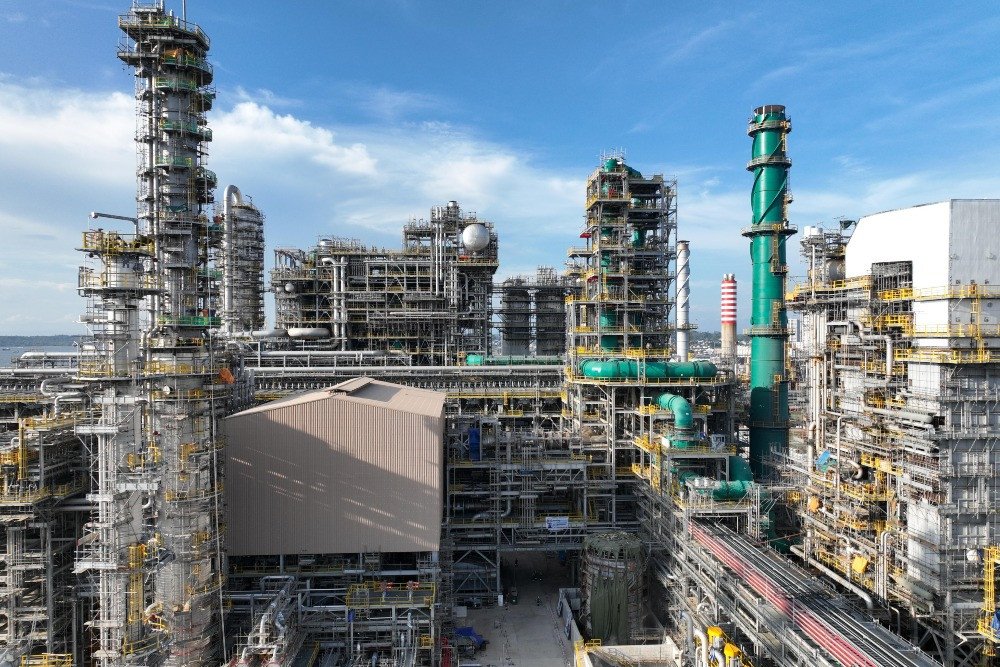
Efforts towards energy self-sufficiency are also reflected in strengthening the downstream sector, one of which is through the Balikpapan Refinery Development Master Plan (RDMP) project. The Rp123 trillion refinery, inaugurated by President Prabowo Subianto on January 12, 2026, is now the largest in Indonesia with a capacity of 360,000 barrels per day. Energy expert Andi Jumardi from the Balikpapan Oil and Gas Technology College stated that the Balikpapan RDMP increases processing capacity by approximately 100,000 barrels per day, making it strategic for strengthening domestic fuel supplies.
Andi explained that national fuel consumption currently stands at around 1.6 million barrels per day, while domestic refinery capacity remains at around 1.1 million barrels per day. Although it hasn’t fully covered the deficit, the additional capacity from the RDMP is considered an important initial step in reducing dependence on fuel imports. He also highlighted the ongoing economic impact of refinery operations, which create jobs and increase public consumption, creating a multiplier effect on the regional economy.
A similar view was expressed by Mulawarman University economist Purwadi Purwoharsojo. He believes the Balikpapan RDMP plays a crucial role in maintaining fiscal stability and the national trade balance, as fuel imports have been a source of pressure on the state budget and the exchange rate. He believes reducing energy imports will reduce national economic vulnerability, although the construction of new refineries in other regions is still necessary to achieve the energy self-sufficiency target.
From Aceh, the spirit of energy independence also emerged through the 7th Aceh Upstream Oil & Gas Supply Chain Management Summit 2026, held by the Oil and Gas Regulatory Agency (BPMA) in collaboration with the KKKS (contractors). BPMA’s Deputy for Business Support, Edy Kurniawan, stated that this forum served as a platform for sharing experiences and opportunities to create a healthier oil and gas business environment and encourage contract completion that directly impacts Aceh’s economy.
The Head of the Aceh Oil and Gas Regulatory Agency (BPMA), Nasri Djalal, emphasized that collaboration between oil and gas stakeholders in Aceh has significant potential to create a multiplier effect on community welfare while increasing state and regional revenues. Support from the Aceh Government is also considered crucial, as conveyed by the Aceh Regional Secretary, M. Nasir, who emphasized that oil and gas management must be oriented towards public welfare and national energy security.
With these various initiatives, energy self-sufficiency is not only understood as a technical production target, but also as a development strategy that opens up opportunities for multiplier effects for the community, strengthens the regional economy, and sustainably supports national resilience.
)* Energy Observer
