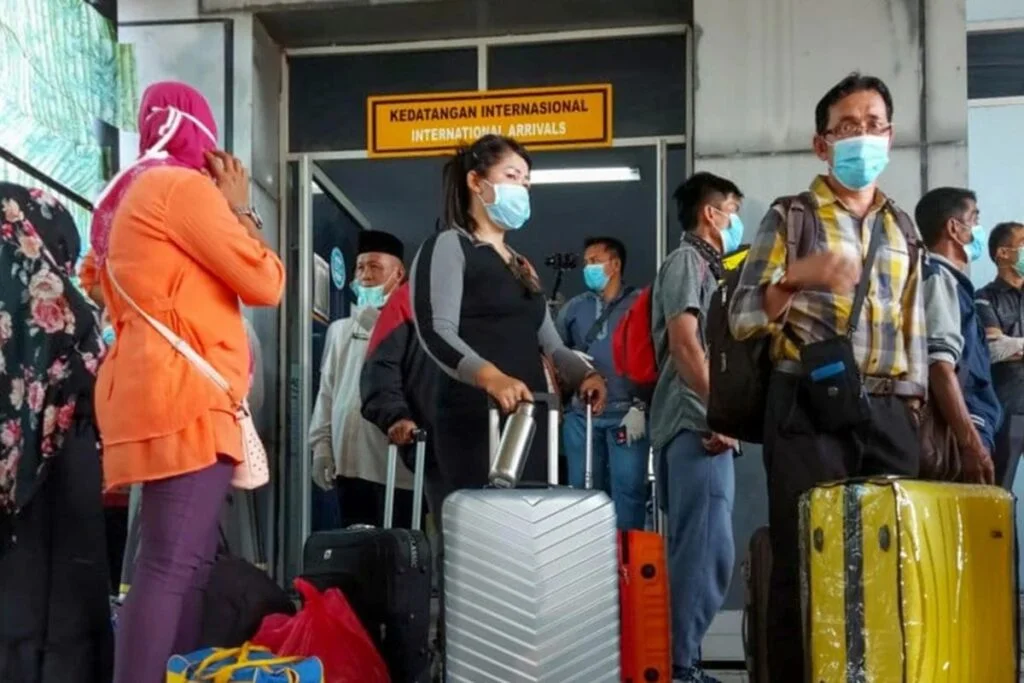

Jakarta – The government’s commitment to protecting and empowering Indonesian Migrant Workers (PMI) is not only limited to procedural aspects and legal protection, but also includes increasing financial literacy as an important provision before workers are sent abroad. This step is part of the government’s comprehensive strategy to ensure the sustainability of the welfare of PMI and their families.
Minister of Protection of Indonesian Migrant Workers (P2MI), Abdul Kadir Karding, emphasized that financial education is now one of the main materials in pre-departure training. According to him, financial literacy is an important foundation that every prospective PMI must have in order to be able to manage their income wisely in the destination country.
“Financial literacy is basically also provided as one of the materials during training to prepare them before working or going abroad,” said Karding.
The government realizes that without a good understanding of financial management, many migrant workers ultimately fail to build a stable economic future even though they have a large enough income while working abroad.
“Therefore, this training is not only limited to job technicalities, but also includes the ability to manage personal and family finances,” added Karding.
The Deputy Minister of P2MI, Christina Aryani, said that financial understanding cannot be underestimated. Based on experience in the field, many PMI use the results of their hard work consumptively and do not have savings or long-term investments when they return to Indonesia.
“There are many stories in the field, money earned from working abroad is used consumptively and does not produce results. With this training, we want to build awareness so that the results of their hard work can be used for business capital, investment, and family economic sustainability when returning home,” he said.
This financial education program covers various important topics such as saving, basic investment, to the use of financial technology. The government also collaborates with financial institutions and monetary authorities such as Bank Indonesia in its implementation.
Head of Bank Indonesia Representative Office for North Kalimantan Province, Hasiando G. Manik, emphasized that PMI empowerment must include aspects of digital finance and a safe and efficient cross-border payment system. Bank Indonesia, according to him, is actively providing education on the importance of choosing legal money transfer channels and using digital payment systems such as QRIS Cross-Border.
“Bank Indonesia has a role in providing financial education, including choosing legal money transfer channels, as well as the use of digital payment systems such as QRIS Cross-Border which is now connected to Malaysian and Indonesian banks,” explained Hasiando.
He also reminded the importance of maintaining the sovereignty of the national currency in the border region. “Often when the rupiah exchange rate weakens, people waver and prefer to use foreign currency. We need to address this so that the rupiah remains sovereign in the border region,” he said.
This collaborative effort between the government and Bank Indonesia shows that financial literacy for migrant workers is not just a complement, but a strategic need. With a good understanding, migrant workers are expected to be the driving force of the economy of their families and villages of origin, and are able to utilize the results of their work as capital for a better future.
This step confirms the government’s seriousness in protecting PMI comprehensively. Starting from departure, working period abroad, to return and socio-economic reintegration in the country.
