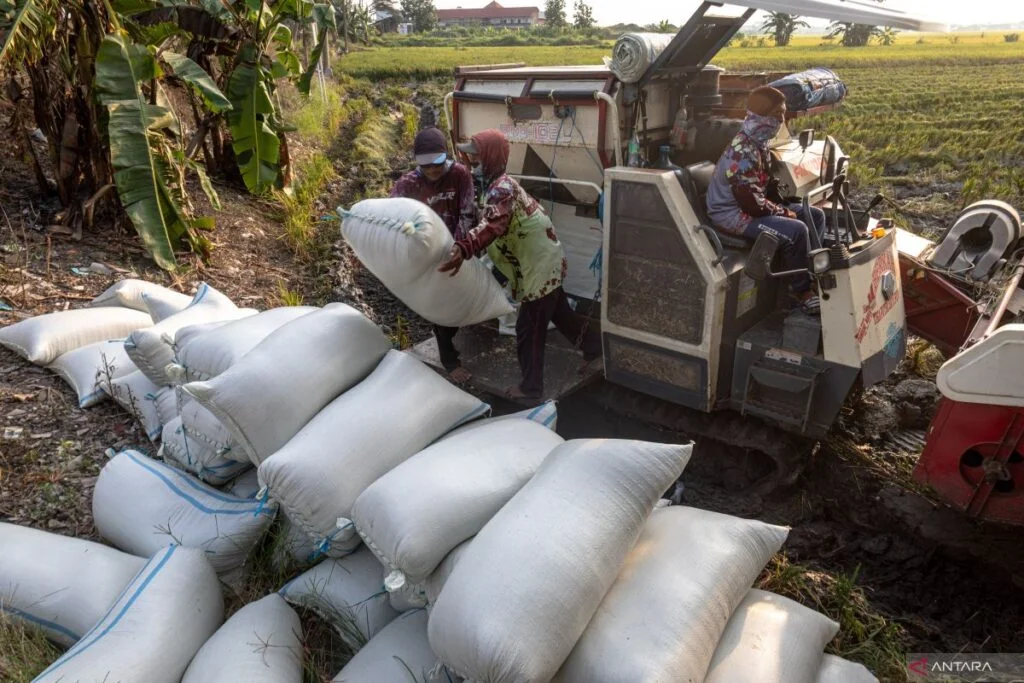

Jakarta — President Prabowo Subianto emphasized that the government is fully committed to increasing national food production as a strategic path towards self-sufficiency.
“Indonesia cannot continue to rely on imports. We have fertile land, human resources, and technology that can be utilized to strengthen domestic production. The government will fully oversee this program through fertilizer subsidies, superior seeds, and more equitable agricultural infrastructure development,” he said.
The President emphasized that achieving self-sufficiency is not just about food availability, but also closely related to national pride and job opportunities. He called on all parties to act simultaneously.
“If our food security is strong, this nation will be more independent and sovereign. Therefore, I ask all ministries, regional governments, and farmers to work together with the same spirit. This is our shared struggle to ensure that the Indonesian people have sufficient and affordable food,” he said.
In line with the President’s directive, Minister of Agriculture Andi Amran Sulaiman emphasized that the food self-sufficiency target will be realized through concrete steps.
“We have begun land intensification, modernizing agricultural equipment, and strengthening national food reserves in various regions. These efforts not only meet domestic demand but also open up export opportunities for strategic commodities. With the President’s full support and the hard work of farmers, we are optimistic that the self-sufficiency target can be achieved more quickly,” he emphasized.
He explained that the national production increase program not only focuses on quantity, but also ensures the welfare of farmers.
“We want to ensure the availability of fertilizer and production inputs so farmers can be more productive. The government is committed to building a sustainable agricultural system focused on farmer welfare while maintaining stable food prices. This is not just a short-term policy, but a long-term agenda that is a national priority,” he concluded.
