
By: Andika Pratama
Indonesia’s current economic transformation is entering a new chapter, where international cooperation plays an integral role in building a resilient and sustainable people-centered economy. In this context, the recent meeting between Minister of Cooperatives Budi Arie Setiadi and Joesley Batista, the principal owner of J&F Investimentos, marks a significant policy milestone—emphasizing the synergy between global industrial power and the spirit of mutual cooperation within village-based cooperatives.
Held under the directive of President Prabowo Subianto, the meeting went beyond typical economic diplomacy. It reflects the government’s firm resolve to position cooperatives, particularly the Merah Putih Village Cooperative, as a central pillar of future national economic development. This partnership with a global entity like J&F Investimentos—which boasts a broad portfolio in energy, food, and financial technology—demonstrates Indonesia’s openness to strategic innovation and investment that directly benefits grassroots economies.
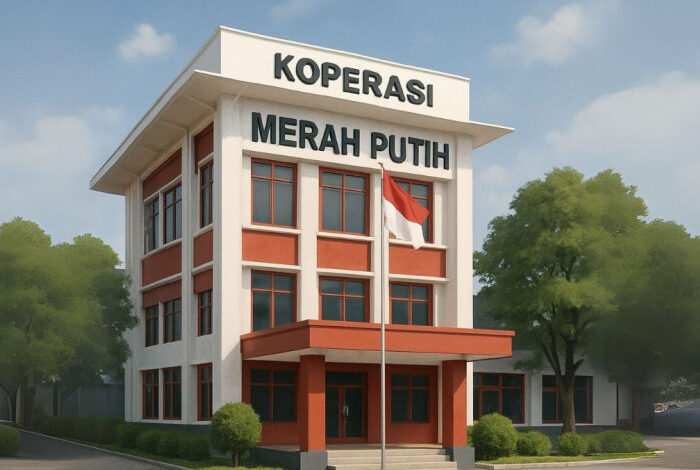
The Merah Putih Village Cooperative Program itself is a breakthrough initiative designed to empower rural communities by strengthening their economic foundations. Based on principles of equity, empowerment, and mutual aid, this cooperative serves as a participatory platform enabling villagers to collectively manage and sustain local resources. Strategic international collaborations, such as the one being explored with J&F Investimentos, elevate village cooperatives from mere domestic distributors to active players in global economic networks.
Joesley Batista’s interest in the program deserves serious attention. His engagement goes beyond mere investment potential; he has expressed genuine appreciation for the community-driven development model that underpins cooperatives in Indonesia. His desire to personally visit village cooperatives in the country opens the door for meaningful knowledge and experience exchange—a move that could not only benefit Indonesia but also inspire similar community-driven models in countries like Brazil.
On the government side, a stronger commitment is evident in building an inclusive, globally competitive cooperative ecosystem. Minister Budi Arie emphasized that the integrated business model developed by J&F—which spans food, energy, and digital finance—is in line with the evolving role of Indonesian cooperatives. These are no longer confined to basic savings-and-loans activities but are increasingly managing community-based strategic industries. In other words, village cooperatives are no longer seen as secondary players, but as key actors in national economic transformation.
This international collaboration also highlights a growing global recognition of cooperatives as a relevant and adaptive economic model. Amid global economic uncertainties, rising inequality, and waning trust in conventional systems, cooperatives emerge as a sustainable and equitable alternative—anchored in community involvement. With the support of technology and international networks, Indonesian cooperatives now have a major opportunity to “level up” and participate in global value chains.
However, such partnerships must be pursued with caution and integrity. The government must ensure that all foreign investments entering village cooperatives uphold local values, protect community economic sovereignty, and avoid turning cooperatives into mere tools for business expansion. This requires clear and transparent regulation, as well as participatory oversight, to preserve the cooperative’s identity as a people-centered economic institution.
This strategic move by the Minister of Cooperatives sends a strong message: Indonesia’s economic future lies in cross-border collaboration grounded in local strength. Village cooperatives, with all their potential and challenges, are now at the forefront of global change. Making them pillars of tomorrow’s economy is not just rhetoric—it must be realized through real partnerships, technological support, and a shared commitment between the state and the private sector.
The involvement of J&F Investimentos in this strategic initiative also demonstrates growing international recognition of Indonesia’s people-centered economic model. With the right approach, initiatives like the Merah Putih Village Cooperative could become a leading economic diplomacy export—not just in terms of products, but in exporting the values of solidarity and mutual cooperation as the foundations of an inclusive economy.
With the right synergy, Indonesian village cooperatives have the potential to become a model for the future economy—not only strong in financial terms, but also rich in social value. The world is beginning to see that true economic strength lies not only in the accumulation of capital, but also in the collective capacity of communities to create shared prosperity. Village cooperatives embody this strength, and international cooperation—if pursued wisely—will accelerate the emergence of a more just, inclusive, and sovereign economic future for Indonesia.
The author is an Economic Analyst
