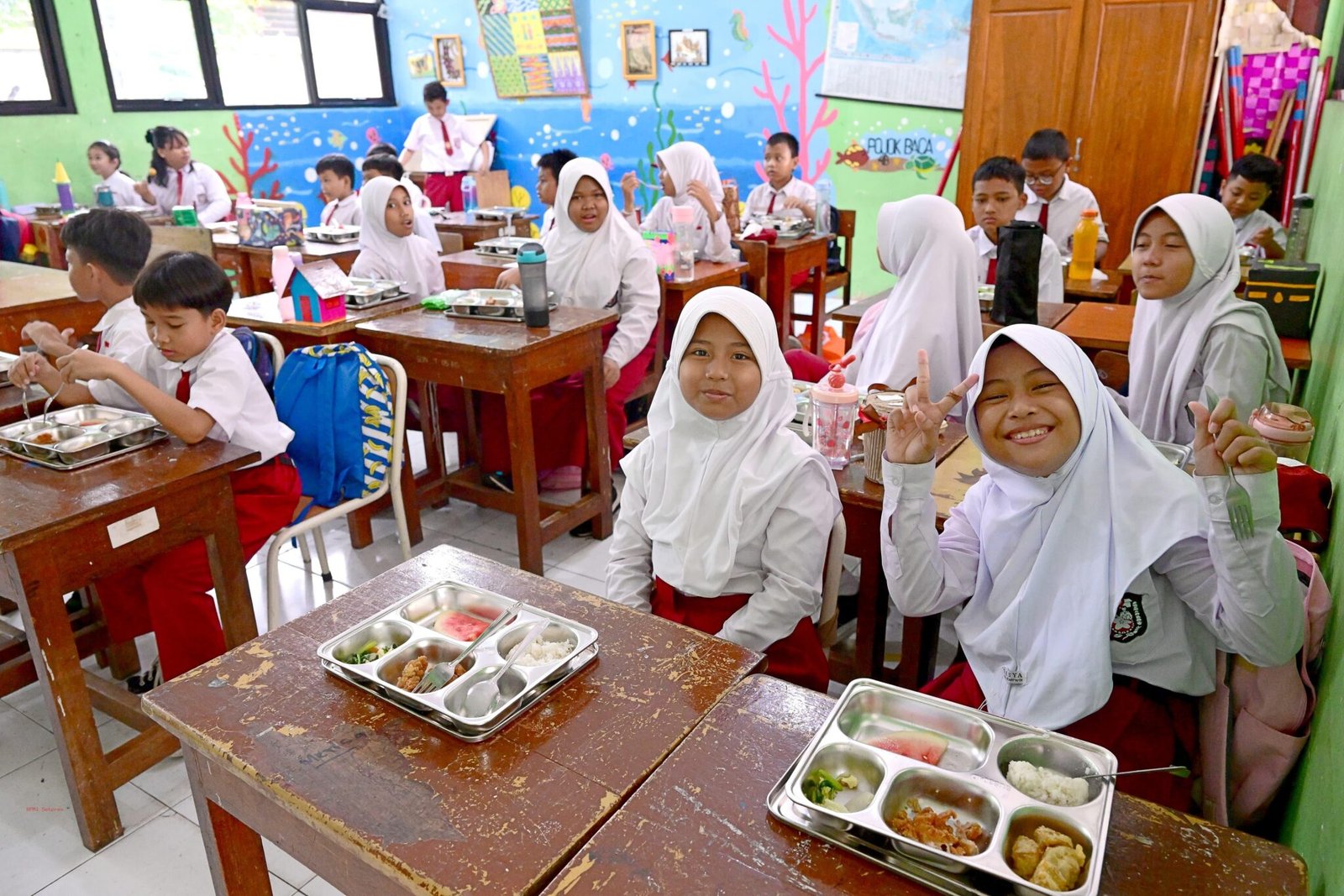

Jakarta – The government, through the National Nutrition Agency (BGN), is expanding the Free Nutritious Meals (MBG) Program to include students in Elementary Schools. Since its official launch on July 14, 2025, the program has reached 848 students in its initial phase and continues to expand as the number of Nutrition Fulfillment Service Units (SPPG) increases in various regions.
The MBG program, which previously targeted formal school students, has now been expanded to elementary schools, where the majority of participants come from underprivileged families and 3T (frontier, outermost, and disadvantaged) areas. At elementary schools, students receive three meals a day and two snacks, unlike the scheme in public schools, which only covers lunch. This approach is considered more comprehensive in meeting the nutritional needs of children from extremely poor families.
BGN Special Staff, Redy Hendra Gunawan, stated that food distribution is being handled by 16 operationally ready SPPGs. Two pilot SPPGs, Margahayu and Graha Prima Kencana, serve thousands of beneficiaries and serve as models for the development of similar services across Indonesia.
“In conjunction with the launch of the People’s Schools, the National Development Planning Agency (BGN) has gradually distributed MBG to these schools. Currently, the number of beneficiaries among People’s School students has reached 848,” he said.
As of the third week of July 2025, there were 2,109 active SPPGs across various regions, a significant increase from 1,998 at the initial launch of the People’s Schools. Nationally, the MBG program has reached over 6.3 million children. The government targets this program to reach 82.9 million children by the end of November 2025.
Previously, the Director of Nutrition Fulfillment Governance of BGN, Siti Aida Adha Taridala, said that the MBG scheme in People’s Schools is different from the regular scheme which usually only covers one lunch.
“For Elementary Schools, according to the Head of the Agency’s directive, it’s different from what we’ve been doing (providing MBG). It’s directed at three meals: breakfast, lunch, and dinner. Then there are two snacks, one in the morning and one in the afternoon,” he explained.
Meanwhile, to ensure food quality and safety, BGN implements strict standard operating procedures (SOPs) and provides a public complaint channel. All food is prepared in a central kitchen, packaged in safe, single-use packaging, and distributed directly to service points.
By expanding this program to public schools, the government hopes that children from underprivileged families will have equal access to nutrition, thereby supporting their growth, health, and enthusiasm for learning. The MBG program is a concrete step towards developing superior human resources and realizing Indonesia Emas 2045.
