
By: Surya Diningrat)*
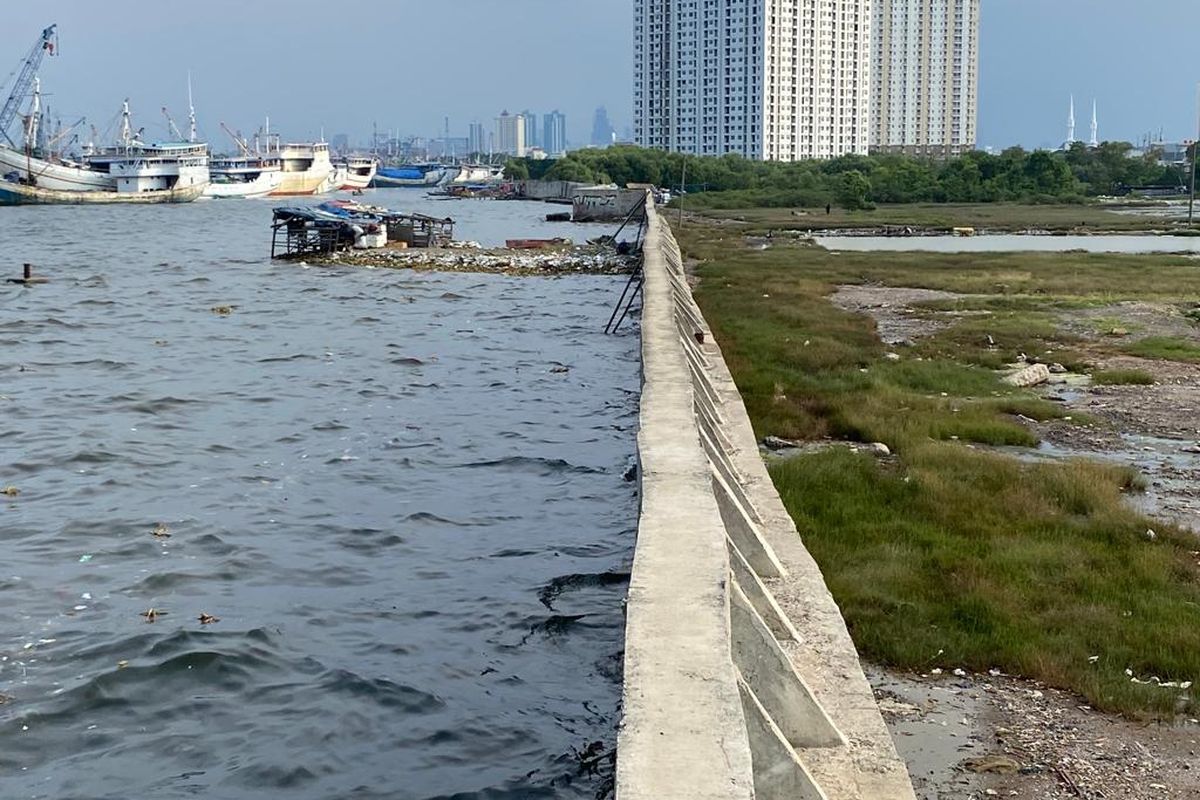
The Giant Sea Wall project along the northern coast of Java (Pantura) is increasingly showing promising prospects—not only as a climate change adaptation solution but also as a magnet for global investment. Stretching over 500 kilometers and with an estimated budget of USD 80 billion, this project stands as one of the most ambitious and strategic infrastructure initiatives in Indonesia’s history. It is not only the central government that has shown full commitment; domestic businesses and international partners have also begun to express strong confidence and enthusiasm for the future of Java’s northern coastline.
Coordinating Minister for Infrastructure and Regional Development, Agus Harimurti Yudhoyono (AHY), stated that the sea wall project has attracted interest from investors across various countries, including China, South Korea, Japan, Middle Eastern nations, and the Netherlands. According to him, this is not merely an infrastructure project but a symbol of Indonesia’s seriousness in addressing environmental challenges and the escalating climate crisis, particularly for coastal communities.
AHY emphasized that the project reflects the state’s commitment to protecting its people from the threats of tidal flooding, coastal erosion, and rising sea levels. More than that, it is an invitation for long-term partnerships built on the spirit of global cooperation. He affirmed that the government is ready to collaborate with all stakeholders to ensure the success of the project—technically, financially, and socially-environmentally.
Support from the domestic private sector has also been very enthusiastic. Chairman of the Indonesian Chamber of Commerce and Industry (Kadin), Anindya Novyan Bakrie, expressed optimism about the role of international partners, particularly the Netherlands, in realizing the project. He noted that the Netherlands has over five centuries of experience in dike management and delta planning, and is known for its expertise in public-private partnership models in water infrastructure.
Anindya also stressed the importance of aligning physical development with financial innovation. According to him, the private sector plays a strategic role not only as financiers but also as innovators in project design, technology, and governance.
From the regulatory and financial planning standpoint, the government is moving progressively. Deputy Minister of Public Works and Public Housing (PUPR), Diana Kusumastuti, explained that the Land Value Capture (LVC) scheme will be one of the primary approaches to attract investors. Through this scheme, the government offers not only the construction of the sea wall but also the development of new areas atop the wall that can be utilized for various economic and social purposes.
Land on top of the sea wall will be offered for toll roads, residential zones, and even floating solar power plants. This integrated approach allows investors to gain reasonable returns while supporting sustainability. The scheme also positions the government as a facilitator that guarantees legal certainty and fiscal incentives for participating investors.
In terms of governance, the construction of the Giant Sea Wall also holds tremendous potential to reshape urbanization along the Pantura. Flood-prone and tidal-affected areas such as Semarang, Pekalongan, and northern Jakarta will benefit directly from the protection of residential and economic zones. Moreover, the sea wall corridor could become a new growth zone supporting inter-city connectivity, renewable energy development, and integration of industrial areas and ports.
Equally important, sustainability and social inclusivity remain key priorities. The government is committed to involving local communities, regional stakeholders, and environmental experts throughout the construction process. With an adaptive and environmentally responsive design, the project is expected to become a model for how development can strengthen—not destroy—coastal ecosystems.
A project of this scale demands accountable, transparent, and data-driven governance. Cross-ministerial coordination, synergy with local governments, and robust public oversight are crucial to ensure that the project is not only completed on time but also delivers tangible and equitable benefits. The Ministry of Public Works and the Coordinating Ministry for Infrastructure continue to promote public consultation and comprehensive technical studies as part of a precautionary principle.
Now is the time for all elements of the nation to give concrete support to the Giant Sea Wall project. This is not just about building a massive wall along the shore—it is about building a new horizon of hope for community protection, coastal economic transformation, and fair global partnerships. With the spirit of national unity and international support, Indonesia has a significant opportunity to lead in adaptive and environmentally friendly infrastructure development.
Let us oversee and support the government’s strategic steps in building a coastal protection barrier for northern Java—for a safe, resilient, and sustainable future for Indonesia’s coastal regions.
*) The writer is an Urban Governance Expert.
