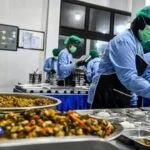

Jakarta – The Indonesian government continues to demonstrate its strong commitment to accelerating the implementation of the Free Nutritious Meals (MBG) program by strengthening the infrastructure of healthy kitchens, or Nutrition Fulfillment Service Centers (SPPG), across various regions. This effort forms a vital part of the national strategy to improve children’s nutrition while generating a multiplier effect on local economic growth.
The Head of the National Nutrition Agency (BGN), Dadan Hindayana, emphasized that the success of the MBG program relies on three key factors: infrastructure, budget, and human resources (HR). Of these, infrastructure remains the biggest challenge and is currently being prioritized.
“The budget is ready, and human resources are in place. Now we’re focusing on the third key: infrastructure. We’re working closely with regional governments to get this done,” Dadan said in Jakarta.
He added that the acceleration of healthy kitchen development is a direct mandate from the President and is targeted to cover all beneficiaries by the end of the year. “We’ve been tasked by the President to speed up this program, and God willing, we aim to reach all beneficiaries by the end of November or early December,” he stated.
To ensure equitable acceleration, BGN’s Deputy for Monitoring and Oversight, Maj. Gen. (Ret.) Dadang Hendrayudha, said that the agency is coordinating closely with local governments, the TNI-Polri, as well as with various NGO partners and foundations involved in the program.
“We’re in communication with foundations and partners who have joined us. The goal is to accelerate the program. For example, Central Java is ready to build 1,542 MBG kitchens,” said Dadang. He stressed that multi-sector collaboration is key to ensuring the program is effectively implemented across all provinces.
One of the regions showing significant progress is North Sumatra. Governor Bobby Nasution stated that the province targets building 1,700 SPPG units, with 77 kitchens already operational. By the end of 2025, 200 kitchens are expected to be up and running across various districts and cities.
“However, this requires cooperation from all stakeholders, including the regional leadership coordination forum (Forkopimda). This collaboration is crucial,” Bobby said. He also highlighted that the MBG program not only improves children’s health and nutrition but also contributes greatly to local economic development.
“This is a key driver of local economic activity. Besides its nutritional benefits, the economic impact is substantial. Earlier I saw women participating in the SPPG operations, working there,” he noted.
The MBG program is one of the national priorities aimed at building a healthy and productive generation, as well as significantly reducing stunting rates. The government places healthy kitchens as the core infrastructure that will ensure the systematic, standardized, and targeted distribution of nutritious meals.
With cross-sectoral collaboration and full support from central and regional governments, optimism about the program’s success continues to grow. More than just a nutrition initiative, MBG is seen as a driver of long-term socio-economic transformation across Indonesia.
The development of SPPG kitchens is not only intended as a food service facility but also as a nutrition education center for the community. Through these kitchens, the public can access training on healthy menus, nutritious cooking techniques, and the proper use of locally sourced, balanced food ingredients. The government hopes that the presence of these kitchens will foster collective awareness of the importance of consuming healthy food in daily life.
Furthermore, the synergy between key ministries—such as the Ministry of Health, Ministry of Home Affairs, and Ministry of Social Affairs—continues to strengthen MBG program implementation on the ground. This collaboration ensures that not only the physical and logistical aspects are met, but also the social sustainability, from beneficiary identification to impact monitoring.
