

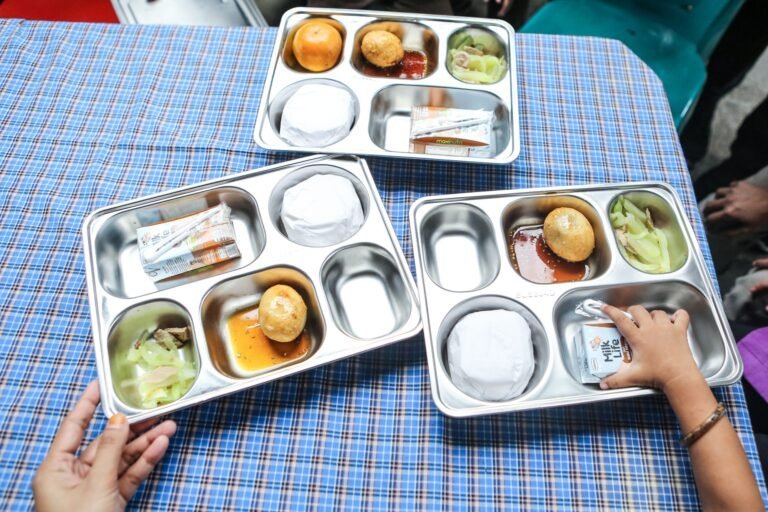
Jakarta – The government continues to be committed to improving the quality of human resources from school age by accelerating the expansion of the Free Nutritious Meal Program (MBG) to all regions of Indonesia. After initial trials in a number of priority areas, the government through the Ministry of Education, Ministry of Health, and Ministry of Social Affairs has now begun to accelerate the implementation of the program to the national level, targeting millions of students from pre-school to junior high school levels in remote areas, borders, and areas vulnerable to nutrition.
Head of the National Nutrition Agency (BGN), Dadan Hindayana, said that his party is currently conducting training and coaching for 30,000 nutrition service units that are targeted to be operational in August 2025. The entire process is carried out with the principle of caution and taking into account the readiness of logistics and human resources in the field.
“We are currently conducting training and coaching for more than 30,000 nutrition service units throughout Indonesia. Our target is for all service units to be fully operational starting in August 2025. We are carrying out this process very carefully, carefully considering the readiness of logistics and the availability of human resources in each region,” said Dadan.
The MBG program is one of the government’s flagship programs that aims to reduce stunting rates, increase learning concentration, and reduce the gap in access to nutrition between regions. Cross-sector collaboration is an important foundation for the success of the MBG program. The government does not only rely on one agency, but involves local communities, educational institutions, civil society organizations, and the private sector to create an inclusive and sustainable nutrition ecosystem.
Meanwhile, Deputy Minister of Religious Affairs, Father R. Muhammad Syafi’i, explained that Islamic boarding schools have played an active role in the MBG program, especially in terms of kitchen management. According to him, many Islamic boarding school kitchens have been upgraded to MBG kitchens to serve the needs of students and the surrounding community.
“Many Islamic boarding school kitchens have now had their capacity increased to become MBG kitchens, so that they not only serve the needs of the students, but also the surrounding community,” said Romo.
On the other hand, Deputy Minister of Finance (Wamenkeu), Suahasil Nazara, said that the program financing is running with tight control so that all funds are really used to support the fulfillment of community nutrition. Transparency is a priority by requiring all SPPGs to have social media accounts to publish food menus and daily service activities.
“We ensure that this program runs with very tight control so that every rupiah is truly used to support the fulfillment of community nutrition. SPPG is required to have a social media account to publish food menus and service activities every day,” he said.
In addition to health benefits, the program also encourages local economic turnover through the procurement of food from local farmers and ranchers. Finance Minister Sri Mulyani said that MBG not only has an impact on the education and health sectors, but also becomes a sustainable microeconomic stimulus.
With the expansion of the program targeted to be completed gradually by the end of 2025, the government hopes that MBG can become an important foundation in the development of healthy, productive, and globally competitive Indonesian people. Budget transparency and public oversight will also be strengthened so that this program runs accountably and effectively. The government is optimistic that MBG is not just a food aid program, but a strategic step in building the future of the nation.
