
By: Rama Aditya
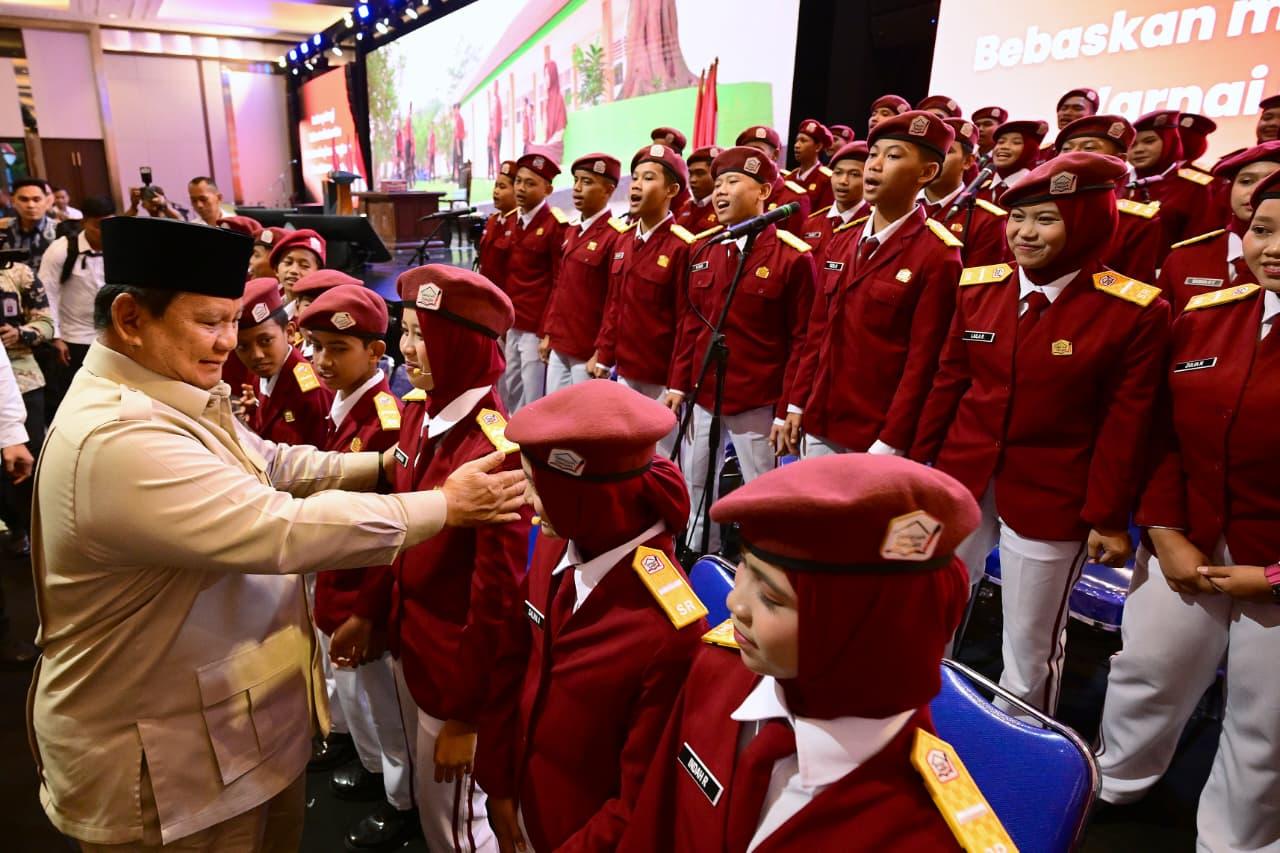
The government’s commitment to expanding access to inclusive education continues to be strengthened through the People’s School (SR) program, the benefits of which are increasingly being felt in various regions. In East Java, Governor Khofifah Indar Parawansa has consistently demonstrated her concern for People’s School students through various social activities that directly involve the students.
To date, at least nine People’s Schools have participated in various activities in several regions, including Bangkalan, Kediri, Lamongan, Pamekasan, Mojokerto, Banyuwangi, Tuban, Jombang, and Gresik. The East Java Provincial Government has ensured that the program’s scope will continue to expand so that more students from underprivileged families can benefit.
Khofifah emphasized that the existence of the People’s Schools is not only to provide access to education but also to shape the character of the younger generation. She believes that government attention and support are crucial factors in fostering students’ enthusiasm for learning and optimism for a better future.
In various activities, Elementary School students not only participate but also contribute through artistic performances such as hadrah. They also receive support in the form of school supplies and other necessities as a token of their commitment to the sustainability of their education.
Direct interaction between regional leaders and students also has a positive psychological impact, especially for children from lower-income backgrounds. One student in Bangkalan expressed his pride at meeting the governor in person, which was a valuable experience and added motivation to continue learning.
Students have also experienced significant changes since joining the People’s School. They believe the program not only provides academic learning but also instills the values of discipline, a positive attitude, and the encouragement to pursue higher aspirations. The supportive school environment, with the active participation of teachers, contributes to a conducive and caring learning environment.
Nationally, the central government has also shown interest in the People’s School program. The Coordinating Minister for Political and Security Affairs, Retired General Djamari Chaniago, conducted a direct inspection of the 31st Senior High School (SRMA) in Pekanbaru, Riau, to ensure the program was on target.
During his visit, the Coordinating Minister for Political, Legal, and Security Affairs emphasized the importance of ongoing evaluation of the implementation of People’s Schools in various regions. He stated that the government is actively monitoring the program’s progress to ensure there are no irregularities and that its initial objectives are optimally achieved.
He also commended the development of SRMA 31 Pekanbaru, which he considered to have shown significant progress in a relatively short time. He attributed this achievement to the synergy between the school, the local government, and various other stakeholders.
Furthermore, the government views People’s Schools as a strategic component in improving the quality of human resources, particularly for communities that previously had limited access to education. This program is believed to be an effective instrument in promoting improved community welfare.
The Coordinating Minister for Political, Legal, and Security Affairs also encouraged students to maximize learning opportunities, recognizing that education is key to determining their future. Furthermore, the role of teachers is considered crucial as the spearhead in shaping the character and mentality of the younger generation. Educators are expected to guide students with dedication, including fostering positive attitudes and behaviors.
Meanwhile, the school in Pekanbaru reported that dozens of students from low-income families are currently enrolled in boarding school. The learning process takes place intensively, not only in the classroom but also through coaching in the dormitory environment, which is considered to support both academic and character development.
The students acknowledged that the existence of the People’s School has been very helpful, particularly due to the comprehensive educational facilities it provides. This program is seen as opening up broader opportunities for children from underprivileged families to receive a decent, quality education.
The successful implementation of the People’s School program in various regions is also inseparable from the ongoing strengthening of cross-sector collaboration. Local governments, educational institutions, and community support are crucial elements in ensuring the program’s sustainability and targeted effectiveness. This synergy is the foundation for creating an inclusive and adaptive educational ecosystem that addresses student needs.
The government continues to evaluate and strengthen policies to ensure the continued growth of the People’s School program. Efforts to improve the quality of teaching staff, provide adequate facilities, and strengthen a character-based curriculum are part of the long-term strategy to ensure the program’s sustainability.
Overall, the People’s School program is increasingly demonstrating its strategic role as a solution for expanding access to education while simultaneously developing a competitive and character-driven young generation. With strong commitment from the central and regional governments, along with support from various parties, this program is expected to produce a superior generation ready to face future challenges and contribute to the nation’s progress.
*) Social and Educational Analyst
