
By: Nur Utunissa
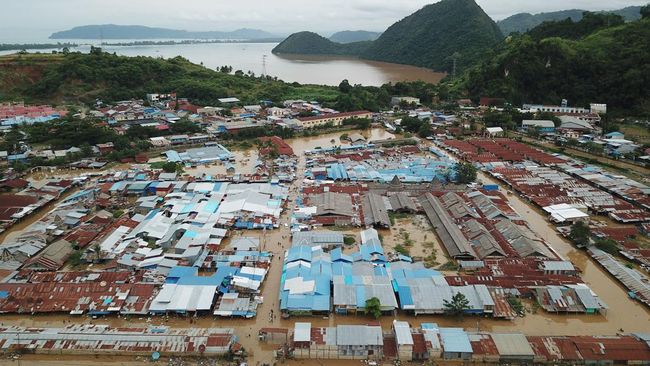
The government continues to consolidate national strength in addressing a series of disasters that have struck several regions in Sumatra. This step is taken in response to the increasing intensity and frequency of natural disasters triggered by extreme weather, geographical conditions, and increasingly complex environmental pressures. This consolidation not only focuses on emergency response, but also includes recovery efforts and the strengthening of long-term resilience so that social, economic, and environmental impacts can be reduced in a sustainable manner.
The consolidation of national strength is realized through strengthened coordination among ministries and government agencies, regional governments, security forces, the business sector, and elements of civil society. The central government ensures that all elements move within a unified command framework and integrated policies, preventing overlaps in authority or delays in aid distribution. This synergy is key to ensuring that each affected area receives assistance according to its specific needs and level of damage.
The Coordinating Ministry for Human Development and Culture (Kemenko PMK) has strengthened synergy with the business sector in disaster response efforts in Sumatra. Assistant Deputy for Disaster Management at Kemenko PMK, Merry Efriana, stated that disaster management requires strong collaboration so that assistance can quickly reach affected communities and continue through the recovery process.
During the emergency response phase, the main priority is saving lives and fulfilling the basic needs of affected communities. National resources are mobilized to support evacuation, healthcare services, food provision, clean water supply, and adequate evacuation shelters. Logistics routes are kept open so that aid distribution can reach areas whose access has been cut off by disasters. At the same time, the government strengthens disaster information systems so that field condition data can be updated quickly and accurately.
The consolidation of national strength also includes strengthening the role of regional governments as the frontline of disaster management. The central government encourages the enhancement of regional capacity in disaster management, ranging from planning and mitigation to emergency response. Policy synchronization between the central and regional governments is carried out so that measures taken are aligned with local characteristics and needs. In this way, disaster management can be more adaptive and effective in each region.
In the environmental sector, the government places ecosystem restoration as an integral part of the disaster management strategy. Rehabilitation of river basins, protection of forest areas, and control of land-use change are key focuses to reduce the risk of hydrometeorological disasters. This approach emphasizes that disaster management cannot be separated from environmental conservation and sustainable development agendas.
In addition, community involvement is a crucial pillar in disaster management efforts in Sumatra. The government encourages active public participation in preparedness and mitigation, including through disaster education and the strengthening of disaster-resilient communities. Awareness and capacity at the local community level are believed to be able to accelerate initial responses when disasters occur, while also strengthening overall regional resilience.
From a funding perspective, the government optimizes various financing schemes to support disaster management, whether through the state budget, regional support, or collaboration with non-governmental sectors. Budget management is carried out in an accountable and transparent manner to ensure that every rupiah allocated truly contributes to the recovery of affected communities. This step is important to maintain public trust while ensuring the sustainability of disaster management programs.
The consolidation of national strength in handling disasters in Sumatra reflects the government’s commitment to protecting the safety of the people and maintaining national stability. Disasters are not viewed merely as emergency events, but as development challenges that require comprehensive and sustainable approaches. Through cross-sector synergy, strengthening regional capacity, and community involvement, the government seeks to ensure that disaster management does not stop at short-term recovery, but becomes part of a broader national resilience strategy.
Previously, President of the Republic of Indonesia Prabowo Subianto revealed that he had been contacted by several world leaders offering assistance for disaster management in Sumatra. However, the Indonesian government assessed that the situation could still be handled with national capabilities. According to President Prabowo, from the outset the government had mobilized all available resources to respond to the disaster. He noted that the TNI and Polri moved swiftly on the ground and showed initiative without having to wait for direct instructions from the president.
Minister of State Secretary Prasetyo Hadi also stated that the government has not opened channels for foreign financial assistance. According to him, the government still has the capacity to handle the impacts of disasters in Aceh, North Sumatra, and West Sumatra. He added that the government has sufficient food and fuel reserves and has prepared special distribution patterns, including the delivery of aid by air. Ready-to-use funds in the state budget amounting to Rp500 billion are considered sufficient to support disaster response efforts.
Going forward, the government will continue to strengthen mitigation and preparedness efforts as a long-term investment in facing disaster risks. The consolidation undertaken today is expected to build a stronger foundation for Sumatra in dealing with natural challenges in the future. Through collective efforts of all elements of the nation, disaster management in Sumatra is directed not only toward recovering from existing impacts, but also toward moving forward to a safer, more resilient, and sustainable future.
*) The author is a literacy activist at Narasi Nusa Institute.
