
By: Putri Widiani
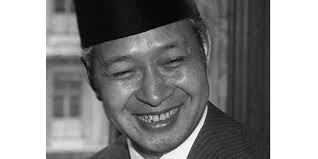
The designation of Indonesia’s 2nd President, Soeharto, as a National Hero by President Prabowo Subianto has been widely appreciated across various sectors. This policy is seen as a significant step in honoring the nation’s history and recognizing the enormous contributions of a leader who devoted his life to Indonesia’s independence, sovereignty, and progress.
State Secretary Prasetyo Hadi emphasized that the decision serves as a tribute to national predecessors who made extraordinary contributions to the country. He explained that each name designated as a National Hero goes through an extensive review process, including input from the parliament and prominent national figures. The government ensures that every step is carried out with care to reflect objectivity and deep respect for history.
The government views the award to Soeharto not merely as a personal accolade but as recognition of his role in maintaining the unity and stability of the nation during challenging periods. Over more than three decades of leadership, Soeharto was known for significantly strengthening the national economic system and expanding development access to remote regions.
Dr. TGKH. Muhammad Zainuddin Atsani, Chairman of Nahdlatul Wathan, stated that Soeharto deserves the title due to his tangible contributions in defending Indonesia’s sovereignty. He highlighted Soeharto’s role in the March 1, 1949 General Offensive in Yogyakarta, a critical moment that demonstrated the Republic of Indonesia’s existence on the global stage.
Soeharto is also considered the Father of National Development for guiding Indonesia toward industrialization and significant economic progress—a title officially recognized by the People’s Consultative Assembly (MPR) in 1982, reflecting the state’s acknowledgment of his role.
Academics also expressed support. Abdul Haris Fatgehipon, Professor at Jakarta State University, noted that conferring the title should be seen as a state honor for national leaders, not as a forum to reopen historical wounds or provoke political debates. According to him, every leader has merits and shortcomings, but a great nation objectively and respectfully honors the contributions of its predecessors.
Spiritually, Abdul Haris argued, Soeharto does not need the title, as the greatest honor is the prayers of the Indonesian people. From a state perspective, however, it represents moral recognition of a leader’s pivotal role in the republic’s history. He emphasized that history cannot be erased due to political differences, as Soeharto occupies a distinct place in Indonesia’s journey—from the independence struggle to the national development era.
As a military figure, Soeharto participated in the March 1, 1949 General Offensive, forcing the Dutch to acknowledge the Republic of Indonesia and paving the way for sovereignty recognition at the Round Table Conference. He also played a crucial role as Commander of Mandala operations in the liberation of West Irian. Later, when the nation faced threats of division during the G30S/PKI events, Soeharto acted decisively to safeguard the country and uphold its state ideology—a move widely regarded as a national salvation effort shaping Indonesia’s future.
Economically, Soeharto is credited with stabilizing the nation after prior crises. Through the Five-Year Development Plan (Repelita), he promoted sustainable economic growth. Agricultural development policies enabled Indonesia to achieve food self-sufficiency in the 1980s, a monumental accomplishment recognized globally. He also strengthened strategic industries such as aviation, shipping, and energy, demonstrating his commitment to national self-reliance.
Soeharto expanded social development through initiatives like Inpres Primary Schools and community health centers (Puskesmas), improving access to education and healthcare in remote areas. These steps illustrate his long-term vision of developing human resources as the foundation of national progress.
Abdul Haris noted that the firm policies of the New Order must be understood in their historical context. At that time, political stability and security were prerequisites for national development. Soeharto understood that development required order to build investor confidence and international trust. Thus, the strict measures of that era emerged from urgent circumstances demanding swift and decisive action for the country’s survival.
The government regards conferring the National Hero title on Soeharto not only as a symbolic honor but also as a moral message for future generations to evaluate history proportionally. Recognizing past leaders’ contributions reflects the nation’s maturity in appreciating the long journey of the republic.
This step also demonstrates the government’s commitment to maintaining continuity in honoring prominent figures without being trapped by past political differences. In this way, the award affirms that Indonesia does not forget its history and always places service to the nation as the highest value in public life.
Author is a Public Policy Analyst
