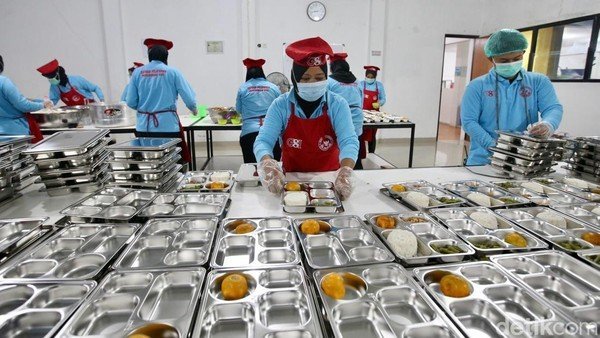

Jakarta — The Free Nutritious Meal Program (MBG) is confirmed to continue throughout the month of Ramadan with a number of technical adjustments. This policy is taken to ensure that the nutritional needs of beneficiaries remain fulfilled without disrupting the observance of fasting, particularly for Muslim students.
The implementation of MBG during Ramadan emphasizes flexibility in both menu and distribution timing. These adjustments are applied contextually, taking into account the conditions of beneficiaries in each region, ranging from school students and Islamic boarding school students (santri) to pregnant women and toddlers.
Coordinating Minister for Food Affairs Zulkifli Hasan stressed that the program will not be suspended during Ramadan. The government’s main focus is to maintain the continuity of the program while respecting the religious practices of the community.
“We have decided that the implementation of MBG during the month of Ramadan will continue because schools remain open. Students will be given dry meals. For Muslims who are fasting, they will receive dry food,” Zulkifli Hasan said.
This decision marks a shift in the distribution approach, particularly for Muslim students who are fasting. Dry meals are chosen so that the food can be stored and consumed at iftar, without reducing the benefits of the program.
Meanwhile, schools serving non-Muslim communities will continue to receive MBG as usual. Distribution is carried out in the morning with regular menus, without any changes to the scheme. A similar mechanism applies to pregnant women and toddlers who are not fasting, ensuring continuity of nutritional intake.
Adjustments are also applied in Islamic boarding schools. Zulkifli Hasan explained that there are no changes to the menu for santri, but the distribution time is adjusted to coincide with iftar.
“For pesantren, we simply shift the timing and distribute the meals in the afternoon at the time of breaking the fast. So there are no changes,” Zulkifli Hasan added.
From a nutritional and technical standpoint, Head of the National Nutrition Agency (BGN) Dadan Hindayana ensured that the dry menus prepared during Ramadan continue to meet nutritional standards.
Menu variations are designed to avoid monotony while still containing protein and other essential nutrients.
“For example, during fasting, the menu includes dates, boiled eggs or salted eggs or pindang eggs, fruit, milk, and shredded meat,” Dadan Hindayana said.
These menus are designed to be practical for students to take home after school. With this scheme, MBG continues to function as daily nutritional support even though consumption patterns change during Ramadan.
Furthermore, Dadan Hindayana explained that distribution will be adjusted based on regional characteristics. In predominantly Muslim areas, meals are distributed during the day for students to take home and consume at iftar, while in non-fasting regions services remain normal.
“In areas where the majority of the population is Muslim, meals will be distributed during the day at school to be taken home and used as food for breaking the fast. For schoolchildren in areas where the majority are not fasting, services will continue as normal,” Dadan Hindayana explained.
Through these adjustments, MBG is expected to remain an important instrument in maintaining public nutritional quality during Ramadan, while also reflecting adaptive and inclusive policymaking.
