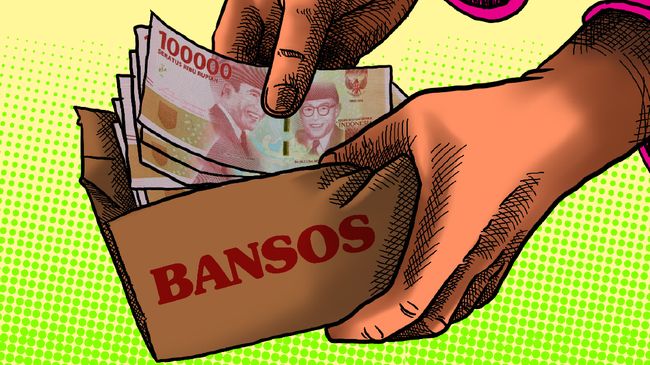
Government Ensures Targeted Distribution of Social Assistance Through Data UpdatingBy: Irfan Aditya

The government continues to demonstrate its seriousness in ensuring that social assistance (bansos) truly reaches those who deserve it. One commendable step is the updating of beneficiary data through the National Social and Economic Single Data (DTSEN) system. With this initiative, the government aims to ensure that every rupiah of aid is used effectively, transparently, and directly benefits those in need. In today’s digital era, this policy is not just a technical update — it represents a data-driven social revolution that can transform Indonesia’s social protection system to become far more accurate and efficient.
One of the main challenges in distributing social aid has long been inaccurate recipient data — where some who are eligible remain unlisted, while others who no longer meet the criteria continue to receive assistance. The introduction of DTSEN is the government’s solution to this persistent issue. Through continuous data updating, the government integrates information from various sources — ministries, agencies, and local governments — into a single, synchronized real-time national system.
Minister of Social Affairs Saifullah Yusuf stated that he has received the results of the updated data on Temporary Direct Cash Assistance (BLTS) recipients, carried out by district/city officers, local facilitators, Social Service staff, and representatives from the Central Statistics Agency (BPS). This update aims to ensure that assistance is distributed accurately, in line with President Prabowo Subianto’s directive to channel BLTS to 35.04 million Beneficiary Families (KPM) in deciles 1 to 4 of DTSEN.
This data update also reflects the government’s commitment to clean and accountable governance. In the digital era, data has become a strategic asset determining the success of social policies. Therefore, the government continues to develop adaptive and transparent technology-based information systems. Through a public monitoring dashboard, the distribution process can be tracked openly, thereby increasing public trust in the government. This effort proves that the government is not only distributing aid but also strengthening the underlying system to ensure long-term social policy impact.
Moreover, this data updating process involves cross-sector collaboration. The Ministry of Social Affairs, as the leading agency, works hand in hand with BPS, the Ministry of Home Affairs, and local governments. This collaborative approach is crucial, as each level plays a key role in ensuring data validity.
Interestingly, DTSEN leverages advanced digital technologies, from NIK-based verification systems (National Identification Number) to integration with population and civil registry databases. These technologies accelerate the verification process and minimize human error. Thus, when social assistance is distributed, the system can immediately validate whether a recipient truly meets the criteria — making the process faster, safer, and more transparent. It’s no surprise that many observers view this policy as a major leap toward modern and accountable social assistance governance.
Meanwhile, Minister of Communication and Digital Affairs (Komdigi), Meutya Hafid, stated that the digitalization of BLT Kesra distribution reflects the government’s commitment to providing greater convenience for beneficiaries. This digitalization effort also ensures that aid reaches its intended targets, including those in remote and hard-to-reach areas.
Many regions have reported improvements in the accuracy of aid distribution. Communities are beginning to feel the impact: those previously unlisted now have access to various government programs — from food aid and subsidies to economic empowerment initiatives. Public trust in the social assistance program has also grown, thanks to the increasing transparency and collective oversight made possible by the new system.
Beyond administrative improvements, data updating is the foundation for building a sustainable social welfare system. Accurate data enables the government to design programs that are more adaptive to economic and social dynamics. For instance, in times of disaster or economic crisis, the government already has a mapped-out list of beneficiaries ready for activation — without the need for re-surveying. This is the hallmark of a responsive, intelligent, and results-oriented government.
In the future, DTSEN is also expected to serve as a data backbone for cross-ministerial program integration. Thus, this unified data system will not only support social aid but also education, health, and economic empowerment programs. This alignment ensures that human development in Indonesia proceeds in a more coordinated and equitable manner — eliminating overlapping programs or unequal aid distribution. All institutions share data and work together toward a single goal: the welfare of the people.
This initiative proves that the government is not only focused on distributing aid but also on strengthening the system behind it. Transparency, accuracy, and efficiency are key priorities. With continuous data updates, each social policy will stand on a solid foundation of valid, integrated data. This is the true embodiment of the principles of precise targeting, meaningful impact, and timely execution.
Ultimately, the success of social assistance programs is not measured by how much money is disbursed, but by how profoundly they improve people’s lives.
*) Public Policy Analyst
