Government Follows Up on “17+8” Workers’ Demands with Policies to Protect Labor and Prevent Layoffs

By: Hendri Hendrawan
The government continues to demonstrate its seriousness in responding to the workers’ aspirations known as “17+8” — a set of demands long advocated by labor unions across various sectors. These aspirations consist of 17 main demands and 8 additional ones, all emphasizing the protection of workers’ rights, job security, and social security. In this context, the government is taking swift action to ensure that the policies implemented are not merely formal responses, but truly address the real issues faced on the ground. This also serves as a form of political communication, affirming that workers’ voices are a vital part of shaping the direction of national economic development.
One of the main focuses of this follow-up policy is the protection of workers who are vulnerable to layoffs. The global situation, still not fully recovered from the pandemic, coupled with economic pressures from inflation and industrial slowdown, has made the threat of layoffs increasingly real. The government is crafting more adaptive policies to prevent companies from taking shortcuts by terminating employees. Proposed approaches include tax incentives for companies that retain their workforce, as well as wage subsidy programs targeted at labor-intensive sectors.
Coordinating Minister for Economic Affairs, Airlangga Hartarto, stated that the government continues to issue policies aimed at creating jobs. In addition, the government is strengthening oversight of labor practices that violate regulations. The “17+8” aspirations highlight ongoing violations, ranging from unclear employment contracts, harmful outsourcing systems, to wages that do not meet standard regulations.
Another equally important step is establishing continuous social dialogue. The government recognizes that the labor sector is highly dynamic, and thus policies cannot be static. Through tripartite forums involving the government, employers, and labor unions, it is hoped that a mutual understanding can be reached in seeking joint solutions. These forums also serve to ensure that the “17+8” demands do not remain mere documents, but are truly used as references in strategic decision-making in the labor sector.
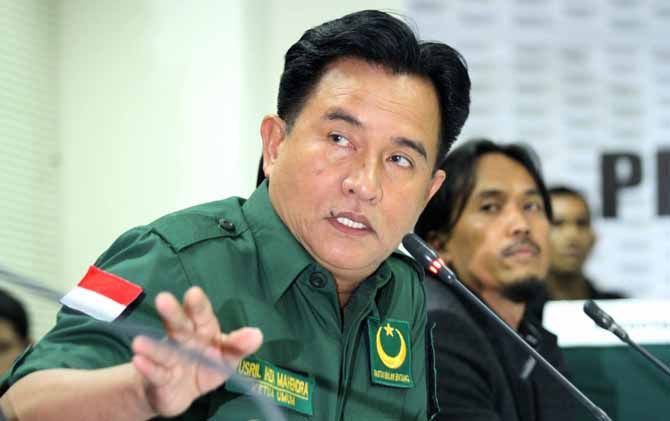
Coordinating Minister for Law, Human Rights, Immigration, and Corrections (Kemenko Kumham Imipas), Yusril Ihza Mahendra, affirmed that the government has responded positively to these demands. Regarding the legal and human rights aspects, Yusril stated that the government enforces and applies the law fairly, transparently, and with a high regard for human rights. Even for those suspected of legal violations, their basic rights remain protected. He also emphasized the importance of ensuring fair law enforcement, stating that he would coordinate with all law enforcement agencies on this matter.
Meanwhile, the Chairman of the Democratic Party, Agus Harimurti Yudhoyono (AHY), stressed that his party listens openly and supports dialogue to find solutions. According to him, labor issues such as decent wages, contract protection, and the threat of mass layoffs cannot be addressed by technical regulations alone, but require healthy communication among the government, the parliament, employers, and labor unions. AHY noted that although he serves as Coordinating Minister for Infrastructure, he also represents the party leadership, which has a duty to respond to public concerns. He appreciated the dialogue forums held by the Indonesian Parliament (DPR RI) and the government, seeing them as valuable platforms to formulate fair and pro-worker labor policies.
AHY’s statement also reaffirmed that employment issues must be a priority in all development policies. Amid global challenges that may reduce job opportunities, political parties and the government must demonstrate a genuine commitment to maintaining employment stability. Inclusive dialogue is expected not just to gather aspirations, but to produce concrete actions such as skill enhancement programs, broader social security coverage, and support for labor-intensive industries to continue absorbing a large workforce.
Labor issues remain a central theme of these aspirations. Demands for fair wages, protection for contract workers, and open discussions on outsourcing have gained significant attention. The government is strengthening tripartite dialogue channels between employers, labor unions, and the state to seek joint solutions. This approach ensures that the workers’ voices, which have often been marginalized, are placed at the core of determining fair minimum wage policies and labor standards.
In the end, the follow-up to the “17+8” aspirations marks an important momentum for the government to reinforce the trust of the working public. Labor protection is not only about individual rights, but also serves as a pillar of national economic and social stability. With policies that support workers while also allowing businesses to grow healthily, the government seeks to balance the interests of all parties. If these steps are carried out consistently, not only can the threat of layoffs be mitigated, but a stronger foundation can also be built for a fairer, more harmonious, and sustainable industrial relationship in Indonesia.
The author is a Political Observer
