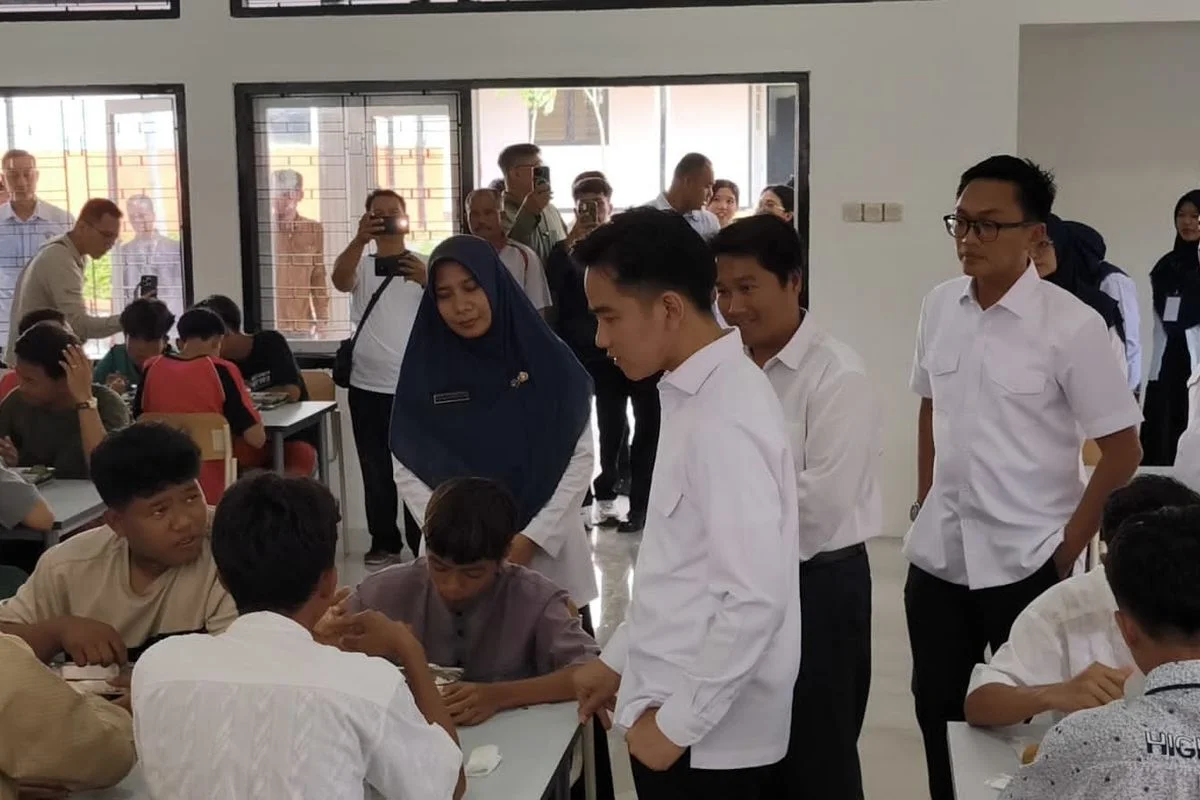
Government Implements Integrated Poverty Alleviation Efforts Through the People’s School Program

By: Nancy Dora )*
The government under President Prabowo Subianto continues to demonstrate a real commitment to alleviating poverty through an integrated and sustainable approach. One of these strategic steps is realized through the People’s School program, which is designed not only as an educational institution but also as a center for empowering poor families. This program is a concrete symbol of the synergy between social policy and economic development, by placing education as the main axis of national poverty alleviation.
Social Affairs Minister Saifullah Yusuf stated that the presence of People’s Schools is not simply about constructing buildings and conducting teaching and learning processes, but rather part of a broader integrated poverty alleviation strategy. These schools are designed to produce agents of change from low-income communities, equipping them with the skills and strong character to build a future. The government aims to improve the families of students participating in this program, both economically and socially. Children receive a quality education, while their parents are empowered through training and productive economic programs, and their homes are renovated to make them habitable.
This comprehensive approach is the main difference between People’s Schools and conventional education systems. In its implementation, the government prioritizes cross-sector collaboration, from the Ministry of Social Affairs and the Ministry of Finance to local governments. All parties are involved to ensure that the implementation of the People’s Schools aligns with its goal of providing opportunities for poor and extremely poor families to escape the poverty trap. Gus Ipul emphasized the importance of collaboration between all elements, including teachers, principals, education personnel, parents, and local governments, in overseeing the success of this program.
One of the main principles in the implementation of the People’s Schools is transparency and fairness. The government ensures that there are no bribery practices, collusion, or levies in the student recruitment process. These schools are expressly aimed at children from underprivileged families who deserve adequate educational facilities. Therefore, this program is not only a free education facility but also a social instrument that protects the rights of the poor to access quality education.
In addition to providing formal education, the People’s Schools instill values of character, discipline, and empathy. Teachers are equipped with a high level of social sensitivity towards students from disadvantaged backgrounds. The government also pays attention to the psychological aspects of students, especially during the initial adaptation period, which often leads to homesickness or difficulty adapting. However, experience in various regions shows that children in People’s Schools are able to develop into more independent, disciplined individuals with a strong enthusiasm for learning.
In terms of infrastructure, the government has prepared the construction of a permanent building for the People’s School, which will be equipped with various superior facilities. The school is planned to accommodate more than 1,000 students from elementary to high school. Facilities include modern classrooms, student and teacher dormitories, prayer rooms, laboratories, libraries, auditoriums, sports fields, and extracurricular activity areas. The land for the construction is being provided by the local government, while funding will come from the State Budget (APBN).
Finance Minister Purbaya Yudhi Sadewa believes that the People’s School program, along with the Free Nutritious Meals (MBG) program, is a crucial part of the strategy for equitable distribution of development benefits. He believes that both programs are instruments that strengthen national stability through equitable distribution of community welfare. The People’s School not only provides education for children from poor families but also creates job opportunities for thousands of local workers, particularly in the construction and renovation of school infrastructure. Thus, the economic impact of this program can be felt directly by the community at the grassroots level.
Furthermore, the People’s School (Sekolah Rakyat) is a concrete manifestation of the synergy between social and economic development. By empowering parents, the government encourages the creation of an independent economic ecosystem around the school. Parents gain access to skills training and capital support to develop small businesses. Meanwhile, improving the quality of housing for students’ families contributes to a healthy and productive living environment. This approach demonstrates that poverty alleviation is not simply about providing assistance; it must be accompanied by increased capacity and opportunities.
The People’s School program also has a significant social impact. In various regions, enthusiasm forPublic response to this program is very high. Many parents are proud that their children can attend a school that prioritizes not only academics but also character and moral values. One parent in Samarinda expressed gratitude that her child can attend the People’s School after experiencing financial constraints for a long time. Stories like these reflect new hope for poor families across Indonesia to break out of the intergenerational cycle of poverty.
At a macro level, the existence of the People’s School contributes to the achievement of the three main pillars of national development initiated by President Prabowo: high economic growth, equitable distribution of development benefits, and dynamic national stability. By providing access to education and economic empowerment for the poor, the government not only strengthens the nation’s social foundation but also maintains national cohesion amidst global economic challenges.
This program demonstrates that poverty alleviation policies cannot be implemented in isolation but must be integrated with education, the economy, and social aspects. The People’s School serves as a model for holistic human development, educating children to become a superior generation while empowering their families to become independent. With the support of the community and local government, the People’s School is expected to become an important milestone towards a poverty-free Indonesia, where every child has an equal opportunity to achieve a better future. )* The author is a social observer.
