Government Prioritizes Rehabilitation and Reconstruction Programs After the Sumatra Disaster

By: Nimas Ayu)*
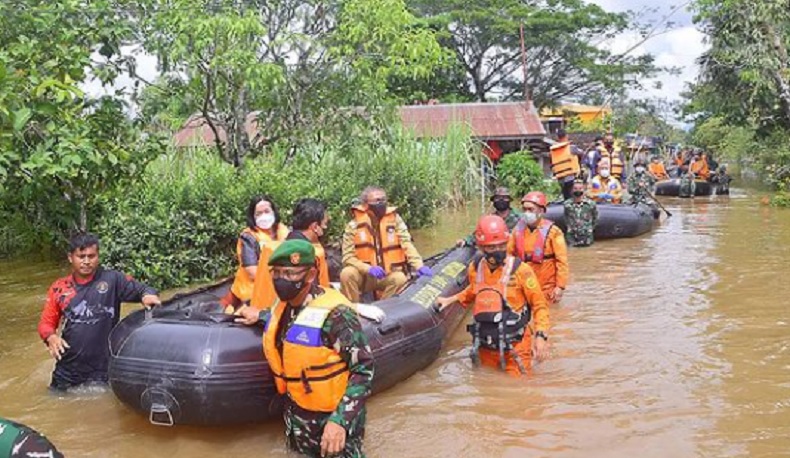
The central government has ensured swift and coordinated measures in responding to the floods and landslides that struck Aceh, North Sumatra, and West Sumatra. The disasters—triggered by extreme weather and the impact of Tropical Cyclone Senyar—serve as a test of national preparedness in protecting the public. Under the directive of President Prabowo Subianto, all national resources have been mobilized to accelerate emergency response efforts while simultaneously preparing for comprehensive rehabilitation and reconstruction phases.
The Coordinating Minister for Human Development and Culture (Menko PMK), Pratikno, emphasized that the President’s directive serves as the basis for mobilizing ministries, agencies, the military, police, and regional governments. His statement on deploying national strength to ease the burden on affected communities was conveyed in the form that all national resources have been instructed to be deployed in the emergency response stage to support residents.
Pratikno also stated that relevant ministries and agencies are already on the ground to accelerate the restoration of public services and vital access routes. The message that ministries and agencies are working as hard as possible to assist communities was expressed in the form that these efforts are being implemented jointly with local governments, the military, and the police. Additionally, joint field visits with the Head of BNPB have become an important momentum to strengthen integrated coordination.
During a follow-up meeting at Silangit Airport, North Tapanuli, Pratikno once again stressed the need to accelerate emergency response measures. The instruction that all national resources must be added to expedite evacuation, logistics, refugee protection, medical services, and infrastructure recovery was expressed in the form that these steps have been ordered for immediate implementation. The government is ensuring that basic needs are met and that aid distribution continues to flow, as reported by relevant authorities.
Pratikno confirmed that rehabilitation and reconstruction plans have been prepared in parallel with emergency response efforts. The statement that the rehabilitation and reconstruction scenario is being readied—even while the primary focus remains on emergency response—illustrates that the government is operating on two tracks at once: rapid disaster relief and long-term recovery. The provision of temporary housing has become a priority, as stated by Menko PMK in the form that temporary shelters must be accelerated while awaiting the construction of permanent housing.
He also conveyed appreciation toward officers and volunteers, stating in essence that the hard work of military, police, and local government personnel is highly valued, particularly in building temporary shelters and managing on-site conditions. In terms of synergy, the message that resources must be deployed and coordination maintained in the field was expressed in the form that the government fully supports cross-sector collaboration.
Amid challenges—especially the difficulty of deploying heavy machinery due to terrain conditions—Pratikno asserted that these obstacles will not impede the government’s commitment to continue assisting affected communities. He also highlighted the importance of learning from this disaster to strengthen national preparedness in the future.
The Ministry of Public Works also plays a strategic role by accelerating the opening of road access in affected regions. Minister of Public Works Dody Hanggodo emphasized that restoring road access is the top priority, conveyed in the form that such access is essential to prevent delays in aid delivery. Instructions to withdraw heavy machinery from regular projects and redirect them to disaster-hit areas were conveyed in the form that the order for reallocation has been issued, with emphasis that compliance is mandatory.
The deployment of heavy equipment is considered vital to reconnect isolated areas and prevent potential social disruptions. Dody also stated that without open access, the delivery of clothing, food, and clean water would be delayed, making road access restoration a primary focus for field teams. The statement that visits should be postponed to avoid distracting field operations was conveyed in the form that postponing such visits is necessary to maintain team concentration.
The Head of BNPB, Suharyanto, is prioritizing three main response focuses: searching for missing victims, restoring communication networks, and expediting logistics distribution. His statement on prioritizing search operations in Sibolga, Central Tapanuli, and South Tapanuli was conveyed in the form that these areas have become the focus of SAR operations. He also instructed that SAR operations run 24 hours a day, which was expressed in the form that nonstop operations are required under the leadership of Basarnas.
BNPB is also maximizing air and sea routes for aid distribution, particularly in areas that remain isolated. Three helicopters, a sea vessel, 28 Starlink units, and 33 generators have been prepared to support communication and logistics recovery. In Aceh, the report that five districts have become accessible again has been used as the basis to accelerate the distribution of basic necessities and sarongs.
The integrated approach involving central and regional governments, the military, police, volunteers, and technical agencies clearly shows that the state is fully present during this emergency. The government has also prepared the development of temporary and permanent housing, infrastructure repairs, and socio-economic recovery as part of a sustainable rehabilitation and reconstruction phase.
The government’s commitment to addressing this disaster reaffirms that public safety and recovery are the top priorities. Through cross-sector coordination, large-scale resource deployment, and long-term recovery planning, the government ensures that the people of Sumatra can rise again and become more resilient in facing future disasters.
*) Social Analyst
