
Jakarta — The government has reaffirmed its commitment to maintaining the stability of subsidized fuel prices despite escalating global geopolitical conflicts that have pushed up international crude oil prices. The increase in global oil prices has been driven by rising tensions involving Iran, the United States, and Israel, which briefly pushed oil prices beyond the US$100 per barrel mark.
Energy market data shows that Brent crude oil prices surged to as high as US$111.04 per barrel before settling at around US$107.93 per barrel. Meanwhile, U.S. West Texas Intermediate (WTI) crude also climbed to US$111.24 per barrel before stabilizing at approximately US$107.40 per barrel. This situation has prompted the government to take anticipatory measures to ensure that global energy price volatility does not directly impact the public.
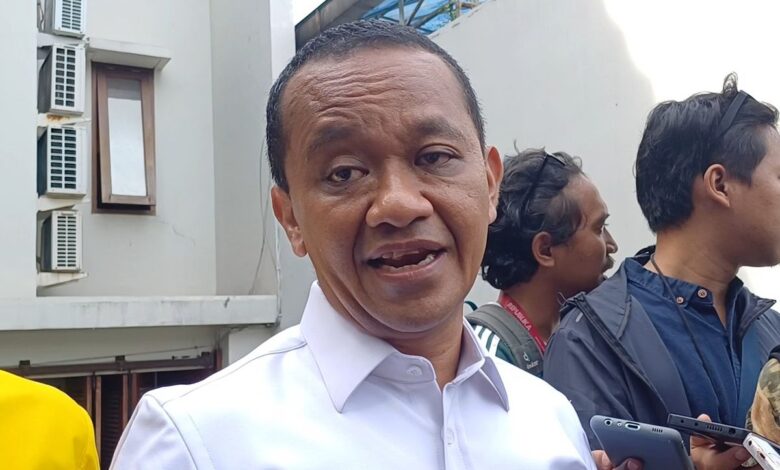
Responding to the situation, Minister of Energy and Mineral Resources (ESDM) Bahlil Lahadalia stated that the government will maintain the prices of subsidized fuels so they do not increase, particularly ahead of the Eid al-Fitr 1447 Hijri holiday. According to him, the government remains committed to ensuring national energy stability despite pressure from global markets.
“We ensure that until the upcoming holiday season, subsidized fuel prices such as Pertalite and Solar will remain stable and will not increase. The government is present to protect the public even as global crude oil prices rise,” said Bahlil Lahadalia.
In addition to maintaining price stability, Bahlil also urged the public to remain calm and avoid excessive purchasing. He assured that national fuel reserves remain sufficient and that energy distribution continues to operate smoothly.
“National fuel stocks are in a safe condition and industrial activities continue to run normally. Energy imports are also proceeding without disruption, so the public does not need to worry,” he explained.
Support for the government’s policy has also come from economist Syafruddin Karimi of Andalas University. He assessed that the decision to maintain subsidized fuel prices amid global conflict is a strategic step to safeguard people’s purchasing power and prevent a spike in inflation.
“In a global situation filled with pressure, maintaining fuel prices provides room for households and small businesses. Inflationary pressure can be reduced because logistics costs do not immediately increase,” said Syafruddin Karimi.
Meanwhile, Senior Analyst at the Indonesia Strategic and Economic Action Institution, Ronny P. Sasmita, stated that the government still has fiscal space to sustain the policy in the short term. However, he noted that the policy still requires careful management to ensure fiscal sustainability.
“From a fiscal perspective, the government still has room to hold fuel prices temporarily, especially to maintain inflation and public purchasing power. However, this policy must be balanced with careful budget management,” said Ronny.
Through this policy, the government demonstrates its commitment to maintaining national energy price stability while protecting the public from the impact of global conflicts. The measure is expected to help maintain economic stability and ensure that community activities continue to run smoothly amid global uncertainty.
