Government Realizes a Healthy Young Generation Through the Free Nutritious Meals (MBG) Program

*) By: Dwiki Adisaputro
The Free Nutritious Meals (MBG) Program is a strategic initiative by the administration of Prabowo Subianto and Gibran Rakabuming Raka to lay the foundation for a healthy, intelligent, and competitive young generation in Indonesia. In its first year, more than 1.4 billion servings of nutritious food have been distributed to millions of school children, pregnant women, and toddlers across the country — a monumental achievement that reflects the government’s serious commitment to being present at the people’s dining table.
The government, through the National Nutrition Agency (BGN), reported encouraging results. As of October 2025, over 1.4 billion nutritious meals have been served to 36.7 million beneficiaries, including school children, toddlers, pregnant women, and breastfeeding mothers. This figure demonstrates the state’s genuine dedication to meeting the basic needs of its people.
BGN Head, Dadan Hindayana, emphasized that the MBG program is not merely about “free school lunches,” but rather a long-term investment in building a healthy, intelligent, and productive generation. Access to adequate nutrition during the formative years is critical in determining one’s intellectual capacity and productivity in the future. By prioritizing nutrition as a national agenda, the state is essentially laying the foundation for the country’s global competitiveness. MBG serves as a tangible manifestation of human development, which for years had been merely a slogan. Now, the people can witness the state’s presence — right at their dining table.
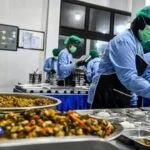
However, the benefits of MBG go beyond health and education. The program has also become a driver of the people’s economy. To date, 11,570 Nutritional Fulfillment Service Units (SPPG) are actively operating across Indonesia, including in 3T regions (Frontier, Remote, and Disadvantaged areas). This SPPG network has created 394,748 new jobs, involving local farmers, livestock breeders, artisans, and food servers. President Prabowo is even optimistic that by early 2026, the number of workers absorbed by the MBG ecosystem could reach 1.5 million. This optimism is well-founded, as local economic activity continues to rise in tandem with the growing demand for raw materials and logistics for the program.
Riza Damanik, Deputy for Micro Enterprises at the Ministry of Cooperatives and SMEs, noted that 85 percent of the MBG budget is allocated for sourcing raw materials from the agriculture, fisheries, and plantation sectors, with at least 60 percent targeted to come from local MSMEs. Thus, MBG not only distributes nutritious food but also strengthens an inclusive supply chain, revitalizing the rural economy.
The government has made significant achievements in this early stage. Researcher Abdan Sakura from the Indonesian Public Institute recorded that as of September 2025, the MBG program had utilized only 18.3 percent of the total IDR 71 trillion allocated in the 2025 state budget. So far, 5.58 million beneficiaries have been reached out of the targeted 82.9 million. This figure should not be seen as a failure, but rather as an initial step towards building a broader, more measurable social protection system.
In addition to MBG, the government is also implementing the Nutritional Resilience Program (PKG) with a budget of IDR 3.4 trillion, which has reached over 415,000 residents in nearly every province. According to Abdan, this reflects the government’s serious commitment to strengthening the national nutrition system, through both improved service quality and greater budget transparency. With enhanced monitoring and an open auditing system, the quality of MBG implementation is expected to continue improving in the near future.
The Prabowo-Gibran administration also stressed that this policy is a realization of the fifth principle of Pancasila: social justice for all. When children from Papua to Aceh receive adequate nutrition, it signifies the true embodiment of equality in public policy. MBG stands as a symbol of non-discriminatory state presence, reaching all layers of society regardless of social, religious, or geographical backgrounds.
In a speech marking his first year in office, President Prabowo reaffirmed that Indonesia’s economic foundation remains solid amid global uncertainty. He stated that Indonesia’s current economic growth is still around 5 percent, one of the highest among G20 countries. The country has also managed to maintain inflation at around 2 percent, among the lowest in the G20. According to him, these achievements are the result of the hard work of all parties committed to maintaining economic stability while also improving public welfare.
A stable economy provides a strong foundation for sustaining social programs such as MBG. When inflation is under control and economic growth remains positive, the government gains the fiscal space to continue its long-term human development agenda. This is where MBG and macroeconomic policy complement each other: adequate nutrition fosters a productive workforce, and a healthy economy ensures the sustainability of the national nutrition program.
The government continues to refine the governance and quality of the MBG implementation. But what must not be overlooked is that the first step has already been taken, and the policy direction is clear. The public is encouraged to continue supporting and overseeing the MBG program, not only as beneficiaries, but as part of a national movement to build a healthy, smart, and happy generation — toward Golden Indonesia 2045.
*) Public Policy Analyst
