
Government Strengthens Commitment to Free Nutritious Meal Program to Ensure Its Effectiveness

By: Ferri Diputra
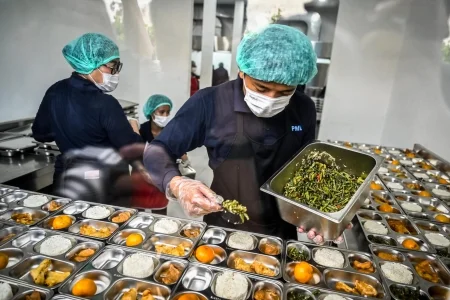
The government continues to strengthen its commitment to the Free Nutritious Meal Program (MBG) to ensure that its benefits reach the right target. This initiative was launched as part of efforts to improve the well-being of school children, pregnant women, and other vulnerable groups who need balanced nutrition.
Since its launch, the MBG program has reached thousands of schools and communities across Indonesia. Through collaborations with various stakeholders, including relevant ministries, local governments, and civil society organizations, the government strives to ensure that every recipient receives benefits equitably and with quality. Additionally, this program aims to raise awareness about the importance of balanced nutrition in daily life.
To increase its effectiveness, the government has taken several strategic steps, including tightening food distribution supervision. A technology-based monitoring system has been implemented to ensure there are no discrepancies in the distribution of aid. Periodic evaluations are also being carried out to adjust policies to better suit the needs on the ground. The government is also working with academics and nutrition experts to develop meal menus that meet the nutritional needs of the community.
Acting Deputy III of the Coordinating Ministry for Human Development and Culture (PMK), Nunung Nuryantono, emphasized that the MBG program is a national priority to reduce stunting rates and improve the intelligence of future generations. This program not only provides free meals but also educates the public on the importance of good nutrition.
The success of the MBG program is also supported by various sectors, including the private sector and local communities. Some companies have contributed through their Corporate Social Responsibility (CSR) programs by providing nutritious food and supporting facilities.
Moreover, educators and parents play a crucial role in ensuring children benefit from the program. Socialization on healthy eating habits and the importance of balanced nutrition is also being intensively promoted to raise public awareness.
In some regions, the program has shown positive results, including increased school participation and reduced rates of malnutrition among children. Parents have also reported positive changes in their children’s eating habits since the program was implemented.
Looking ahead, the government plans to expand the program’s reach by increasing the number of beneficiaries and improving the quality of food provided. This will be achieved by enhancing cooperation with local farmers to ensure that the ingredients used in the program are fresher and of higher quality. Involving local farmers also contributes to improving the economy of rural communities.
Finance Minister Sri Mulyani Indrawati explained that the MBG program is expected to contribute 0.7% to the Gross Domestic Product (GDP). She further elaborated that the program will require around 185,000 workers and could potentially reduce poverty by 0.19%. For example, in the January 2025 implementation, there were 220 Nutrition Fulfillment Service Units (SPPGs) carrying out this program. Each SPPG is responsible for providing meals to 3,000 beneficiaries. In total, there were 589,902 beneficiaries, including students, pregnant women, and toddlers.
In December 2025, the government plans to expand the number of SPPGs to 5,000 and increase the number of beneficiaries to 4,000 per unit. With a 2025 budget of IDR 71 trillion for the MBG program, it is targeted to provide meals to 15.5 million students and 2.4 million pregnant women and toddlers.
Meanwhile, the Minister of Micro, Small, and Medium Enterprises (UMKM), Maman Abdurrahman, has prepared three schemes to ensure UMKM involvement in the MBG program on a sustainable basis. He explained that these schemes were designed because the MBG program has a tremendous multiplier effect on the national economy, particularly in driving growth in the food and beverage sector of UMKMs.
With this program, there will be economic turnover in every village, which will stimulate the economy across Indonesia. The UMKM sector will be the main beneficiary of this program. All aspects, from upstream to downstream, will contribute to creating a food business ecosystem. With economic movement and new business opportunities, Indonesia is building a new business ecosystem in the food sector. Almost every aspect of the supply chain in this program involves UMKMs.
The three schemes prepared by the Ministry of UMKM include strengthening the management and production quality of UMKM entrepreneurs involved in the MBG program. They will continue to monitor and evaluate UMKMs to ensure the organization and operational management of the businesses involved are maintained.
With these measures, the government hopes that the MBG program will become even more effective in assisting the community and creating a healthier and more productive generation. The government also hopes that this program will serve as a model for other countries facing similar challenges in improving public nutrition.
Through synergy between the government, society, and the private sector, this program is expected to become a real solution to improve the welfare and quality of life of the Indonesian people. Moreover, the program’s sustainability will continue to be evaluated to ensure its benefits are felt in the long term, thus creating a stronger, smarter, and higher-quality generation.
The author is a graduate student residing in Jakarta.
