

By: Surya Wiguna )*
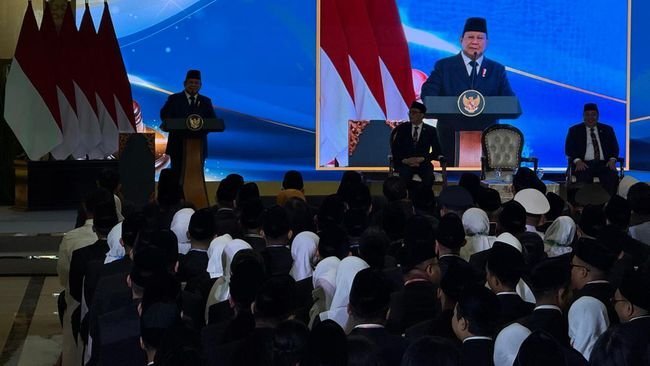
The government’s commitment to strengthening the national justice system has been proven again through progressive and bold policies. President Prabowo Subianto has firmly set a plan to increase judges’ salaries by 280 percent as part of structural reforms in the judiciary. This decision not only reflects the state’s concern for the welfare of law enforcement officers, but also underlines the government’s seriousness in building a clean, independent, and authoritative justice system in the eyes of the public.
This salary reform measure has received full support from various groups, including professional organizations and legislative institutions. Solidarity of Indonesian Judges, represented by Catur Alfath Satriya, assessed that the President’s policy is not merely a form of appreciation for the profession of judges, but also constitutional recognition of basic rights that have been delayed. According to him, the state is present in real terms to protect the dignity of the judicial institution by providing proper support for those implementing justice in the field.
However, improving the welfare of judges is not the end point of reform. Solidarity of Indonesian Judges emphasizes the importance of further steps to strengthen guidance and supervision within the judicial institution. The urge to abandon corrupt practices, reject all forms of gratification, and uphold integrity is a moral call conveyed to all judges. They realize that public trust in the legal system is not only built by the state through policies, but also maintained by the ethical commitment and personal responsibility of each judge.
In that context, the community of judges wants broader reforms, including in terms of promotions and transfers that must be carried out meritocratically and free from transactional intervention. They also encourage the acceleration of the ratification of the Draft Law on the Position of Judges so that the position and function of judges have a strong and clear legal basis. No less important, guaranteeing the security of judges and their families is also a major concern considering the many pressures faced in carrying out their duties.
From the legislative side, Deputy Speaker of the Indonesian House of Representatives, Adies Kadir, gave his full support to the President’s decision. He saw that this salary increase was a real form of the state’s efforts to build a justice system that is free from intervention and deviation. According to him, this significant incentive will be an effective barrier to the entry of the judicial mafia and the potential for bribery that has so far harmed the legal process. Adies also emphasized the importance of the integrity of judges, especially at the young level, to make this policy a momentum to strengthen moral and professional responsibility.
However, Adies realized that improving the judiciary is not enough just by increasing salaries. This step must be followed by strengthening ethics, internal supervision, and increasing transparency in the entire judicial process. The DPR, in this case, is committed to fully supporting the reform agenda carried out by the government. Collaboration across institutions is very important to ensure that this reform does not stop at nominal policies, but touches on the substance of systemic improvements.
The same thing was also expressed by Deputy Chairman of Commission III of the Indonesian House of Representatives, Dede Indra Permana, who saw the salary reform policy as a form of the President’s political courage amidst budget efficiency pressures. He considered the decision to reflect a national priority that places law as the main foundation of government. Dede also considered that this policy was the answer to the long hopes of judges throughout Indonesia who wanted recognition for their strategic role in upholding justice.
Dede emphasized that salary increases must be accompanied by high professionalism. He hopes that judges can now focus more on their main duties as guardians of justice, without being distracted by economic pressures or temptations from outside the system. The President, according to him, has shown that law enforcement is not just a slogan, but is accompanied by real steps that support the independence and integrity of the judiciary. He also invited the judiciary to continue to innovate and improve case management for better legal services for the community.
Judges’ salary reform is ultimately not just an administrative or budgetary issue. It is part of the government’s grand strategy to reorganize the foundation of national law so that it can compete globally. A professional, clean, and independent judicial system will be an important asset in creating a healthy investment climate, strengthening democracy, and increasing public trust in state institutions. Indonesia cannot talk about equitable development without ensuring that those who enforce justice also receive fair treatment from the state.
President Prabowo Subianto’s policy of increasing judges’ salaries by 280 percent is not only a form of appreciation for the strategic role of the judiciary, but also reflects the government’s real commitment to improving the national legal system. This step is a strong signal that judicial reform is a priority agenda for the state in building a legal system that is professional, independent, and free from irregularities.
The improvement of judges’ welfare is expected to reduce the space for corrupt practices, strengthen the integrity of the judicial apparatus, and restore public trust in the legal process. More than just an increase in allowances, this policy is part of a long-term strategy to make law the main foundation of national life. The government, through this bold policy, has demonstrated its commitment to placing the judicial institution in its proper position, namely strong, trustworthy, and on the side of substantive justice for all Indonesian people.
)* Public Policy Observer
