
Government to Disburse Social Assistance in July 2025, for Stability of Community Purchasing Power

By: Dhita Karuniawati )*
The government will again disburse social assistance (Bansos) in July 2025 as a strategic step to maintain the stability of people’s purchasing power, especially vulnerable and low-income groups. This policy is part of the government’s ongoing efforts to reduce the impact of global economic pressures, maintain household consumption, and encourage national economic growth.
Social assistance is still provided by the government to people who meet the requirements and are entitled. In data from the Ministry of Social Affairs, 80 percent of Social Assistance has been distributed to all Beneficiary Families (KPM).
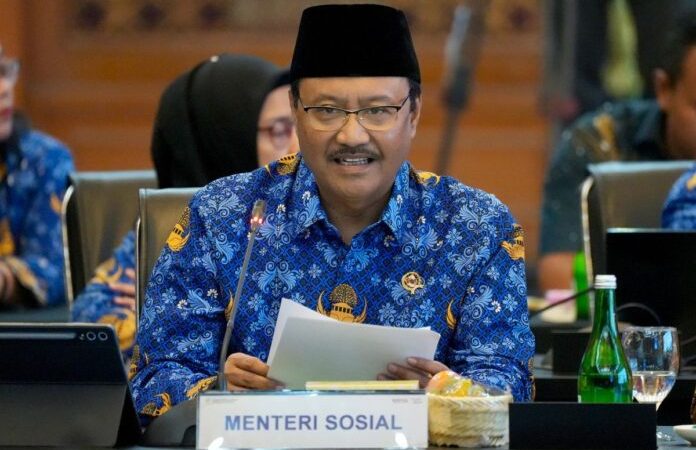
Minister of Social Affairs (Mensos) Saifullah Yusuf said that 80 percent of Social Assistance has been distributed, including thickening social assistance. This has also been reported to the president. Most of the social assistance funds that have not been distributed are allocated to new recipients; the distribution process is currently awaiting the opening of accounts for new recipients.
According to the Ministry of Social Affairs report, social assistance has reached 8,028,881 recipients of the Family Hope Program (PKH), or 80.3 of the total recipients. Then, as many as 81, or 14,810,907 people, received basic food assistance.
The provision of additional social assistance (Bansos) is part of the government’s economic stimulus for the June-July 2025 period. To be effective and on target, its distribution will refer to the National Socio-Economic Single Data (DTSEN). Amid the weakening domestic economy due to the impact of global pressure, one of the groups most affected is the poor and vulnerable. The policy of thickening Bansos was rolled out with the aim of protecting these community groups.
The government has allocated a budget of Rp11.93 trillion for the distribution of additional social assistance. The additional assistance is the Basic Food Card of Rp200,000 per month and food assistance in the form of 10 kg of rice per month. Each of these assistance is given to 18.3 million beneficiary families (KPM) for two months (June and July 2025).
Finance Minister Sri Mulyani Indrawati said that the government, in this case the Ministry of Social Affairs, will implement the additional Sembako card, which is IDR 200,000 per month, paid in June 2025. Meanwhile, food assistance will be implemented with Bapanas and the Ministry of Agriculture.
In implementing the provision of additional social assistance, the government determines the recipients based on DTSEN as instructed by President Prabowo Subianto through Presidential Instruction (Inpres) Number 4 of 2025. DTSEN is a database system that combines Integrated Social Welfare Data (DTKS), Socio-Economic Registration (Regosek), and Updates on the Target for the Acceleration of the Eradication of Extreme Poverty (P3KE). DTSEN is also verified with the Population Administration Information System (SIAK) of the Ministry of Home Affairs to ensure the accuracy of the data on social assistance recipients.
Data matching and reconciliation are carried out by the Central Statistics Agency (BPS). The single data produced will then become the basis for all ministries and institutions in distributing social assistance or subsidies, so that there is no overlap and is truly received by the people in need.
Head of BPS, Amalia Adininggar Widyasanti said that the process of integrating and updating DTSEN has been ongoing since February 3, 2025. In addition to validating various data, the process also includes field verification involving cooperation between BPS, the Ministry of Social Affairs (Kemensos), and the Financial and Development Supervisory Agency (BPKP). Of the 20.3 million KPM (Beneficiary Families) currently, 16.5 million have been verified by BPKP. Of the 16.5 million, 14.3 million are in deciles 1-4 and have begun to be distributed by the Minister of Social Affairs as of the end of May 31, 2025.
Based on the results of the data consolidation, the Ministry of Social Affairs also conducted direct checks in the field to find targeting errors or inclusion errors. From the checks, the Ministry of Social Affairs officially crossed out 1.9 million KPM who were categorized as inclusion errors. KPM who were crossed out are no longer entitled to receive the Family Hope Program (PKH) and Non-Cash Food Assistance (BPNT) starting in the second quarter of 2025.
Responding to the policy of thickening Social Assistance in economic stimulus, Bank Permata Chief Economist, Josua Pardede assessed that the additional IDR 200 thousand per month Basic Food Card and 10 kg of rice per month would also help low-income people deal with economic pressures. This policy will provide direct support for 18.3 million beneficiary families for two months.
Josua Pardede also said that the government has taken the right step by using DTSEN to distribute social assistance in a targeted and effective manner. DTSEN ensures that social assistance is targeted and effective in supporting the most vulnerable and poor community groups, helping them deal with the impact of rising prices and maintaining purchasing power directly.
The social assistance program launched in July is expected to have a positive impact on the socio-economic conditions of the community. In addition, the circulation of money from social assistance also boosts the local economy in various regions. In the education sector, PKH assistance has helped increase school participation of children from underprivileged families.
The disbursement of social assistance in July 2025 is a concrete step by the government in maintaining people’s purchasing power amidst economic dynamics that are not yet fully stable. This policy not only touches on social aspects, but also becomes an effective fiscal instrument in maintaining national economic growth.
With cross-ministerial synergy and strict supervision, social assistance is expected to be able to reach people who really need it, strengthen social resilience, and become a foundation towards a more inclusive and prosperous Indonesia.
)* Contributor Indonesian Strategic Information Study Institute
