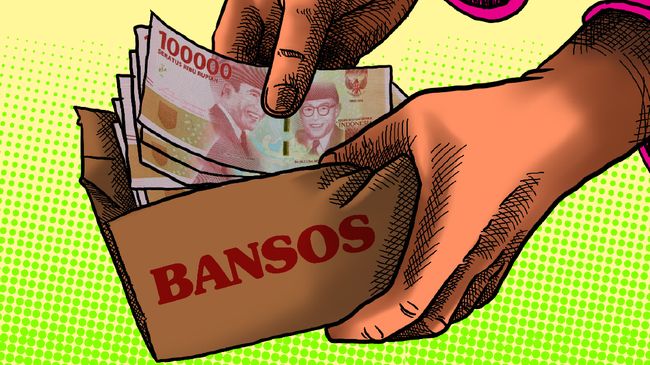

JAKARTA — The Indonesian government has once again rolled out a social assistance (bansos) policy as part of its efforts to maintain the purchasing power of citizens. The program is expected to ease the burden on vulnerable groups while sustaining national consumption stability, particularly toward the end of 2025.
Member of Commission VIII of the House of Representatives (DPR) from the Golkar Party, Erwin Aksa, viewed the disbursement of social assistance in the fourth quarter as a positive move. He noted that the assistance could serve as a safety net for low-income households to help them maintain purchasing power during the year-end period.
“This can help beneficiary families meet their basic needs, especially during Christmas and New Year, which are typically associated with seasonal inflation,” Erwin said.
However, he emphasized that social assistance must evolve — meaning it should encourage recipients toward productivity.
“For instance, through micro-enterprise mentoring or vocational training for beneficiaries,” he explained.
Erwin believes that with a more productive approach, the impact of government aid will not end immediately after disbursement.
“In this way,” he continued, “the economic effect can be more sustainable and help communities move out of economic vulnerability.”
He expressed hope that social assistance would no longer serve merely as a temporary relief measure, but as a stepping stone toward economic advancement. “Not just to survive within poverty, but to rise above it,” Erwin concluded.
Echoing this sentiment, David Sumual, Chief Economist at Bank Central Asia (BCA), said that the distribution of aid would have a positive impact on household consumption and overall economic growth at year’s end, particularly through unconditional transfer payments such as the BLT Kesra program.
“This will have a stronger multiplier effect on household spending compared to in-kind social assistance, as households can allocate the funds according to their immediate needs,” David explained.
The Ministry of Social Affairs (Kemensos) is once again distributing social assistance in the fourth quarter of 2025 for Keluarga Penerima Manfaat (KPM), or beneficiary families with low economic capacity. The assistance includes several programs, such as BLT Kesra, Family Hope Program (PKH), Non-Cash Food Assistance (BPNT), Rice Assistance Program, and Indonesia Smart Program (PIP).
The government will distribute the aid through Himbara banks — BRI, BNI, Mandiri, and BTN — directly into beneficiaries’ accounts, as well as through PT Pos Indonesia.
