
Impact of the Free Nutritious Meal Program: Reducing Stunting and Improving Children’s Health

By: Aristika Utami
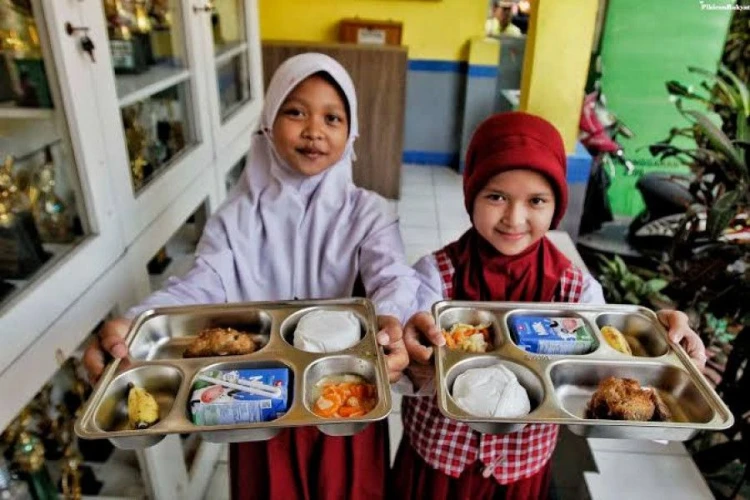
Stunting remains a significant health issue that threatens the future of children in Indonesia. Its impacts are not only felt in physical growth but also in their cognitive abilities. One of the efforts expected to address the issue of stunting is the Free Nutritious Meal Program (MBG), which aims to provide adequate nutrition to children, particularly in areas with high poverty levels and limited access to nutritious food.
The MBG program, which is one of the flagship initiatives of President of the Republic of Indonesia, General TNI (Ret.) H. Prabowo Subianto, has already been implemented. The program also enjoys support from various parties, including security forces.
The Head of Public Relations at the NTT Police, Kombes Pol. Henry Novika Chandra, stated that this program aims to improve the welfare and health of the community, particularly for vulnerable groups such as schoolchildren, pregnant women, and the less fortunate.
Stunting occurs due to a combination of several factors, such as insufficient nutrition, repeated infections, and a lack of access to clean water and sanitation. According to data from the World Health Organization (WHO), stunting can hinder the physical and mental development of children, ultimately affecting the quality of human resources (HR) in the future. Stunted children tend to have lower learning abilities, lower productivity as adults, and are more susceptible to various diseases.
The Free Nutritious Meal Program is one of the interventions that can significantly reduce the prevalence of stunting. This program also aims to empower local farmers, breeders, fishermen, and SMEs in providing food ingredients.
Member of the House of Representatives’ Commission IX, Nurhadi, said that the MBG program aims to ensure that children receive balanced nutrition. Additionally, local economies also benefit as they develop and children grow healthier.
This program focuses on providing nutritious food tailored to the nutritional needs of children, especially those from low-income families. By providing nutritious meals for free, the government ensures that children get the necessary nutrition to grow and develop optimally.
Academician at the Department of Health Nutrition, Faculty of Medicine, Public Health, and Nursing, Universitas Gadjah Mada (UGM), Dr. Toto Sudargo, said that the MBG program has great potential to improve the cognitive function of students, which needs to be balanced with the processing of nutrition from the provided food menu.
One of the main goals of this program is to increase the consumption of nutritious foods such as protein, complex carbohydrates, vitamins, and minerals, which are essential to support children’s growth. These nutritious foods include milk, eggs, vegetables, fruits, and other protein sources that the body needs. With the MBG program, children who previously struggled to access nutritious food due to economic limitations can now receive the proper intake to support their growth.
The Head of the National Nutrition Agency (BGN), Dadan Hindayana, stated that they continue to ensure that all communities meet their nutritional needs, which requires support from the public, tight supervision, and the sustainability of the MBG program.
Although the Free Nutritious Meal Program has a very positive impact, there are several challenges in its implementation. One of the main challenges is the funding required to provide nutritious food for children. The government must collaborate with various parties, including the private sector and international organizations, to ensure the sustainability of this program.
Member of the National Nutrition Agency (BGN), Tengku Syahdana, said that the public can actively participate in the MBG program, whether as BGN partners, SPPG partners, or as kitchen staff in MBG facilities. This is a collective effort to create a healthy generation leading towards Indonesia’s Golden 2045.
The distribution of nutritious food must be targeted to those who truly need it. Geographical and logistical challenges, especially in remote areas, can also affect the effectiveness of this program. Therefore, good coordination between local governments, the central government, and the community is needed to ensure that nutritious food reaches the right hands.
With the synergy between the government, society, and SMEs, it is hoped that the MBG program will not only reduce stunting rates but also improve the quality of life for the community as a whole.
The Free Nutritious Meal Program has a profound impact on reducing stunting and improving children’s health in Indonesia. By providing the right nutritious food, children can grow healthy, develop good cognitive abilities, and strengthen their immune system against diseases.
The success of this program will significantly impact the improvement of human resource quality in the future and the substantial reduction of stunting rates. The government, society, and the private sector must work together to ensure the sustainability and effectiveness of the Free Nutritious Meal Program, creating a better future for Indonesia’s children.
)*Public Policy Analyst
