

By: Nana Sukmawati
The government continues to push forward with economic strengthening strategies to maintain growth momentum amidst global challenges. One of the main steps being accelerated is increasing investment as a key pillar of national economic strengthening.
The economic growth of 4.87 percent in Q1 2025 continues to demonstrate the resilience of the national economy amid global pressures, following a growth rate of 5.02 percent in Q4 2024. The government remains optimistic that it can achieve its target of 5.2 percent growth by the end of the year.
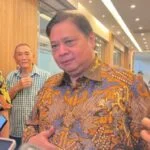
Coordinating Minister for Economic Affairs, Airlangga Hartarto, stated that the government will introduce various strategic policies in the coming quarter to stimulate the economy. This step is considered crucial for maintaining public purchasing power and expanding job opportunities.
One of the primary strategies that will be implemented is strengthening social protection programs. The government will distribute social assistance through the Family Hope Program (PKH), Food Card, as well as the 13th salary for Civil Servants (ASN) in May-June 2025. The Free Nutritious Meals (MBG) program will also be expanded.
These programs are designed to have a multiplier effect on the national economy. With increased purchasing power, consumer demand is expected to revitalize, which in turn will drive more balanced economic growth.
The government is also considering providing additional incentives for specific sectors that show potential for growth. These incentives will be tailored to sectors facing slowdowns, such as the hospitality industry, while continuing to support sectors that are growing, such as food and beverages and agriculture.
In the previous quarter, the government provided a 50 percent discount on electricity tariffs and a discount on airline tickets during the Lebaran holidays. These policies have already had an initial positive impact on public purchasing power and will continue to be strengthened with subsequent strategies.
Airlangga Hartarto explained that the slowdown is partly due to global uncertainties, such as the trade war between the United States and China, as well as reciprocal tariff policies from the US. This situation has put pressure on exports and the investment climate in general.
The government’s budget efficiency policy reflects caution in maintaining fiscal sustainability while still prioritizing growth. However, the government remains committed to preserving fiscal stability for long-term sustainability.
The government has devised a comprehensive investment strategy to support economic recovery. The establishment of a Task Force for Job Expansion is a first step in opening more job opportunities for the public.
Through the Presidential Instruction on Deregulation and the revision of Presidential Regulation on Investment Business Sectors, the government aims to simplify investment procedures to make them more attractive to both domestic and foreign investors.
The government is also implementing an investment credit scheme specifically for labor-intensive industries. This step is expected to strengthen the industrial sector and create millions of new jobs in various regions.
The optimization of capital expenditure (capital expenditure) by state-owned enterprises (BUMN) and the distribution of People’s Business Credit (KUR) are also integral parts of the investment enhancement strategy. These efforts will strengthen the role of MSMEs as the backbone of the economy.
Airlangga Hartarto emphasized that the government’s commitment to deregulation and simplifying permits is the cornerstone for creating a more investor-friendly and globally competitive investment climate.
In addition to domestic strategies, the government is also strengthening its efforts to mitigate global risks. Ongoing negotiations on tariffs with the United States and the completion of economic cooperation with the European Union (EU-CEPA) are actively being pursued.
Indonesia’s membership in BRICS and its accession to the OECD reflect the government’s serious efforts to strengthen Indonesia’s position in the global economic arena. This will support the long-term economic transformation toward the vision of an advanced Indonesia.
From a digital perspective, the Ministry of Investment and Downstreaming projects that Indonesia’s digital economy investment will reach US$130 billion by 2025. This figure highlights Indonesia’s dominance in Southeast Asia in this sector.
Deputy for Investment Climate and Investment Ministry, Riyatno, stated that the digital economy sector is a top priority for attracting foreign investment. Digital ecosystems, such as data centers, are considered highly potential.
Riyatno also emphasized the importance of collaboration between the government, industry sectors, and academia in building a digital investment ecosystem. This synergy is vital in driving innovation and accelerating the national economic transformation.
Efforts to strengthen investment are also aligned with global risk mitigation strategies. The government continues to intensify trade negotiations, including the completion of a comprehensive economic partnership agreement with the European Union (EU-CEPA) and tariff discussions with the United States.
Indonesia’s membership in the BRICS economic bloc and its efforts to accede to the OECD are part of the government’s diplomatic efforts to expand market access and increase national competitiveness in the international arena.
With strategies to increase purchasing power, boost investment, and mitigate global risks, the government hopes Indonesia’s economy can grow inclusively and be resilient in facing international dynamics. These three strategies are the main pillars in efforts to achieve the growth target for this year.
These strategic steps reflect the government’s commitment to maintaining macroeconomic stability while promoting inclusive growth. By strengthening the domestic sector, promoting quality investment, and responding adaptively to global dynamics, the government hopes that Indonesia’s economic foundation will be stronger in facing medium- and long-term challenges.
