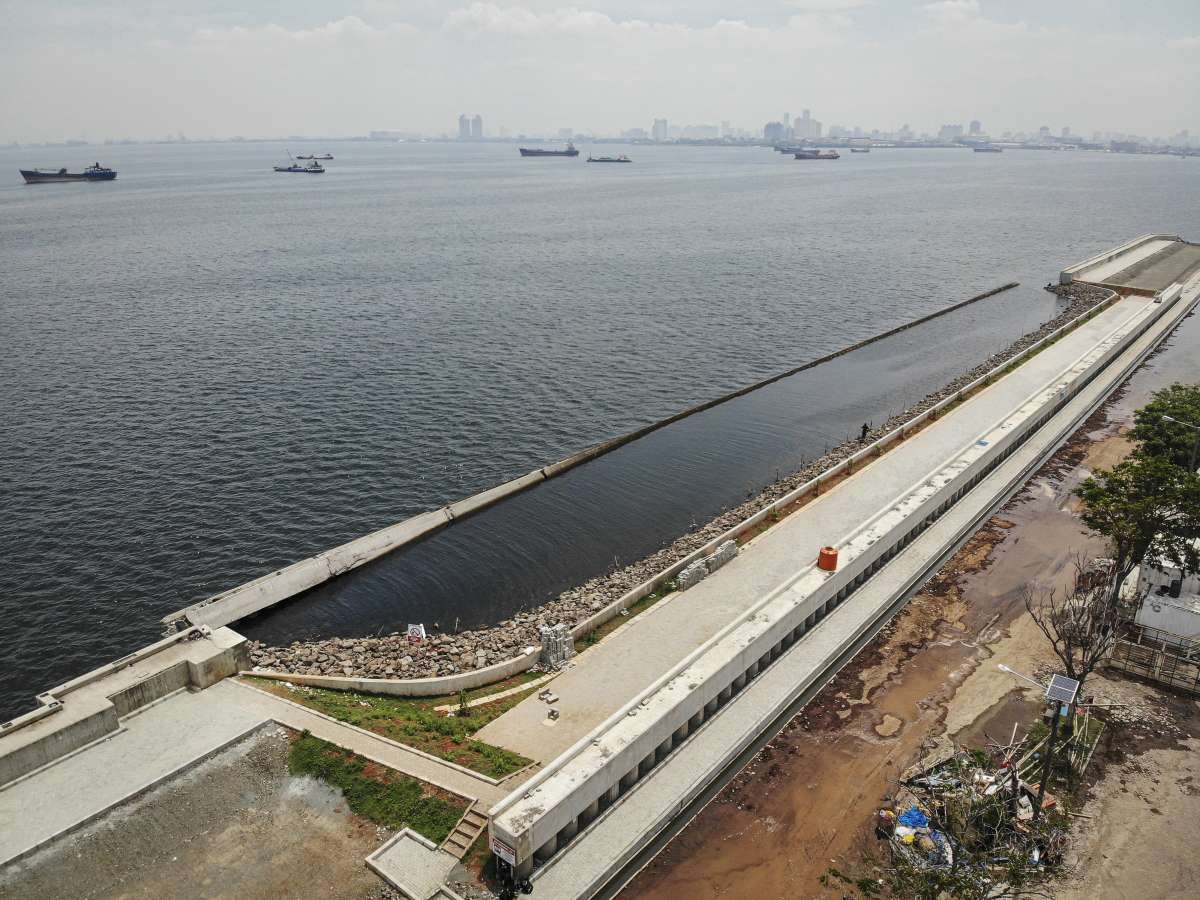
Indonesian Government Constructs Giant Sea Wall Along Java’s Northern Coastline to Protect Coastal Areas

By: Bara Winatha)*
The Indonesian government has begun realizing the construction of a Giant Sea Wall along the northern coast (Pantura) of Java. This project is part of the government’s strategic measures to address the serious threats posed by climate change, land subsidence, and tidal flooding, all of which have long endangered the lives of millions residing in coastal regions. Stretching across a 500-kilometer coastline from Banten to Gresik, the sea wall is expected to serve as a vital barrier for protecting coastal ecosystems and ensuring the sustainability of national development.
Coordinating Minister for Infrastructure and Regional Development, Agus Harimurti Yudhoyono (AHY), stated that the Giant Sea Wall project is now a top priority in President Prabowo Subianto’s national development agenda. He emphasized that the project is not only about infrastructure but also about protecting the people, enhancing climate resilience, and securing the nation’s future. President Prabowo has shown strong commitment to the project, which was already part of his vision and mission even before he took office.
Several countries have expressed interest in cooperating on the project, including the Netherlands, Japan, South Korea, China, and several Middle Eastern nations. The government is open to strategic partnerships with various parties, including international private sectors, to ensure that the development proceeds efficiently and sustainably. The government is also finalizing technical and administrative steps, including the establishment of the North Coast Java Sea Wall Authority, which will coordinate the project’s integrated implementation.
Governor of the Jakarta Special Capital Region, Pramono Anung, stated that the Jakarta Provincial Government is ready to follow up on President Prabowo’s directives concerning the portion of the sea wall project located within the capital. He explained that the Jakarta government is currently studying the project’s technical documentation in detail and will release information to the public once the planning process is complete. The construction in Jakarta will begin in the Muara Angke area and will include an extension of the sea wall from 12 kilometers to 19 kilometers.
On the international front, Dutch Deputy Minister for Foreign Economic Relations, Michiel Sweers, stated that the Netherlands has long been involved in the early stages of the sea wall project in Indonesia. He noted that the Dutch government completed the feasibility study in 2020 and is ready to provide technical support and expertise from its dredging and engineering companies. The Netherlands views the project not only as a climate protection effort but also as an opportunity to establish a new economic growth corridor in Indonesia.
Michiel also expressed appreciation for Indonesia’s openness to international collaboration on strategic projects. He affirmed the Netherlands’ readiness to continue the established cooperation and to develop it into a long-term, mutually beneficial partnership. The Giant Sea Wall project can serve as a concrete example of synergy between developing and developed countries in addressing global climate change challenges.
President Prabowo Subianto, in his remarks at the 2025 International Conference on Infrastructure (ICI), stressed that the construction of the Giant Sea Wall is a long-term strategic decision to safeguard the population from coastal disaster threats. He estimated that the project would take up to 20 years to complete with a projected cost of USD 80 billion or approximately IDR 1,297 trillion. The President underscored the importance of taking immediate action so that coastal communities are no longer victims of increasingly extreme climate change impacts.
The sea wall is designed not only as a physical barrier against ocean waves but also as a multifunctional space that can be developed into a new economic area. The government targets the sea wall to serve not just as protection from tidal flooding but also to facilitate land reclamation for ports, housing, green spaces, and other public facilities. This approach aims to address environmental challenges while contributing to national economic growth.
Several environmental experts and observers have welcomed the initiative, viewing the sea wall project as a clear sign of the government’s awareness of the real threats posed by climate change. Furthermore, the involvement of various parties—both national and international—demonstrates a collaborative, inclusive, and responsive approach to contemporary challenges. The key to the project’s success lies in cross-sectoral coordination, transparency in the development process, and active public participation in each implementation stage.
In the long run, the project is expected to protect coastal areas from the threat of submersion and to create a model for climate-adaptive sustainable development. With strong commitment from the central government, technical support from local authorities, and collaboration with partner countries like the Netherlands, Indonesia has a significant opportunity to become a pioneer of integrated sea wall development in Southeast Asia.
The construction of the Giant Sea Wall along the northern coast of Java is not merely an infrastructure project—it is a tangible form of the government’s protection for coastal communities. In a global context marked by climate crises and rapid urbanization, this step affirms that Indonesia is not standing idle. The government is taking swift and strategic action, making this project a symbol of its commitment to the people and its resolve in facing the challenges of the future.
*) The writer is a social and community affairs observer.
