Indonesian Migrant Workers to Japan: A Clear Example of a Beneficial International Partnership

By: Lia Pramesti
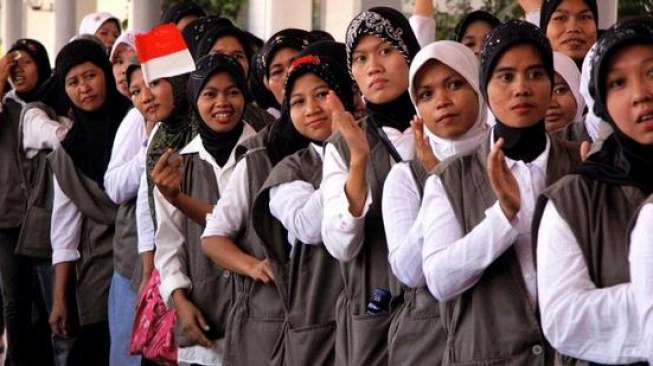
The deployment of hundreds of Indonesian migrant workers to Japan once again serves as concrete evidence of the strong bilateral relations between the two countries. A total of 306 prospective migrant workers were officially sent to Japan under the Government-to-Government (G to G) program in the nursing sector on June 17, 2025, in Depok, West Java. This deployment was organized by the Ministry for the Protection of Indonesian Migrant Workers (P2MI) as part of the government’s commitment to expanding safe and legal overseas employment opportunities for Indonesian citizens.
All participants underwent a selection process before earning this valuable opportunity. The high demand for skilled nursing workers in Japan has been met by the Indonesian government through strengthened international cooperation—an effort that not only enhances the welfare of migrant workers but also upholds the country’s global image. Worker placements through official channels like the G to G program ensure the protection of rights and legal certainty for those sent abroad.
Suyanto, the Deputy Regent of West Kotawaringin (Kobar), emphasized how local governments can play a vital role in improving human resource quality through targeted partnerships. His appreciation for Enter Borneo, a training institution producing quality workers, reflects the synergy between the public and private sectors in preparing young people to compete internationally.
The full support of the Kobar regional government for training and labor deployment programs to Japan is commendable as a concrete form of pro-people policy. Amid domestic employment challenges, such programs serve as real solutions, especially for youth in rural areas who often have limited access to quality job opportunities.
Fenny Ariyanti, General Manager of LPP Enter Borneo, highlighted the crucial role of private training institutions in supporting the development of globally competitive human resources. The fact that 17 participants are set to depart for Japan this April through the Japan Career/AIC Indonesia pathway reflects the success of the nearly four-year program focusing on language and skills training.
The growing interest from the Kobar community in Japanese language training at Enter Borneo is a positive sign that the program effectively meets local demand for broader and higher-quality employment opportunities. This enthusiasm also reflects the desire among youth not just for jobs, but for access to quality training that enables them to compete professionally in the global labor market.
This initiative also demonstrates the government’s success in strengthening labor diplomacy with destination countries. Japan, as a strategic partner, has developed close cooperation with Indonesia in various fields, including employment. The migrant worker program to Japan not only delivers economic benefits but also enhances the knowledge and skills of Indonesian human resources. Training standards and job readiness have been aligned with the increasingly competitive demands of the global labor market.
Minister of P2MI, Abdul Kadir, stated that the deployment of 306 Indonesian migrant workers to Japan signifies the government’s optimism and commitment to preparing a skilled workforce ready to compete globally. By emphasizing the high competency of the workers, the public can be assured that the selection and training processes were rigorous, standardized, and accountable.
The fact that 306 individuals passed the selection and will be placed in various regions across Japan proves that the quality of Indonesian workers is widely recognized by partner countries. It’s not just about numbers—it’s about quality. The composition of 16 nurses and hundreds of caregivers demonstrates that Japan’s demand for healthcare workers represents a strategic opportunity for Indonesia, and this opportunity has been effectively seized with a structured approach.
The active role of the government through the P2MI Ministry in facilitating language and technical skills training ensures the readiness of migrant workers prior to departure. The program has been designed systematically to ensure that workers are not only professionally accepted in the host country but are also capable of demonstrating high work quality. The government has also guaranteed that the entire process is transparent and free from brokers and illegal placements.
The deployment of these migrant workers benefits not only the individuals and their families but also contributes to the national economy through remittances. Furthermore, returning workers with new experiences and skills are expected to become local development drivers in the future. This proves that international job placement programs are not just short-term solutions, but part of a long-term national human resource development strategy.
The government’s commitment to expanding similar collaborations to other countries shows that the protection and quality improvement of migrant workers will remain a top priority. Through the deployment of workers to Japan, international trust in the quality of Indonesian labor is further reinforced, and the bilateral relationship between the two countries is expected to grow even stronger in the future.
The author is a researcher in International Relations.
