Indonesia’s Strategic Role in the 10th WWF Bali to Realize Access to Clean Water and Sanitation

By: Laurens Parengkuan
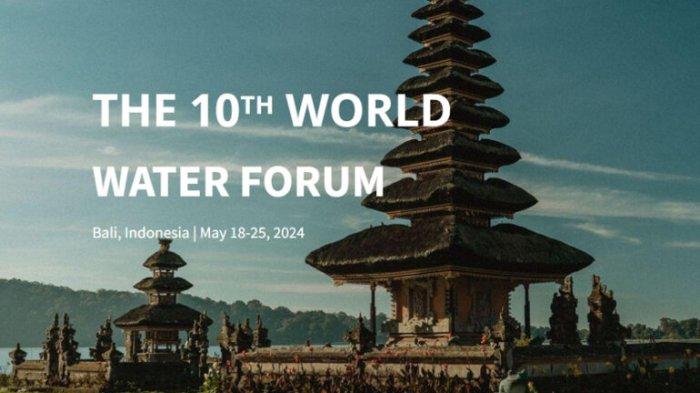
The 10th World Water Forum (WWF) which will be held in Bali on 18-25 May 2024 will be an important momentum for Indonesia in particular and the world in general in continuing to improve water governance. The theme of the 10th WWF, namely Water Shared for Prosperity, shows the global world’s serious attention to the management of water issues for the benefit of the future of water for shared prosperity.
Water is an important issue that will affect the quality of life of living creatures now and in the future, so its availability must be ensured continuously as the key to the welfare and sustainability of the earth. For Indonesia in particular, as the largest archipelagic country in the world, of course the issue of water management has its own challenges in water management, ranging from protecting natural resources to dealing with water-related natural disasters.
In this context, it becomes clear that Indonesia’s strategic role in the World Water Forum is not only as a host, but also as an active learner and leader in global initiatives in maintaining water sustainability for shared prosperity.
One of the key aspects of Indonesia’s strategic role is developing cross-sector and cross-border collaboration. In the upcoming WWF meeting, Indonesia will play a central role in strengthening its partnerships with other countries, international organizations, the private sector and civil society in developing holistic and inclusive solutions to water problems.
Indonesia’s strategic role also includes efforts to expand access to clean water and sanitation for all levels of society. With a growing population and rapid urbanization, this challenge is becoming increasingly urgent, and Indonesia has demonstrated commitment and concrete steps to address inequality in access to clean water and sanitation through sustainable policies and programs.
Apart from that, Indonesia also uses this forum as a platform to fight for global issues related to water, including climate change, biodiversity and sustainable development. By sharing experience, knowledge and technology, Indonesia acts as an agent of change in promoting innovative and sustainable solutions to water challenges at local, regional and global levels.
Thus, the 10th World Water Forum in Bali is not only a discussion forum, but also a momentum for Indonesia to emphasize its strategic role in promoting water for shared prosperity. Through cross-sector collaboration, increasing access to clean water, and global advocacy, Indonesia continues to be committed to being a leader in protecting water resources which are very important for sustainability and shared prosperity in the world.
More specifically, this role can be seen from various policies in water resources management. Through sustainable policies and regulations, the Indonesian government has created a framework that enables efficient and sustainable water management. This includes regulating water use permits, monitoring water pollution, and protecting water ecosystems.
As a form of collaboration, the Indonesian government has collaborated with the private sector in developing water infrastructure, such as building clean water sources, waste water treatment plants, and investing in technology that optimizes water use.
In international cooperation forums, the Indonesian government continues to develop partnerships with international organizations such as the UN, World Bank, and others to ensure technical support, financial resources, and access to best practices in water management.
Regarding cooperation with the UN, Indonesia and the UN are jointly committed to discussing solutions for empowering world water conservation, one of which is discussed is the phenomenon of water stress. On one occasion, the Director of Forestry and Water Resources Conservation, BAPPENAS, Medrilzam, explained that Indonesia also invited various parties across elements.
In an effort to collaborate with civil society in continuing to develop civil society participation to improve water governance, the Indonesian government continues to ensure that the interests and needs of the community are considered in decision making regarding water.
Non-governmental organizations, NGOs, and environmental advocacy groups play a role in educating communities about the importance of sustainable water management, as well as mobilizing support for local initiatives in the protection of water resources.
In contrast to its vital role, for Indonesia serious handling of water problems is a necessity considering that only 2.5% of the total water on the earth’s surface is fresh water. The other 97.5% is salt water or sea water. Of the 2.5% of fresh water, only 1/3 is surface water that can be directly utilized, 2/3 is in the form of fresh water reserves that cannot be directly utilized because they are still in the form of ice, glaciers and snow.
Apart from various other threats that require collaboration from stakeholders to find solutions, starting from over-exploitation, pollution, and changes in rainfall patterns due to climate change. These various phenomena have an impact on the availability of clean water as well as triggering natural disasters such as droughts, floods and landslides.
The implementation of the World Water Forum certainly provides strategic significance for Indonesia’s leadership at the global level, especially in realizing equitable access to water. Therefore, joint support is needed so that the event can run safely and smoothly.
*(The author is an environmental observer
