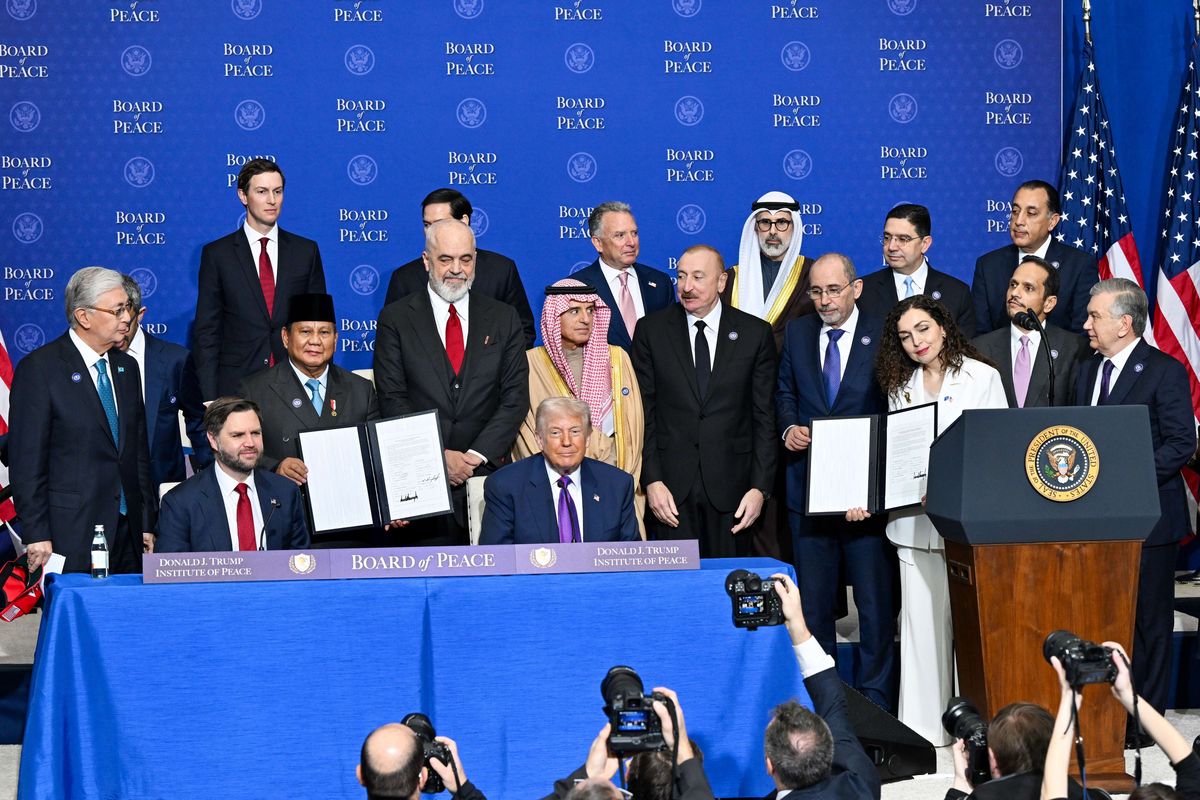
Indonesia’s Strategic Steps on the Peace Council: Diplomacy as an Engine of Peace and the Economy

Jakarta – Indonesia has solidified its position as a global diplomatic force by officially becoming a member of the Board of Peace, an international body focused on conflict resolution and stabilization in volatile regions, including Gaza, Palestine. Indonesia’s participation is seen as a strategic step that aligns diplomacy, security, and national economic acceleration.
This decision has since received positive reviews from various parties. Dave Laksono, Deputy Chairman of Commission I of the Indonesian House of Representatives, called Indonesia’s role on the Peace Council “evidence of intelligent diplomacy” that strengthens Indonesia’s position on the international stage, while also demonstrating real solidarity with the Palestinian people and the nation’s strong commitment to promoting a sustainable peace process.
“President Prabowo’s move is a concrete manifestation of Indonesia’s independent and active foreign policy, a fundamental principle of its foundation. Joining the Board of Peace demonstrates our consistent adherence to our constitutional mandate to establish a world order based on independence, lasting peace, and social justice,” Dave said.
He believes that this participation strengthens Indonesia’s diplomatic position in the eyes of the Islamic world and is also proof of the nation’s solidarity with the struggle of the Palestinian people.
“Indonesia’s presence strengthens our diplomatic standing in the eyes of the Islamic world. This is not just a symbol of solidarity, but also proof that Indonesia always stands with the Palestinian people in fighting for their rights,” he stressed.
Similar support came from youth organizations. M. Imam Satria Jati, Chairman of the South Kalimantan Regional Leadership Council (DPD) of the Indonesian National Movement for the Protection of the Indonesian People (KNPI), stated that Indonesia’s membership on the Board of Peace is a crucial opportunity for the nation to demonstrate its diplomatic capabilities, not only maintaining peace but also promoting economic growth.
According to him, diplomacy has now transformed into a key engine in creating political stability, which has a positive impact on trade, investment, and concrete international cooperation.
“This step is not merely a diplomatic ceremony, but rather concrete evidence of the success of foreign affairs that integrates the peace agenda with the national economic growth engine,” Imam explained.
He saw that the Board of Peace opened up opportunities for Indonesia to become a “problem solver” in global conflicts, while simultaneously strengthening the nation’s image as a country that is active in responding to global security and economic challenges.
“Here, security is no longer seen solely as physical defense, but rather as the result of inclusive peacebuilding that involves collaboration among member states to share best practices in peacefully resolving conflicts,” he said.
Furthermore, Imam emphasized that Indonesia’s voice is now increasingly being taken into account as a constructive actor capable of promoting a fairer international order.
“Diplomacy as an economic engine. Diplomacy has now transformed into a major economic engine, with peace playing a crucial role as a catalyst for global prosperity,” he said.
By creating a stable environment resulting from conflict resolution, a safe space for trade and investment can be opened up, which can then be optimally utilized by Indonesia through the Peace Council to convert diplomatic relations into concrete economic cooperation.
With this strategic step, Indonesia is not only maintaining global security and stability but also creating a conducive environment for broader trade, investment, and technological cooperation, strengthening the nation’s position as a respected strategic partner on the world stage.
