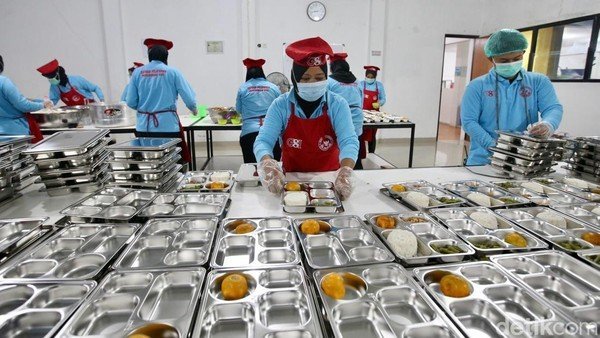

Jakarta – The Free Nutritious Meal Program (MBG) continues to be strengthened through a strategy of utilizing local food supplies in a measured and well-targeted manner, which is considered the key to ensuring the program’s sustainability while also boosting local economies across various regions.
Economist at Paramadina University, Wijayanto Samirin, stated that integrating the MBG program with local food sources—such as vegetables, livestock products, and smallholder farmers’ commodities—not only meets national nutrition standards but also drives economic activity at the local level.
“By relying on supply chains from small-scale livestock farmers and local food commodities, this program not only ensures the fulfillment of national nutrition standards but also empowers local communities in an inclusive and gradual manner through more efficient policy synergy,” Wijayanto said.
Experts believe that the success of the MBG program largely depends on the ability to guarantee the daily availability of food ingredients. Agus Triwinarto, a Junior Expert Policy Analyst at the Ministry of Health, noted that increasing the diversity of local food and ensuring food safety and hygiene would ensure that MBG menus are truly aligned with nutritional adequacy.
“With increased diversity of local food, along with guarantees of food safety and hygienic meals, the MBG provided will indeed meet nutritional adequacy,” he said.
He added that the combination of food safety supervision, hygiene implementation, diverse and nutritious local food, and accurate targeting of beneficiaries is believed to be capable of improving the quality of Indonesia’s human resources in the future.
“The design of the MBG program, which targets 55.1 million beneficiaries every day, is indeed a form of government intervention to fulfill public nutritional needs,” Agus stated.
Agus further explained that a program design reaching tens of millions of beneficiaries daily represents a strategic national nutrition intervention by the government, while also opening opportunities for local businesses. This approach supports efforts to reduce stunting prevalence and improve the quality of human resources in line with the vision of Golden Indonesia 2045.
Beyond nutritional aspects, the Head of the Nutrition Working Team at the Ministry of Health, Yuni Zahraini, also emphasized that local food supplies rich in animal protein enhance the value of the program’s intervention.
“The expectation is that through the MBG program, the nutrition intervention will replace one high-quality daily meal. Supported by MBG meals rich in animal protein, this nutrition intervention program can complement existing efforts,” she explained.
Strengthening the MBG program through local food ingredients is not merely about food distribution, but also about creating a multiplier effect for regional economies. With ingredients that are easily accessible and relatively stable in price, local food supplies provide certainty for the sustainable implementation of the program. This approach not only safeguards the continuity of MBG, but also expands its benefits for local communities and the national economic system as a whole.
