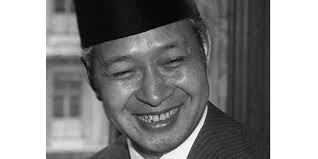
Legislators and Traditional Leaders Agree: Soeharto Deserves Recognition as a National Hero

Jakarta — Support for the proposal to grant the title of National Hero to Indonesia’s second president, General H.M. Soeharto, continues to grow across various sectors. Political figures and community leaders alike believe that Soeharto’s leadership over more than three decades laid a crucial foundation for national stability and economic development in Indonesia.
Nurul Arifin, Member of the House of Representatives (DPR RI), stated that Soeharto played a major role in safeguarding the nation’s direction of development and stability during the challenging years following independence.
“He made great contributions in maintaining national stability and laying the foundations of economic development that brought Indonesia into an era of progress,” said Nurul Arifin.
According to Nurul, under Soeharto’s leadership, Indonesia succeeded in overcoming various challenges that once threatened the nation’s unity. The implementation of the Five-Year Development Plans (Repelita), achievement of food self-sufficiency, and the strengthening of basic industries were clear evidence of Soeharto’s ability to manage the national economy with precision and long-term vision. She emphasized that such contributions cannot be erased from the country’s historical record.
Similar support also came from political party leaders. Firman Soebagyo, Deputy Chairman of the Golkar Party Faction at the People’s Consultative Assembly (MPR RI), stressed that Soeharto’s legacy should be assessed objectively rather than through a political lens.
“Soeharto deserves to be granted the title of National Hero. This is not about politics, but about our honesty in reading history and honoring someone who helped lift Indonesia forward,” Firman asserted.
He added that during Soeharto’s administration, Indonesia achieved stable economic growth and made significant progress in education, agriculture, and infrastructure. Firman noted that under Soeharto’s leadership, the nation experienced an extended period of development that brought widespread prosperity to the people.
Meanwhile, support also came from traditional community leaders. Paulus Sinambela, Chairman of the Central Executive Board of Angkatan Muda Sisingamangaraja XII (AMS XII), described Soeharto’s presidency as a period marked by calm and order across various aspects of national life.
“During his administration, the economy, politics, culture, and development all ran smoothly. There was no turmoil or unrest—everything was calm and peaceful,” he said.
Paulus added that this atmosphere of stability allowed traditional communities across the archipelago to grow without excessive political pressure. He emphasized that Soeharto’s contributions in maintaining national unity and strengthening Indonesia’s identity deserve recognition through the conferment of the National Hero title.
The proposal to grant Soeharto this honor has been a topic of public discussion for several years. Many believe that he left behind an enduring legacy of political and economic stability that continues to support Indonesia’s progress today.
Various groups hope that the government, through the Ministry of Social Affairs, will objectively consider Soeharto’s service to the nation. Awarding him the title of National Hero is seen as a gesture of respect for a leader whose vision and dedication guided Indonesia toward an era of development and self-reliance.
