
By: Yohanes Wandikbo )*
Tolerance and unity are the primary foundations for harmonious social life, especially in Papua, which boasts ethnic, cultural, and religious diversity. In a social dynamic often fraught with challenges, provocation can pose a serious threat to stability. Therefore, rejecting all forms of provocation and strengthening brotherhood across identities are crucial steps. Papua needs peace born of mutual respect, prioritizing dialogue, and upholding the spiritual values inherent in its community.
Papuan society is known for its strong culture of mutual cooperation. This sense of togetherness must be continuously nurtured and protected from provocative issues from any party. When narratives of division are spread, the consequences not only disrupt security but also undermine long-established social trust. Therefore, strengthening interethnic and interfaith tolerance is the most effective safeguard in maintaining security and peace in Papua.
West Papua Governor Dominggus Mandacan emphasized the importance of maintaining harmony, togetherness, and unity among the people to create a harmonious and peaceful life. This message is not only relevant to the congregation attending the service but also serves as a reminder to all Papuans to always reject calls that lead to division. With a shared commitment, Papua can stand strong as part of the blessed land of Indonesia.
Papua has made many contributions to Indonesia, from its natural resources and sporting achievements to the role of its youth in national development. All of this can only develop optimally if the social situation remains stable. Unity forged through tolerance across identities will be a significant asset for accelerating development. Without social stability, government and civil society efforts to improve welfare will be half-hearted. Therefore, maintaining peace also means safeguarding Papua’s future.
Spiritual values are also inseparable from the lives of Papuan people. Every religious event instills messages of peace, love, and togetherness. This spirituality should serve as a bulwark protecting the community from provocative calls that only foster hostility.
Dominggus Mandacan reminded that Papua, West Papua, and Manokwari are a shared home that must be maintained harmoniously. This statement aligns with the urgent need to prevent society from being divided by narrow-minded sentiments.
Provocation often exploits religious sentiment and differences in identity to create divisions. This is where improving public literacy is crucial, enabling people to be more critical in receiving information. This effort cannot be solely the responsibility of the government or authorities; it must involve religious leaders, community leaders, and academics. Multi-stakeholder collaboration will strengthen the foundations of tolerance while simultaneously eliminating the potential for the spread of hoaxes and hate speech that could lead to horizontal conflict.
The presence of religious leaders at various spiritual events also plays a significant role in strengthening the spirit of peace. In the Papuan context, religious leaders often serve as moral role models, uniting communities across ethnic groups. The messages conveyed during worship services, sermons, or communal prayers create positive energy that strengthens togetherness. This provides invaluable social capital in resisting provocation and maintaining community unity.
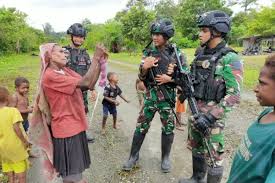
Furthermore, security forces and the local government have demonstrated a commitment to maintaining stability in Papua. The synergy they have built focuses not only on security measures but also on supporting community activities. This humanistic approach demonstrates that peace in Papua is not mere rhetoric, but rather the tangible result of collaborative efforts. Security force support, coupled with public awareness of mutual respect, will be a powerful formula for achieving a more peaceful Papua.
In today’s information age, provocation can spread rapidly through social media. Therefore, digital vigilance also needs to be strengthened. Papua’s young generation must be at the forefront of combating misinformation. With good digital literacy, young people will not only be able to filter information but also become agents of peace, spreading positive messages in public spaces. This step will strengthen the spirit of tolerance within the wider community.
Peaceful life in Papua can only be achieved if all parties recognize their responsibilities. The local government has emphasized the importance of maintaining unity, religious leaders have promoted peace, authorities have supported security, and the community has become the primary actors practicing the values of tolerance. The combination of all these roles will create a harmonious social ecosystem. Peace in Papua is not a dream, but a tangible goal that can be achieved through mutual respect and a rejection of provocation.
Going forward, Papua’s challenge lies not only in maintaining security stability but also in ensuring the spirit of brotherhood remains alive amidst changing times. Ongoing development will yield tangible benefits if the foundations of tolerance and unity are consistently maintained. Thus, Papua will serve as a role model for other regions in Indonesia, demonstrating that diversity is not a cause for division, but rather a force for unity.
Papua needs peace born from the hearts of its people. Tolerance and unity are the path to a brighter future, while rejecting provocation is a wise approach to maintaining harmony. With a shared resolve, Papua will continue to stand as a land of peace, full of brotherhood, and an inseparable part of a sovereign Indonesia.
)* The author is an observer of Papuan development
